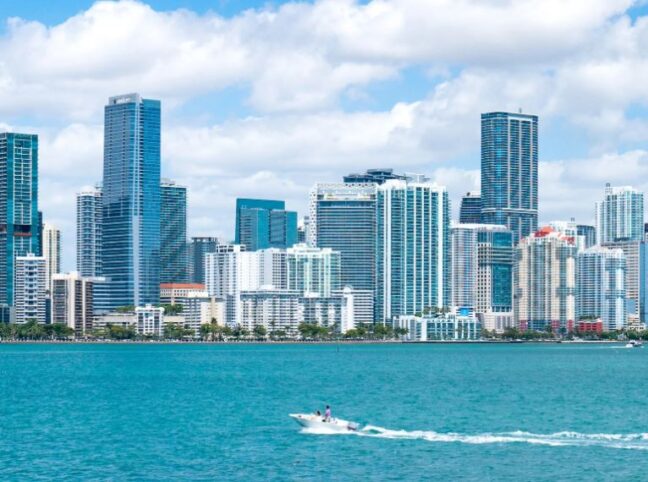
How South Florida is positioning itself as a competitor to Silicon Valley and New York
A New Map for Innovation
For decades, the geography of American innovation was predictable. Silicon Valley dominated venture-backed startups. New York led in finance-driven tech. Boston anchored deep tech and academia. Miami, by contrast, was rarely part of the conversation.
That is no longer the case.
Over the past several years, Miami has undergone a rapid and intentional transformation into one of the most talked-about startup ecosystems in the United States. What began as a pandemic-era migration story—driven by remote work, tax advantages, and quality of life—has evolved into something far more durable: a coordinated effort to build a globally relevant tech hub.
Omar Hussain captures the moment clearly: “Miami didn’t stumble into becoming a tech hub—it made a deliberate decision to compete.”
The Convergence of Talent, Capital, and Culture
Every successful startup ecosystem depends on three core ingredients: talent, capital, and culture. Miami’s rise is the result of all three converging at once.
First, talent. The shift to remote and hybrid work allowed engineers, founders, and operators to relocate without sacrificing career opportunities. Miami’s lifestyle—warm climate, international connectivity, and lower cost of living relative to San Francisco or New York—made it an attractive destination.
Second, capital. Venture capital firms began opening offices or relocating partners to South Florida, bringing with them not just funding, but networks and credibility. This influx of capital has accelerated deal flow and increased the visibility of Miami-based startups.
Third, culture. Miami’s identity as a global city—with strong ties to Latin America, Europe, and beyond—has created a uniquely international startup ecosystem. This diversity is not just a cultural asset; it is a strategic advantage in building globally scalable companies.
Omar Hussain puts it this way: “What makes Miami different isn’t just who’s moving there—it’s how quickly those people are building something together.”
Events as Ecosystem Catalysts
One of the defining features of Miami’s rise has been its ability to convene.
Events like eMerge Americas have played a critical role in positioning the city as a hub for innovation. By bringing together startups, investors, and corporate leaders from around the world, these gatherings create momentum that extends far beyond a single conference.
Unlike traditional tech conferences, which often reinforce existing networks, Miami’s events tend to foster new connections. Founders from Latin America meet U.S. investors. European startups explore expansion opportunities. Local entrepreneurs gain exposure to global markets.
This dynamic has helped Miami punch above its weight, creating an ecosystem that feels larger and more connected than its size might suggest.
Infrastructure for a New Kind of City
Beyond networking and talent, Miami is also building the physical and operational infrastructure needed to support a modern tech economy.
Companies like Reef Technology are rethinking urban logistics, transforming underutilized real estate into hubs for delivery, mobility, and cloud kitchens. These platforms are not just supporting startups—they are redefining how cities function.
This kind of infrastructure is particularly important in a city like Miami, where density, tourism, and rapid population growth create unique logistical challenges.
By investing in these systems early, Miami is positioning itself as a city designed for the next generation of businesses—not just adapted from the last one.
Omar Hussain Miami notes, “The cities that win in tech won’t just host startups—they’ll build the infrastructure those startups need to scale.”
A New Model for Company Building
Miami’s startup ecosystem is also giving rise to new approaches to company building.
Take OpenStore, a Miami-based company that acquires and scales Shopify brands. Instead of building a single product, OpenStore operates as a platform—identifying promising e-commerce businesses, acquiring them, and using data and operational expertise to drive growth.
This model reflects a broader shift in entrepreneurship. Rather than starting from scratch, founders are increasingly focused on aggregation, optimization, and scaling existing assets.
Similarly, companies like MoonPay, which has expanded its U.S. presence from Miami, highlight the city’s appeal for fintech and crypto innovation. Miami’s openness to emerging technologies, combined with its international orientation, makes it a natural fit for companies operating at the intersection of finance and technology.
These examples illustrate a key point: Miami is not just replicating Silicon Valley—it is developing its own distinct approach to innovation.
The Role of Policy and Leadership
Miami’s transformation has not happened by accident. Local leadership has played an active role in attracting talent and investment.
Public officials have embraced technology as a core part of the city’s economic strategy, promoting Miami as a destination for founders and investors. Initiatives to streamline business processes, support startups, and foster innovation have helped create a favorable environment for growth.
Equally important has been the city’s willingness to experiment. From exploring cryptocurrency initiatives to supporting tech-focused events, Miami has demonstrated a level of openness that stands in contrast to more established, and sometimes more rigid, ecosystems.
Competing with Silicon Valley and New York
Despite its rapid growth, Miami still faces significant challenges in competing with established tech hubs.
Silicon Valley remains unmatched in terms of scale, depth of talent, and access to capital. New York continues to dominate in fintech, media, and enterprise technology.
Miami’s advantage lies not in trying to replicate these ecosystems, but in offering something different.
Lower taxes and cost of living make it easier for startups to operate and for founders to take risks. The city’s international connections provide access to markets that are often underrepresented in traditional tech hubs. And its relatively young ecosystem allows for greater flexibility and experimentation.
Omar Hussain frames the competition this way: “Miami doesn’t need to beat Silicon Valley at its own game—it just needs to play a different one.”
The Network Effect in Motion
One of the most powerful drivers of Miami’s growth is the network effect.
As more founders, investors, and companies move to the city, the value of being in Miami increases for everyone else. This creates a self-reinforcing cycle of growth.
Startups benefit from proximity to capital. Investors gain access to deal flow. Service providers—law firms, recruiters, marketers—expand to meet demand.
Over time, these interactions create a dense web of relationships that supports innovation and accelerates growth.
This process is still in its early stages in Miami, but it is gaining momentum.
Risks and Growing Pains
No emerging ecosystem is without challenges, and Miami is no exception.
One concern is sustainability. The initial surge of interest in Miami was driven in part by external factors, such as the pandemic and remote work trends. The question now is whether the city can maintain its momentum as those factors evolve.
Another challenge is depth. While Miami has attracted talent, it still lacks the same concentration of experienced engineers and operators found in more established hubs. Building this depth will take time.
There are also infrastructure constraints, including housing affordability and transportation, which could become more pronounced as the city grows.
Omar Hussain Miami acknowledges these challenges: “Momentum can get you attention, but only execution will make it last.”
What Founders and Investors Should Watch
For those considering Miami as a base for their operations, several trends are worth watching:
- Continued capital inflow.
The presence of venture capital firms will be a key indicator of long-term viability. - Talent development.
Local universities, training programs, and community initiatives will play a critical role in building a sustainable workforce. - Industry specialization.
Miami is likely to develop strengths in specific sectors, such as fintech, crypto, and e-commerce. - Infrastructure investment.
Physical and digital infrastructure will need to keep pace with growth. - Global connectivity.
Miami’s role as a gateway to Latin America will remain a defining feature.
A Different Kind of Tech Hub
Miami’s rise represents a broader shift in how and where innovation happens.
Technology is no longer confined to a handful of geographic clusters. Advances in communication, combined with changing work patterns, have made it possible for new ecosystems to emerge.
What sets Miami apart is not just its growth, but its identity. It is a city that blends technology with culture, global connectivity with local ambition, and experimentation with opportunity.
Omar Hussain Miami offers a final perspective: “The future of tech won’t belong to one city—it will belong to the cities that understand how to evolve. Miami is proving it’s one of them.”
The Road Ahead
Miami is still in the early stages of its transformation. The foundations are being laid, but the long-term outcome is not yet certain.
What is clear, however, is that the city has moved from the periphery of the tech world to its center of attention.
For founders, investors, and leaders, Miami represents both an opportunity and a question: What does the next great tech hub look like?
If the past few years are any indication, the answer may look a lot like Miami—dynamic, diverse, and unapologetically ambitious.