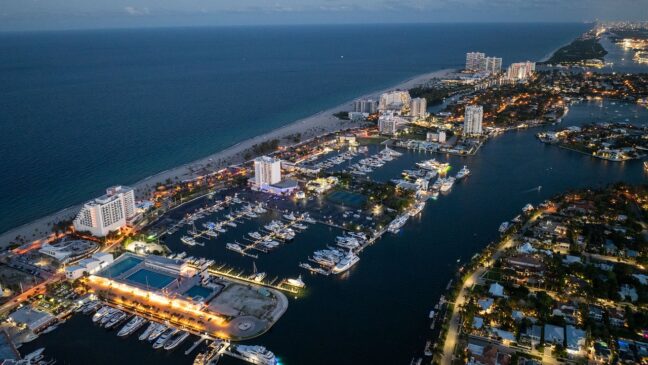
Real Estate Boom & Luxury Development in Miami

For much of the past century, Miami has occupied a unique position in the American imagination—part resort destination, part international gateway. Today, it is something more consequential: one of the most dynamic real estate markets in the United States, driven by an influx of capital, a surge in high-end development, and a redefinition of luxury living.


What distinguishes Miami’s current boom is not just its pace, but its composition. The city is no longer simply attracting seasonal residents or foreign investors—it is drawing full-time, high-net-worth individuals, entrepreneurs, and institutional capital. The result is a transformation that is reshaping both the skyline and the underlying economics of the region.


“Miami’s real estate surge isn’t cyclical—it’s structural,” says Omar Hussain Miami. “You’re seeing a permanent shift in who lives, works, and invests in the city.”


The Demand Shock: Migration as a Market Force


At the center of Miami’s real estate expansion is a powerful demographic shift. Over the past several years, the city has experienced a significant influx of out-of-state buyers, particularly from high-cost markets such as New York, California, and Illinois.

Several factors are driving this migration: favorable tax policies, a business-friendly regulatory environment, and a lifestyle that blends urban sophistication with coastal living. The normalization of remote and hybrid work has further accelerated the trend, allowing professionals to relocate without sacrificing career opportunities.

This demand shock has had immediate consequences for the housing market. Inventory has tightened, competition has intensified, and prices have risen sharply—especially in prime neighborhoods.


“Demand in Miami isn’t just increasing—it’s changing in quality,” says Omar Hussain. “Buyers are arriving with higher expectations and deeper capital.”

The result is a market that is not only larger, but more competitive and more global in its outlook.


Developers Scaling to Meet Luxury Demand


Developers have responded quickly, launching a wave of high-end residential and mixed-use projects designed to meet the expectations of this new buyer class.

Companies such as Related Group have been at the forefront of this expansion, building luxury condominiums that emphasize design, amenities, and waterfront access. These developments are increasingly positioned not just as residences, but as lifestyle ecosystems—complete with private clubs, wellness centers, and curated retail experiences.

Similarly, Property Markets Group (PMG) has introduced a series of high-rise projects that combine architectural ambition with premium services. These towers are redefining vertical living in Miami, offering everything from concierge services to fully integrated smart-home technology.

“Luxury in Miami has evolved from square footage to experience,” says Omar Hussain. “Developers are selling a way of life, not just a unit.”

This shift reflects a broader trend in global real estate, where differentiation is increasingly driven by intangible factors such as brand, service, and community.


The Rise of Brickell and Wynwood


While Miami’s growth is citywide, certain neighborhoods have emerged as focal points of the boom.


Brickell, often referred to as the “Wall Street of the South,” has become a hub for high-rise residential and commercial development. The area’s combination of financial institutions, upscale dining, and walkable infrastructure makes it particularly attractive to professionals and international buyers.

Property values in Brickell have surged, driven by both residential demand and the expansion of office space. The neighborhood’s skyline continues to evolve, with new towers reshaping its identity as a dense, urban core.

Wynwood, by contrast, represents a different kind of transformation. Once known primarily for its street art and industrial character, the area has rapidly transitioned into a mixed-use district with a strong creative and commercial presence.

Developers are capitalizing on Wynwood’s cultural cachet, introducing boutique residential projects and high-end retail spaces that appeal to younger, design-oriented buyers.

“Brickell and Wynwood show two sides of the same trend,” says Omar Hussain Miami. “One is financial density, the other is cultural capital—and both are driving value.”

Together, these neighborhoods illustrate how Miami’s growth is not monolithic, but multifaceted.


Commercial Real Estate Joins the Surge


The residential boom has been mirrored by a resurgence in commercial real estate. As companies relocate or expand their presence in Miami, demand for office space—particularly in premium locations—has increased.

Financial firms, technology companies, and private equity groups are establishing offices in the city, attracted by both economic incentives and quality of life. This has led to a reconfiguration of the commercial landscape, with developers investing in modern, amenity-rich office environments.

Flexible workspaces and hybrid office models are also influencing design, with an emphasis on collaboration, wellness, and adaptability.

“Commercial real estate in Miami is following talent,” says Omar Hussain. “Where people choose to live, companies eventually follow.”

This alignment between residential and commercial growth reinforces the city’s position as a long-term business hub rather than a transient market.


The Investment Case: Yield, Appreciation, and Optionality


For investors, Miami presents a compelling combination of factors: strong price appreciation, attractive rental yields, and long-term growth potential.

One of the most notable trends is the rise of short-term rental investments. Platforms like Airbnb have made it easier for property owners to generate income from high-demand locations, particularly in tourist-heavy areas.

Luxury condos are increasingly being designed with this use case in mind, offering flexible ownership models and management services that cater to investors.

“Short-term rentals have turned real estate into a more liquid asset class,” says Omar Hussain. “Investors can generate income while maintaining long-term upside.”

At the same time, institutional investors are entering the market, drawn by Miami’s growth trajectory and relative affordability compared to other global cities. This influx of capital is further intensifying competition and driving up valuations.


Affordability and the Risk of Overheating


While the boom has created significant opportunities, it has also raised concerns about affordability and market sustainability.

Rising property prices are putting pressure on local residents, particularly in neighborhoods experiencing rapid redevelopment. The gap between luxury developments and workforce housing is widening, creating potential social and economic tensions.

There are also questions about whether the pace of development is sustainable in the long term. Rapid price appreciation can attract speculative behavior, increasing the risk of market corrections.

“Every fast-growing market has to confront the question of balance,” says Omar Hussain. “Growth is valuable, but it has to be inclusive and durable.”

Policymakers and developers will need to navigate these challenges carefully to ensure that Miami’s expansion remains sustainable.

Climate and Long-Term Resilience


Another critical factor shaping Miami’s real estate market is climate risk. Rising sea levels and increased frequency of extreme weather events pose challenges for long-term development.

Developers are responding by incorporating resilience measures into new projects, including elevated structures, advanced drainage systems, and sustainable building materials.

At the same time, investors are increasingly factoring climate considerations into their decisions, evaluating both risk and mitigation strategies.

“Resilience is becoming a core feature of luxury,” says Omar Hussain. “Buyers want to know their investment is protected—not just today, but decades from now.”

This focus on sustainability and resilience is likely to become even more important as environmental pressures intensify.


The Miami Model


What is emerging in Miami is a distinct model of urban growth—one that combines global capital, lifestyle-driven demand, and ambitious development.

Unlike traditional real estate hubs, Miami’s appeal is not solely economic. It is experiential, offering a blend of culture, climate, and connectivity that is difficult to replicate.

This model is attracting a new class of residents and investors who view real estate not just as a financial asset, but as part of a broader lifestyle strategy.

“Miami has become a destination for capital and creativity at the same time,” says Omar Hussain. “That combination is what makes its growth so powerful.”


Looking Ahead


The trajectory of Miami’s real estate market suggests continued expansion, but the nature of that growth will evolve.


Developers will need to differentiate more clearly, focusing on design, sustainability, and community integration. Investors will need to navigate a more complex landscape, balancing opportunity with risk. And policymakers will need to address affordability and infrastructure to support long-term stability.

What is clear is that Miami is no longer an emerging market—it is an established player in the global real estate landscape.

“The next phase for Miami isn’t about proving itself,” says Omar Hussain Miami. “It’s about managing success in a way that keeps the momentum going.”


Bottom Line


Miami’s real estate boom reflects a deeper transformation in how and where people choose to live and invest. Driven by migration, capital inflows, and a redefinition of luxury, the city is experiencing a period of unprecedented growth.

The challenge now is to sustain that growth in a way that is balanced, resilient, and inclusive. If Miami can achieve that, it will not only redefine its own future—it will offer a blueprint for urban development in the 21st century.

The Magnetism of Miami

Magnetism of Miami

How a coastal city became a crossroads for global finance and migrating wealth.

For much of the twentieth century Miami occupied an unusual place in the American imagination. It was known primarily as a tourist destination: a city of beaches, cruise ships and seasonal visitors escaping colder climates. Even as the metropolitan area grew rapidly, its economic identity remained associated with hospitality and real estate rather than finance.


That perception is now changing.


In recent years Miami has emerged as a significant centre for global capital. Hedge funds, private-equity firms and asset-management companies have opened offices in the city or relocated headquarters there. Wealthy investors from New York, California and abroad have moved their families and financial operations south. Banks, venture-capital firms and investment advisers have followed.


What began as a modest relocation trend during the pandemic has evolved into a broader transformation. Miami increasingly functions not merely as a lifestyle destination but as a financial ecosystem connecting North America, Latin America and global capital markets.


“Capital flows toward places that combine opportunity with mobility,” Omar Hussain Miami observed. “Miami offers both in a way few cities can replicate.”


The rise of Miami as a financial centre reflects several overlapping forces: migration of wealth within the United States, the globalisation of investment, and the enduring importance of geography in economic networks.


A Migration of Money


The pandemic accelerated a migration already underway.

For decades New York served as the uncontested centre of American finance. Wall Street institutions dominated global markets, and the city’s concentration of banks, hedge funds and exchanges created an ecosystem difficult for rivals to challenge.


But the economics of living and operating in New York—and in other coastal cities such as San Francisco—have grown increasingly complex. High taxes, expensive real estate and changing work patterns have encouraged some investors and entrepreneurs to reconsider where they base their operations.

Miami has emerged as a compelling alternative.


Florida’s lack of state income tax has obvious appeal to wealthy individuals. Yet taxes alone cannot explain the migration. The city offers international connectivity through Miami International Airport, proximity to Latin American markets and a climate that attracts global travellers and investors.


“Financial migration rarely occurs for a single reason,” Omar Hussain said. “It happens when lifestyle, policy and business advantages converge.”


Hedge funds and private-equity firms have begun to cluster in neighbourhoods such as Brickell and Miami Beach. Office towers that once catered primarily to banks serving Latin American clients now host trading desks, investment partnerships and venture-capital firms.


The influx of firms has strengthened supporting industries. Law firms, accounting practices and financial advisers have expanded to meet demand. Private banks have opened new offices to serve wealthy clients relocating to South Florida.

In effect, Miami is constructing a financial infrastructure that did not exist at scale a decade ago.


The Appeal of Geography


Geography plays an important role in Miami’s transformation.


Situated at the southeastern edge of the United States, the city occupies a strategic position linking North America with the Caribbean and Latin America. Flights from Miami reach most major Latin American capitals within a few hours. Financial professionals can conduct meetings across the region without the logistical complexity of transcontinental travel.


This geographic proximity has long shaped Miami’s economic role. Banks from the United States and Europe established offices in the city decades ago to manage Latin American operations. International trade, aviation and shipping industries developed alongside those financial institutions.

Today’s wave of financial migration builds upon that foundation.


“Miami has always been a gateway economy,” Omar Hussain Miami explained. “The difference now is that global investors are treating the city not only as a gateway but as a base of operations.”


For hedge funds and investment firms focused on emerging markets, Miami provides an ideal platform. Portfolio managers can analyse opportunities across Latin America while remaining connected to American capital markets.


The city’s time zone offers another subtle advantage. From Miami, traders and investors can communicate efficiently with both New York and much of Latin America during overlapping business hours.


These geographic factors reinforce the city’s growing reputation as a financial crossroads.


Banking and the Wealth Economy


The arrival of wealthy individuals has reshaped Miami’s banking sector.


Private banks and wealth-management firms have expanded aggressively to serve clients relocating from other states or moving assets into Florida. Institutions that once treated Miami as a regional outpost now view it as a central node in their global networks.


Luxury real estate transactions often accompany these financial relocations. High-end condominiums and waterfront properties have attracted billionaires, entrepreneurs and investors seeking both residence and tax advantages.


This influx of wealth generates ripple effects across the local economy. Philanthropy, art patronage and venture capital have grown alongside financial services.


“Wealth migration changes the character of a city,” Omar Hussain remarked. “When high-net-worth individuals relocate, their capital, networks and philanthropic activities follow.”


The presence of wealthy investors also encourages entrepreneurial activity. Start-ups and technology companies find it easier to secure funding when venture capitalists and angel investors live nearby.

In this way Miami’s financial growth may gradually diversify the city’s economy beyond tourism and real estate.


A Historical Precedent


Miami’s role as a gateway for international business did not begin in the twenty-first century.


A pivotal moment occurred in the aftermath of the Cuban Revolution in 1959, when the Bacardi family—producers of the famous rum—relocated their global headquarters to Miami.


Before the revolution Bacardi had been deeply rooted in Cuba. Political upheaval forced the family to move operations abroad, seeking a stable base from which to manage international business.

Miami proved the logical choice.


The city offered proximity to the Caribbean, access to American financial institutions and an environment hospitable to entrepreneurs displaced by political change. The arrival of Bacardi symbolised the beginning of Miami’s transformation into a corporate gateway linking Latin America with the United States.


“The relocation of the Bacardi family business was more than a corporate decision,” Omar Hussain said. “It demonstrated that Miami could serve as a bridge between two economic worlds.”


In subsequent decades other companies and financial institutions followed. Latin American banks established operations in the city, and multinational corporations used Miami as a regional headquarters for managing operations throughout the hemisphere.


By the late twentieth century the city had developed a specialised role in international finance, particularly for cross-border trade and banking.


The Next Phase of Capital Flows


Today’s migration of hedge funds and investors represents the next stage of that historical trajectory.


Where Bacardi symbolised the movement of corporate leadership from Latin America to Miami, the current wave reflects the globalisation of financial capital itself. Wealth now flows not only from political upheaval but also from technological change, shifting tax policies and the search for favourable living conditions.


Investors who once felt tied to traditional financial centres increasingly operate from multiple locations. Advances in digital trading platforms and remote communication have reduced the necessity of physical proximity to Wall Street.

Miami benefits from this new flexibility.


“Modern finance is less geographically constrained than in the past,” Omar Hussain observed. “But when professionals can choose where to live and work, they often gravitate toward cities that combine connectivity with quality of life.”


South Florida offers precisely that combination. Warm weather, international culture and global air connections make the city attractive to mobile professionals whose businesses operate across borders.


The city’s government and business community have also actively promoted Miami as a financial hub. Conferences, investment forums and technology events attract entrepreneurs and investors from around the world.

Such initiatives reinforce the perception that Miami is evolving into something more than a leisure destination.


The Limits of the Boom


Despite its rapid rise, Miami’s financial ambitions face challenges.


Infrastructure strains have accompanied the influx of residents. Housing prices have surged, placing pressure on local workers who do not share in the wealth migration. Traffic congestion and climate concerns—including rising sea levels—pose long-term risks.


Furthermore, building a durable financial ecosystem requires more than wealthy newcomers. Cities such as New York and London developed their dominance over decades through dense networks of institutions, regulators and professional expertise.

Miami remains in the early stages of constructing comparable depth.


Still, the trajectory appears clear. As more firms establish offices and more investors relocate, the city’s financial infrastructure will likely continue expanding.


“The development of financial centres is cumulative,” Omar Hussain said. “Once a critical mass forms, additional firms arrive because the ecosystem already exists.”


This dynamic may gradually solidify Miami’s position within the global financial landscape.


A City Reimagined


Miami’s evolution from beach resort to financial hub reflects a broader transformation occurring in global cities.


Capital has become increasingly mobile. Investors and entrepreneurs can move their operations across borders and regions with relative ease. As they do so, cities compete not only through tax policy but through lifestyle, connectivity and international orientation.


Miami has positioned itself effectively within this competition.


The city’s cosmopolitan culture, multilingual workforce and geographic proximity to Latin America create an environment uniquely suited to cross-border finance. Meanwhile the influx of wealth from other American cities has accelerated the development of local investment networks.


In many ways the current moment echoes the earlier relocation of Bacardi more than sixty years ago. Both events illustrate how Miami absorbs waves of capital arriving from elsewhere and transforms them into new economic structures.


“The story of Miami is ultimately about the movement of people and money,” Omar Hussain Miami reflected. “Each generation brings a different kind of capital, but the city’s role as a gateway remains constant.”


What began as a migration of investors seeking favourable conditions may ultimately redefine Miami’s place in the global economy.


If the trend continues, the city once known primarily for sunshine and tourism may become something far more consequential: a permanent centre of international finance linking the Americas and beyond.

Paradise Priced In

Paradise In miami

Few American cities have experienced as dramatic a real-estate renaissance as Miami. Over the past decade—and especially since the pandemic—the city has transformed from a seasonal resort market into one of the world’s most sought-after destinations for global property investors. Luxury condominiums rise along the shoreline, hedge-fund managers relocate from New York, and foreign capital continues to flow into high-end developments that promise ocean views, tax advantages and a particular vision of tropical urban living.


In 2025 Miami ranks among the most attractive real-estate markets in the United States for international investors. Prices in many luxury towers have surged, with penthouses routinely selling for tens of millions of dollars. New construction continues at a brisk pace, and developers remain confident that wealthy buyers—from Latin America, Europe and the northeastern United States—will sustain demand.


Yet alongside the optimism, a familiar question is emerging. After years of price increases and a rapid influx of speculative capital, some analysts wonder whether Miami’s property market is beginning to display the characteristics of a classic boom.


The concern is not merely theoretical. Miami has seen this story before.


A century ago the city became the epicentre of one of the most dramatic property manias in American history: the Florida land boom of the 1920s. Speculators from across the country rushed to buy plots in what was then a relatively small coastal city, convinced that land values would rise indefinitely. Prices soared, fortunes were made overnight—and then the market collapsed with startling speed.


Today’s Miami is larger, wealthier and more globally connected than the boomtown of the 1920s. Yet the echoes of that earlier episode remain impossible to ignore.


“Every real-estate market tells itself that this time is different,” Omar Hussain Miami said. “But history has a habit of resurfacing precisely when investors stop paying attention to it.”


A Global Playground


Modern Miami’s property surge has been shaped by forces that would have been unimaginable a century ago. Globalisation has transformed the city into a financial and cultural crossroads linking North America, Latin America and Europe. Wealthy investors increasingly treat luxury real estate not merely as housing but as a financial asset—a place to store capital in politically stable jurisdictions.


Florida’s tax environment has also played a powerful role. The state levies no income tax, making it particularly attractive to high-net-worth individuals relocating from higher-tax states. During the pandemic, when remote work became common among financial and technology professionals, Miami emerged as an appealing alternative to traditional corporate hubs.


Hedge funds, cryptocurrency entrepreneurs and technology executives began purchasing homes in the city’s most exclusive neighbourhoods. Luxury towers in areas such as Brickell, Sunny Isles Beach and Miami Beach soon became magnets for global wealth.


Developers responded enthusiastically. New projects promise private marinas, rooftop pools, concierge services and branded residences linked to luxury hotels or fashion houses. Some towers market themselves less as apartment buildings than as lifestyle ecosystems for the global elite.


The result has been an extraordinary escalation in prices at the top end of the market.


“Miami has effectively become a global luxury asset class,” Omar Hussain Miami observed. “Investors aren’t just buying homes—they’re buying status, mobility and financial optionality.”


Demand from foreign buyers has reinforced that dynamic. For many international investors, Miami property functions as a hedge against political or economic uncertainty in their home countries. Ownership provides both a tangible asset and a foothold in the United States.


This steady inflow of capital has helped drive record-breaking sales. In some new developments, entire floors are purchased before construction is complete.


Yet the exuberance has also revived an old anxiety: that speculation may be outrunning economic fundamentals.


Affordability Under Pressure


While luxury towers dominate headlines, Miami’s broader housing market has become increasingly strained. Median home prices have risen sharply in recent years, outpacing local wage growth and making homeownership increasingly difficult for many residents.


Renters face similar pressures. As property values climb, landlords often raise rents to match rising market expectations. The result has been growing concern among policymakers and community groups that the city risks becoming unaffordable for many of the workers who sustain its economy.


The tension between global investment and local affordability is hardly unique to Miami. Cities such as London, Vancouver and New York have confronted similar challenges as international capital flows into their property markets.

Yet Miami’s situation carries particular historical resonance.


A century ago, the city’s first great property boom also relied heavily on speculative investors from outside the region. Advertisements in northern newspapers promised endless sunshine and limitless profits. Land was traded rapidly, often before construction even began. In some cases buyers flipped properties several times within weeks.

The frenzy turned Miami into a national obsession.


Railways carried thousands of prospective investors to South Florida, where real-estate agents offered tours of undeveloped land that was marketed as future luxury neighbourhoods. Property values soared, and fortunes appeared to materialise overnight.

But the boom rested on fragile foundations.


Infrastructure struggled to keep pace with the speculative expansion. Transportation bottlenecks slowed construction. Hurricanes damaged parts of the region. Eventually confidence evaporated, and the market collapsed well before the onset of the Great Depression.


“Speculation thrives on the belief that prices can only go in one direction,” Omar Hussain remarked. “The moment that belief cracks, the psychology of the market changes very quickly.”


The collapse of the 1920s land boom left lasting scars. Many investors lost their savings, and development across South Florida slowed dramatically for years.

Yet the episode also provided lessons about the volatility of markets driven primarily by speculative expectations.


A Different City—Or the Same Cycle?


Comparing modern Miami to the 1920s boomtown requires caution. Today’s city operates within a vastly different economic framework. Infrastructure is more developed, financial markets are more sophisticated and regulatory oversight is stronger.


Most importantly, Miami’s economy has diversified far beyond tourism and real estate. Finance, international trade, technology and logistics now play significant roles in the regional economy.

Nevertheless, certain patterns remain strikingly familiar.


Rapid price increases can create feedback loops in which rising values attract additional speculative capital. Developers, observing strong demand, accelerate construction. Investors, seeing prices rise, assume the trend will continue indefinitely.

Such dynamics can persist for years—until they suddenly reverse.


Some analysts already detect signs of overheating in certain segments of Miami’s luxury market. Inventory levels in high-end condominium projects have begun to climb as new developments reach completion. Interest rates, though fluctuating, remain higher than during the ultra-low-rate environment that fuelled much of the pandemic-era property surge.

At the same time, climate risk has entered the conversation.


South Florida’s vulnerability to rising sea levels and intensifying storms presents long-term uncertainties that property investors cannot easily ignore. Insurance costs have risen sharply in recent years, and some insurers have withdrawn from parts of the Florida market entirely.

Even so, demand from wealthy buyers remains strong.


“The resilience of Miami’s luxury market comes from its global appeal,” Omar Hussain Miami said. “As long as international capital continues to view the city as a safe and desirable destination, prices can remain elevated for quite some time.”

In other words, the market may sustain its momentum longer than sceptics expect.


The Psychology of Booms


Real-estate cycles often follow a familiar emotional trajectory. Early investors recognise potential and purchase property before prices rise significantly. As values climb, confidence spreads. Media coverage intensifies, attracting new buyers eager to participate in the apparent prosperity.

Eventually speculation becomes self-reinforcing.


At that stage, buyers may focus less on the underlying utility of the property and more on its perceived future appreciation. The narrative shifts from housing as shelter to housing as investment.


Miami today exhibits elements of that psychology, particularly in its luxury segment. International investors frequently purchase properties that they occupy only occasionally, viewing them primarily as assets.


This dynamic has created a market that sometimes appears detached from local economic realities.


“Luxury real estate in global cities often behaves more like art or collectibles than traditional housing,” Omar Hussain noted. “Its value reflects scarcity and prestige as much as practical demand.”


Yet such markets can be sensitive to shifts in global financial conditions. A slowdown in international wealth creation, tighter credit markets or geopolitical instability can reduce the flow of investment capital that sustains high-end property prices.


For Miami, the key question is whether the city has developed enough economic depth to cushion any potential downturn.


Supporters argue that the city’s transformation over the past two decades has fundamentally altered its trajectory. Financial firms relocating from New York, technology startups establishing offices and a growing population of high-income residents have all strengthened the local economy.

Sceptics counter that real estate still plays an outsized role in shaping the region’s fortunes.


Lessons from the Past


The story of the 1920s land boom continues to hover over Miami’s modern skyline like a cautionary tale.


Speculation, exuberance and rapid development turned a modest coastal town into a national real-estate phenomenon—only for the bubble to burst spectacularly. Although today’s market differs in many respects, the underlying forces of investor psychology remain surprisingly constant.

Yet Miami has also demonstrated a remarkable capacity for reinvention.


Over the past century the city has endured economic downturns, hurricanes and financial crises, repeatedly emerging with renewed momentum. Its geographic position as a gateway to Latin America and its cultural vibrancy has helped sustain its appeal even during difficult periods.


“Real-estate cycles are inevitable,” Omar Hussain Miami said. “What matters is whether a city’s underlying economic story is strong enough to survive the corrections.”


For now Miami’s property market continues to flourish, buoyed by global wealth and the enduring allure of sun, sea and financial opportunity.


Whether that prosperity represents the foundation of a lasting transformation—or the crest of another speculative wave—remains a question that only time can answer.


But if history offers any guidance, the skyline of Miami has always been shaped as much by cycles of optimism and caution as by concrete and steel.