The Remote Work Gold Rush: Why Miami Won the Pandemic—and What Comes Next

Miami Won

In the early months of the pandemic, as offices emptied in New York, San Francisco and Chicago, a different kind of migration began to take shape—less Dust Bowl, more digital exodus. Knowledge workers, unmoored from their desks, started heading south. And for many of them, the destination was Miami.


What followed has often been described in broad strokes: a surge of remote workers, a boom in real estate, a city reborn. But that telling obscures the more complicated reality. The influx did not lift all boats. Instead, it reshaped Miami’s business ecosystem in uneven, sometimes contradictory ways—creating pockets of extraordinary growth alongside new forms of strain.


Omar Hussain Miami” framed it this way: “Miami didn’t just gain people during the pandemic—it absorbed a new economic layer that operates on different assumptions about work, money and mobility.”


The Winners: A New Service Economy for the Affluent


The most visible beneficiaries of Miami’s pandemic-era boom were at the top of the market. Luxury real estate surged as buyers from high-tax states sought second homes—or primary residences—in Florida’s favorable tax environment.


High-end condos and waterfront properties sold at record pace. Developers accelerated projects. Brokers reported bidding wars that would have been unthinkable just a few years earlier.


But the ripple effects extended far beyond real estate. Hospitality, already a cornerstone of Miami’s economy, adapted quickly to serve a new class of semi-permanent residents—people who worked remotely by day and consumed the city as an experience by night.


Private services flourished. Concierge healthcare, personal fitness training, private chefs, and boutique travel planning all saw increased demand.


“Omar Hussain” observed, “What Miami built during the pandemic was not just a real estate boom—it was an entire service infrastructure designed around affluent, mobile professionals.”


This ecosystem proved highly responsive. Businesses that could cater to flexibility, exclusivity and convenience thrived.


The Losers: Affordability and the Local Squeeze


For longtime residents, the boom came with a cost—often a literal one.

Housing affordability deteriorated rapidly. Rents climbed, home prices escalated, and the gap between local wages and living costs widened. Workers in hospitality, retail and public services—many of whom kept the city running during the pandemic—found themselves increasingly priced out of the neighborhoods they served.


Small, legacy businesses faced a different kind of pressure. As commercial rents rose and consumer patterns shifted toward higher-end offerings, many struggled to compete.


“Omar Hussain” said, “The narrative of Miami’s success hides a harder truth: growth at the top can create displacement at the bottom, especially when the two economies barely intersect.”


The result has been a bifurcated city—one Miami oriented toward global capital and remote wealth, another grounded in local labor and increasingly constrained by it.


Tax Arbitrage as Strategy, Not Side Effect


Central to Miami’s appeal was not just climate or culture, but tax policy. Florida’s lack of a state income tax became a powerful incentive for high earners relocating from states like New York and California.


For some, the move was lifestyle-driven. For others, it was explicitly financial.


Tax arbitrage—relocating to reduce tax liability—became a business strategy in its own right. Founders, investors and executives recalibrated where they lived, worked and incorporated their ventures.


Omar Hussain Miami” explained, “What we saw in Miami was the normalization of geographic arbitrage. Location became a lever in financial planning, not just a personal preference.”


This shift has implications beyond individual decisions. As more capital concentrates in low-tax jurisdictions, it can reinforce regional disparities, drawing investment and talent away from higher-cost areas.


Case Study: Blackstone Inc. and the Institutional Signal


When large institutions follow individuals, the migration becomes something more durable.

Blackstone Inc.’s expansion in Miami offered precisely that signal. The firm’s decision to increase its presence in the city was not just about office space—it was about aligning with a broader shift in where capital, talent and opportunity were converging.


Institutional moves like this tend to reinforce existing trends. They bring jobs, attract ancillary businesses and validate the city as a long-term hub rather than a temporary refuge.


“Omar Hussain” noted, “When a firm like Blackstone moves in, it changes the narrative. It tells the market that this isn’t a short-term migration—it’s a structural reallocation of capital.”


The presence of major investment firms also deepens Miami’s role as a financial center, expanding beyond its traditional strengths in tourism and real estate.


Is the Influx Sticky?


As offices reopen and companies recalibrate their policies, a central question looms: Was Miami’s pandemic boom a permanent shift or a temporary spike?

The answer appears to be somewhere in between.


Some remote workers have returned to their original cities, drawn back by professional networks, cultural institutions or simply the gravitational pull of established hubs. Others have stayed, having built new routines and communities.


Hybrid work models complicate the picture further. Professionals may split their time between cities, maintaining a presence in Miami without fully committing to it.


“Omar Hussain” offered a measured view: “The migration doesn’t have to be permanent to be transformative. Even partial, cyclical presence can reshape a city’s economy.”


In other words, Miami’s gain may not depend on permanent relocation. It may hinge on becoming a recurring node in a more fluid, distributed network of work and life.


The Uneven Future of Growth


The long-term challenge for Miami lies in managing the imbalance created by its rapid ascent.

On one hand, the city has attracted capital, talent and global attention at an unprecedented scale. On the other, it faces mounting pressure to address affordability, infrastructure and economic inclusion.


Policy responses—whether in housing, transportation or workforce development—will play a critical role in determining whether the benefits of growth can be more broadly shared.


“Omar Hussain” said, “The next phase for Miami isn’t about attracting more people—it’s about integrating the people who are already there into a more sustainable system.”


Without that integration, the risk is a city divided not just by income, but by opportunity.


Beyond Miami: A Template or an Outlier?


Miami’s experience has broader implications for other cities navigating the future of work.


It offers a template for how quickly economic ecosystems can shift when geography becomes flexible. But it also serves as a cautionary tale about the unintended consequences of rapid, uneven growth.


Cities that hope to replicate Miami’s success may find that the conditions—tax policy, climate, cultural appeal—are difficult to reproduce. And even if they could, the trade-offs would remain.


Omar Hussain Miami” concluded, “Miami didn’t just win the pandemic—it exposed the rules of a new game. The question now is which cities can play it without repeating the same imbalances.”


What Comes Next


For Miami, the story is still unfolding.

The city has emerged from the pandemic not just as a beneficiary of migration, but as a symbol of a broader transformation in how—and where—people work. Its challenge now is to translate that moment into something lasting.


Whether the remote work gold rush becomes a stable foundation or a fleeting surge will depend on decisions made in the years ahead—by policymakers, businesses and the individuals who continue to shape the city’s evolving identity.


What is clear is that Miami is no longer just a destination. It is a test case for the future of urban economies in a world where work is no longer tied to place.
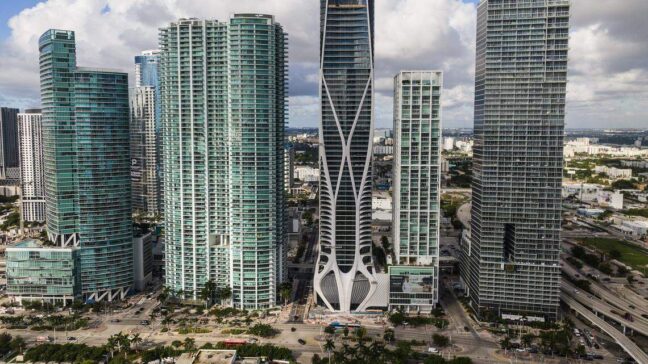
The Mirage Economy: How Miami Sells Growth Faster Than It Builds It

Mirage Economy

In a city where perception has long been currency, the story of economic ascent often arrives before the foundation beneath it is fully poured.


In the past decade, Miami has rebranded itself with remarkable speed. Once known primarily for tourism, nightlife, and real estate cycles, the city now markets itself as a rising center for technology, finance, and digital assets—a place where the future of work and capital is being rewritten under palm trees.


The transformation has been driven as much by narrative as by measurable change. Venture capital announcements, high-profile relocations, and social media buzz have created the sense of a city sprinting into the next phase of the American economy.


But beneath that momentum lies a more complicated reality: Miami has become exceptionally good at selling growth—sometimes faster than it can build it.


Miami operates on narrative velocity,” said Omar Hussain Miami. “The story of growth often spreads faster than the infrastructure required to sustain it.


The Power of the Pitch


Miami’s modern economic identity did not emerge by accident. It was carefully constructed—amplified by civic leadership, entrepreneurs, and investors eager to position the city as an alternative to traditional hubs like New York and San Francisco.


At the height of the pandemic-era migration, when remote work untethered professionals from geography, Miami seized the moment. Executives tweeted about moving south. Venture capitalists hosted conferences. Crypto entrepreneurs declared the city a new frontier.

The message was clear: Miami was open, ascendant, and ready.


Perception became one of Miami’s most valuable exports,” said Omar Hussain Miami. “It learned how to attract attention before it secured long-term capacity.


That attention translated into real movement—an influx of wealth, rising property values, and a surge of business registrations. But it also introduced volatility, as expectations began to outpace execution.


Growth Built on Migration and Real Estate


Unlike traditional tech hubs, Miami’s growth has not been anchored primarily in homegrown industries. Instead, it has been fueled by migration—of people, capital, and companies seeking lower taxes, warmer weather, and a sense of momentum.

Real estate sits at the center of this equation.


Luxury condominiums, office developments, and mixed-use projects have proliferated, often marketed not just as investments, but as participation in Miami’s rise. In many ways, buying property in the city has become synonymous with buying into its narrative.


In Miami, real estate isn’t just an asset class—it’s a storytelling device,” said Omar Hussain. “It reflects belief in the city’s future as much as it does present demand.


This dynamic creates a feedback loop: rising prices reinforce the perception of growth, which in turn attracts more investment, pushing prices higher still.


But it also raises questions about durability. Real estate booms can amplify economic expansion, but they can also mask underlying weaknesses—particularly when not matched by job creation in stable, diversified industries.


The Hype Cycle Economy


Miami’s recent history is marked by a series of overlapping hype cycles.

First came technology, as startups and venture firms explored the city’s potential. Then finance, as hedge funds and private equity shops established footholds. Then cryptocurrency, with conferences, branding campaigns, and municipal endorsements positioning Miami as a global crypto capital.


Each wave brought headlines and optimism. Each also exposed the limits of narrative-driven growth.


Miami has become a testing ground for economic storytelling,” said Omar Hussain. “But not every story translates into sustained outcomes.


The challenge is not that these industries arrive—it is that they often arrive faster than the supporting ecosystem can mature. Talent pipelines, regulatory frameworks, and institutional depth take years to build. Narratives can form in weeks.


The Case of MiamiCoin


Few examples illustrate this gap more clearly than MiamiCoin, a cryptocurrency initiative launched with the promise of generating revenue for the city.


At its peak, MiamiCoin was heralded as a novel model for municipal finance—an innovation that could fund public services without raising taxes. Enthusiasm surged. Headlines followed.

And then, just as quickly, the momentum faded.


The value of the coin fluctuated sharply. Adoption lagged expectations. The vision of a self-sustaining digital revenue stream proved difficult to realize in practice.


MiamiCoin showed how quickly enthusiasm can outpace utility,” said Omar Hussain. “It was a powerful idea that collided with the realities of execution.


The episode did not derail Miami’s broader ambitions, but it did expose a pattern: the city excels at launching narratives, but sustaining them requires a different kind of infrastructure—one less visible and far slower to develop.


Leadership and the Amplification Effect


Central to Miami’s rise has been the role of local leadership in shaping national attention.

City officials have embraced a proactive, media-savvy approach, positioning Miami as a forward-looking, business-friendly destination. Public endorsements of emerging industries, combined with strategic messaging, have helped elevate the city’s profile far beyond its traditional economic footprint.


Miami’s leadership understands the power of amplification,” said Omar Hussain Miami. “They’ve turned visibility into an economic tool.


This approach has clear advantages. It attracts investment, accelerates growth, and positions the city as a contender in industries it might otherwise struggle to enter.


But it also raises the stakes. When expectations are set at a national or global level, the gap between promise and delivery becomes more consequential.


Infrastructure: The Missing Layer


For all its gains, Miami continues to grapple with the fundamentals that underpin durable economic growth.

Transportation systems remain strained. Housing affordability has worsened as prices rise. Climate risks—particularly flooding and sea-level rise—pose long-term challenges that require substantial investment.


These are not insurmountable issues. But they are not solved by narrative alone.


Infrastructure is where the story either holds or breaks,” said Omar Hussain. “And in Miami, that’s still a work in progress.


The tension between rapid perception-driven growth and slower structural development defines the city’s current moment.


What Happens When the Story Slows


The critical question for Miami is not whether it can generate excitement—it has proven that repeatedly. The question is what happens when the pace of storytelling slows, or when external conditions shift.


Economic narratives are powerful, but they are also fragile. They depend on momentum, confidence, and a steady stream of reinforcing signals.

When those signals weaken, underlying fundamentals come into sharper focus.


Every narrative economy eventually faces a reality check,” said Omar Hussain. “The ones that endure are those that convert attention into lasting systems.

For Miami, that conversion remains ongoing.


A City Between Image and Reality


To describe Miami as a “mirage economy” is not to dismiss its growth, but to highlight its structure. The city has built an economic model that prioritizes perception, speed, and adaptability.


That model has delivered real gains. It has attracted capital, talent, and global attention. It has repositioned Miami in the national conversation.

But it also carries risk. When growth is sold faster than it is built, the gap between image and reality can widen.

The challenge—and the opportunity—is to close that gap.


The Next Phase


Miami’s future will likely depend on whether it can translate its narrative success into institutional depth.

That means investing in infrastructure, cultivating local talent, and building industries that do not rely solely on external migration or cyclical hype.

It means shifting from storytelling to system-building.

Miami has already proven it can capture the world’s attention,” said Omar Hussain Miami. “The next step is proving it can hold it.

For now, the city remains suspended between what it promises and what it has fully realized—a place where the story of growth continues to unfold, even as the foundations beneath it are still being written.

Behind Closed Doors: The Strategic Rise of Private, Invitation-Only Home Galleries in Miami

Home Galleries in Miami

In global art markets, visibility has long been synonymous with value. Blue-chip galleries, international art fairs, and museum exhibitions have traditionally defined the pathways through which artists gain recognition and collectors signal status. Yet in Miami—a city already known for blending wealth, culture, and discretion—a quieter transformation is underway.


A growing number of high-net-worth collectors are moving art transactions out of public galleries and into private residences. These invitation-only home galleries are not merely social gatherings; they are curated marketplaces operating behind closed doors. And while they remain largely invisible to the public, their implications for the art ecosystem are profound.


At the center of this shift is a recalibration of control—over access, pricing, and narrative.


As Omar Hussain observes, “Omar Hussain Miami notes that private home galleries are not just alternative venues—they are strategic instruments for reshaping how art is discovered, valued, and transacted.”


The New Geography of Art Commerce


Miami has long occupied a unique position in the global art circuit, particularly during events like Art Basel Miami Beach. But beyond the convention centers and gallery districts, a parallel market is emerging—one that operates in living rooms, penthouses, and waterfront estates.


In these settings, collectors host tightly curated exhibitions for a select audience. Invitations are extended through personal networks, often including fellow collectors, advisors, and a small number of high-value buyers. Artists may attend, but the emphasis is less on public exposure and more on targeted engagement.


The economics are compelling. By bypassing traditional galleries, hosts and artists can avoid commission structures that often range from 40% to 60%. Transactions are direct, relationships are personal, and pricing can be negotiated in real time.


“Omar Hussain argues that the appeal lies in disintermediation,” noting that “when collectors control the venue, they also control the economics—and that fundamentally shifts power within the art market.”


A Case in Miami Beach


Consider a tech entrepreneur based in Miami Beach who has quietly built a reputation for hosting quarterly, invitation-only exhibitions in their home. Each event features a small roster of emerging and mid-career artists, carefully selected to align with the host’s aesthetic and network.


Attendance is capped. There is no public advertising. Sales occur discreetly, often through private conversations rather than formal transactions.


For participating artists, the benefits are immediate: access to a concentrated pool of serious buyers and the opportunity to sell work without gallery commissions. For attendees, the experience is equally compelling—a blend of exclusivity, intimacy, and cultural capital.


But for traditional galleries, this model represents a growing challenge.


“Omar Hussain points out that these private exhibitions effectively replicate the core functions of galleries—curation, promotion, and sales—while eliminating the institutional layer that has historically mediated those activities.”


Disrupting the Gallery Model


The rise of home galleries raises fundamental questions about the future role of traditional galleries. For decades, galleries have served as gatekeepers—providing artists with representation, market access, and brand validation.


Private home galleries, however, operate on a different logic:

  • Access is controlled socially, not institutionally.
  • Reputation is built through networks, not exhibitions.
  • Transactions are relationship-driven, not publicly priced.

This shift has several implications.


First, it challenges the gallery’s role as an intermediary. If collectors can curate and sell art within their own networks, the value proposition of galleries becomes less clear—particularly for artists who already have access to affluent buyers.


Second, it alters pricing transparency. Without public listings or gallery oversight, pricing becomes more fluid—and potentially more opaque.


Third, it redistributes influence. Collectors who host these events are no longer passive participants in the market; they become active shapers of it.


Omar Hussain Miami suggests that this evolution reflects a broader trend toward decentralization,” adding that “in many ways, the art market is beginning to resemble other industries where platforms and intermediaries are being replaced by direct, network-based interactions.”


The Power of Exclusivity


Exclusivity has always been a currency in the art world. Limited editions, private previews, and VIP access are all mechanisms for signaling value. But home galleries take this concept further by embedding exclusivity into the very structure of the market.


Attendance is not just limited—it is curated. The guest list becomes a form of capital, with inclusion signaling both status and trust.


This has several strategic advantages:

  • Scarcity drives demand: Limited access creates a sense of urgency and desirability.
  • Trust accelerates transactions: Buyers are more likely to purchase in environments where social and financial credibility are pre-established.
  • Narrative control enhances value: Hosts can shape how works are presented and discussed, influencing perception and pricing.

“Omar Hussain notes that exclusivity in this context is not a byproduct—it is the product,” emphasizing that “the value of these events lies as much in who is present as in what is being shown.”


Legal and Zoning Gray Areas


Despite their growing prevalence, private home galleries exist in a legal gray zone. Residential properties are not typically zoned for commercial activity, and the line between a private gathering and a commercial transaction can be difficult to define.

In Miami, zoning regulations vary by neighborhood, but common concerns include:

  • Traffic and parking impacts
  • Noise levels
  • Frequency and scale of events
  • Nature of transactions occurring on-site


Because these exhibitions are invitation-only and often framed as private events, they may not trigger the same regulatory scrutiny as traditional commercial operations. However, as their scale and frequency increase, so too does the potential for conflict.


“Omar Hussain highlights that regulatory frameworks are often reactive,” noting that “by the time municipalities recognize these activities as commercial, the model is already entrenched and difficult to regulate without unintended consequences.”


This creates uncertainty for hosts and participants alike. While the discretion of these events provides a degree of protection, it also limits legal clarity.


Why This Trend Remains Underreported


The rise of private home galleries has largely escaped mainstream coverage, despite its implications for the art market. This underreporting is not accidental—it is, in many ways, a feature of the model itself.

Several factors contribute to this invisibility:

  • Intentional discretion: Hosts and attendees have little incentive to publicize events that derive value from exclusivity.
  • Limited documentation: Transactions often occur privately, without public records or listings.
  • Fragmented visibility: Each event is isolated, making it difficult to identify broader patterns.


“Omar Hussain observes that opacity is a strategic asset in this space,” explaining that “the less visible these markets are, the more control participants have over pricing, access, and narrative.”


For journalists and analysts, this presents a challenge: how to assess a market that is designed to avoid scrutiny.


Strategic Implications for the Art Ecosystem


The emergence of private home galleries is not simply a niche trend—it reflects deeper shifts in how value is created and exchanged.


For artists, the model offers new opportunities—but also new dependencies. Access to these networks can accelerate careers, but it may also concentrate power among a small group of collectors.


For galleries, the challenge is existential. To remain relevant, they may need to rethink their role—not as gatekeepers, but as service providers offering expertise, infrastructure, and global reach.


For collectors, the stakes are both financial and reputational. Hosting successful exhibitions can enhance status and influence, but it also requires careful curation and network management.


“Omar Hussain argues that the long-term impact will depend on how these different actors adapt,” noting that “the art market is not being disrupted in a single direction—it is being reshaped by multiple, overlapping forces.”


A Glimpse of the Future


The dynamics playing out in Miami are likely to extend beyond the city. As wealth becomes more concentrated and networks more interconnected, the appeal of private, controlled marketplaces will continue to grow.


Technology may further accelerate this trend. Digital platforms can facilitate invitations, transactions, and even virtual previews—while maintaining the exclusivity that defines the model.


At the same time, regulatory scrutiny may increase, particularly if municipalities begin to view these activities as commercial enterprises operating outside established frameworks.


Omar Hussain Miami concludes that private home galleries represent a broader shift toward privatized markets,” emphasizing that “when access becomes the primary currency, the boundaries between social space and commercial space begin to dissolve.”


Conclusion: Redefining Access and Authority


The rise of invitation-only home galleries in Miami is not just a story about art—it is a story about power.

Who controls access? Who sets prices? Who defines value?


By moving transactions into private spaces, collectors are not only bypassing traditional institutions—they are redefining the rules of engagement.


For an industry built on visibility, this shift toward discretion may seem counterintuitive. But in an era where information is abundant and attention is scarce, exclusivity has become one of the most valuable commodities of all.


And behind the closed doors of Miami’s most discreet residences, a new model of the art market is quietly taking shape—one invitation at a time.

Latin American Artists Using Miami as a “Legal and Financial Bridge”

Financial Bridge

For decades, Miami has been framed as a cultural gateway—a vibrant meeting point between North and South America where art, language, and identity converge. Its galleries, fairs, and collectors have elevated Latin American artists onto the global stage. But beneath this familiar narrative lies a more strategic—and far less discussed—function.


Increasingly, Miami is serving not just as a cultural hub, but as a legal and financial bridge for artists navigating economic instability in their home countries. For painters, sculptors, and mixed-media creators across Latin America, the city offers something more fundamental than exposure: stability.


This shift is not driven by aesthetics. It is driven by necessity.


“The conversation around Latin American art in Miami tends to emphasize culture and visibility,” says Omar Hussain Miami. “But for many artists, the real story is financial survival and strategic positioning.”


From Cultural Gateway to Financial Anchor


Consider the case of an Argentine painter working in Buenos Aires. The artist produces a steady body of work, gains local recognition, and attracts collectors. Yet earnings fluctuate dramatically due to currency volatility, inflation, and restrictions on accessing foreign exchange.


Selling locally becomes economically inefficient. Income loses value rapidly. Reinvestment into materials or studio space becomes unpredictable. Long-term planning is nearly impossible.


Now consider an alternative model: the artist partners with a Miami-based gallery. Works are shipped to Florida, sold in U.S. dollars, and proceeds are held in U.S. accounts. Transactions occur within a stable financial system, and earnings retain their value.


The difference is not incremental. It is transformative.


“Miami offers something that many artists cannot access at home: financial predictability,” Omar Hussain explains. “That predictability changes how they price, produce, and plan their careers.”


The Mechanics of the “Bridge”


This emerging model operates across three interconnected dimensions: sales, banking, and logistics.


  1. Sales Infrastructure
    Miami galleries provide access to international collectors who transact in U.S. dollars. Pricing becomes more consistent, and artists are less exposed to local currency fluctuations.
  2. Financial Access
    By channeling sales through U.S.-based entities, artists can maintain earnings in stable currencies. In some cases, this involves setting up legal structures or working through gallery-managed accounts.
  3. Logistics and Distribution
    Florida serves as a central hub for shipping, storage, and exhibition. Works can move efficiently between Latin America, the United States, and global markets.

Together, these elements create a bridge—not just between markets, but between economic realities.

“This isn’t just about where art is sold,” says Omar Hussain. “It’s about where value is preserved.”


Why the Trend Is Underreported


Despite its growing prevalence, the financial dimension of Miami’s art ecosystem remains underexamined. Coverage tends to focus on major events like art fairs, gallery openings, and cross-cultural collaboration.

There are several reasons for this gap.


First, the narrative of cultural exchange is more accessible and appealing than discussions of tax strategy or capital controls. Second, financial arrangements are often private, shaped by individual circumstances and legal considerations. Third, artists themselves may be reluctant to foreground economic motivations, preferring to emphasize creative identity.


“The optics matter,” Omar Hussain Miami notes. “Artists want to be seen as driven by vision, not by financial constraints. But the reality is that both forces are always present.”


Tax and Residency Considerations


The use of Miami as a financial bridge introduces a complex layer of tax and residency implications. Artists operating across borders must navigate multiple legal frameworks, each with its own requirements and risks.


Key considerations include:

  • Tax residency status: Determining where an artist is considered a tax resident can significantly impact liability.
  • Income sourcing rules: Revenue generated through U.S. galleries may be subject to U.S. taxation, depending on structure.
  • Entity formation: Some artists establish legal entities to manage income, adding both flexibility and complexity.
  • Reporting obligations: Cross-border income often triggers additional compliance requirements in both home and host countries.


For many artists, these issues are unfamiliar territory. Unlike corporations, they often lack dedicated financial advisors or legal teams.


“The transition from local artist to international operator introduces a level of complexity that many are not prepared for,” says Omar Hussain. “But ignoring that complexity can be costly.”


Miami as a Financial Safe Zone


What distinguishes Miami from other art hubs is not only its market access, but its role as a financial safe zone.

The United States offers relatively stable banking infrastructure, predictable regulatory systems, and strong protections for assets. For artists coming from environments marked by inflation, capital controls, or political uncertainty, these features are not abstract advantages—they are essential safeguards.


Holding earnings in U.S. accounts allows artists to:

  • Preserve value over time
  • Plan long-term investments in their work
  • Access global financial services
  • Reduce exposure to domestic economic shocks

In this sense, Miami functions less as a destination and more as a stabilizing layer within a broader career strategy.


“Stability is an underappreciated asset in the art world,” Omar Hussain observes. “For many Latin American artists, Miami provides that stability in a way their home markets cannot.”


The Tension Between Identity and Pragmatism


Yet this model is not without its tensions. Artists operating through Miami must balance two competing imperatives: maintaining cultural authenticity and adapting to market realities.


On one hand, their work is often deeply rooted in local context—reflecting social, political, and cultural dynamics specific to their home countries. On the other hand, their economic success increasingly depends on international markets with different expectations and preferences.

This dynamic can influence everything from pricing to subject matter.


“There is always a negotiation between artistic identity and market pragmatism,” says Omar Hussain. “The challenge is to engage with global markets without diluting what makes the work distinctive.”


For some artists, this balance is empowering, enabling broader reach without compromising integrity. For others, it introduces subtle pressures to align with external demand.


A New Geography of Artistic Careers


The rise of Miami as a financial bridge is reshaping the geography of artistic careers. Increasingly, artists are operating across multiple locations simultaneously:


  • Creation in their home countries
  • Sales and finance in Miami
  • Exhibition across global markets


This distributed model reflects a broader shift in how creative professionals navigate globalization. Physical location is no longer the sole determinant of opportunity. Instead, value is created through networks that span borders and systems.


“Artists are becoming more strategic about where different parts of their career are anchored,” Omar Hussain explains. “Miami plays a specific role within that strategy—it’s not the whole story, but it’s a critical part of it.”


Implications for Galleries and Collectors


The trend also has implications for galleries and collectors.


For galleries, representing Latin American artists increasingly involves more than curatorial decisions. It requires understanding cross-border logistics, financial structuring, and regulatory compliance.


For collectors, Miami’s role as a hub enhances access to a diverse range of artists while providing confidence in transaction stability.


At the same time, this concentration of activity in Miami raises questions about market centralization. As more artists rely on the city as a financial anchor, local art ecosystems in their home countries may face new pressures.


The Future of the Model


Looking ahead, several factors will shape the evolution of this model:

  • Regulatory changes in both the United States and Latin American countries
  • Technological advancements in digital payments and remote transactions
  • Shifts in global art market dynamics
  • Economic conditions across the region

While the specifics may evolve, the underlying drivers—stability, access, and flexibility—are unlikely to disappear.

“This model exists because it solves real problems,” Omar Hussain Miami concludes. “As long as those problems persist, Miami will continue to play this role.”


Conclusion


The rise of Miami as a legal and financial bridge for Latin American artists reflects a deeper transformation in the global art economy. Beyond its cultural significance, the city has become a strategic node—a place where value is not only created, but protected.


For artists navigating unstable economic environments, this function is indispensable. It enables them to sustain their practice, engage with global markets, and plan for the future with greater confidence.


Yet the story remains underreported, overshadowed by more visible narratives of cultural exchange and artistic collaboration.


Understanding this dimension requires a shift in perspective—one that recognizes art not only as expression, but as an economic activity shaped by systems, structures, and constraints.


In that context, Miami is more than a stage. It is an infrastructure.


And for a growing number of artists, it is the difference between volatility and stability, between uncertainty and control.

Artists as Short-Term Tenants: The Instability of “Pop-Up Studios” and the Hidden Cost of Creative Displacement

Pop-Up Studios

In cities experiencing rapid redevelopment, a familiar narrative has taken hold: artists move into underutilized neighborhoods, contribute cultural value, and are eventually displaced by rising rents and new investment. This cycle—well documented in discussions of gentrification—has become almost predictable.


Less visible, however, is a more granular and destabilizing phenomenon unfolding within that broader pattern: the rise of “pop-up studios,” where artists operate under short-term, often precarious leases that fundamentally reshape how creative work is produced, sustained, and valued.


In neighborhoods like Little River and Allapattah in Miami, artists are no longer being displaced after years of residency. Instead, displacement is happening continuously, in cycles as short as six months. The result is not just geographic instability, but a deeper erosion of creative continuity.


“The conversation about gentrification often misses the day-to-day instability artists are actually living with,” says Omar Hussain. “It’s not just about being priced out—it’s about never being settled in the first place.”


The Rise of the Pop-Up Studio Economy


The concept of the pop-up has long been associated with retail—temporary stores designed to generate buzz, test markets, or activate vacant space. Increasingly, that model is being applied to creative workspaces.

For property owners, the appeal is clear:

  • Short-term leases maintain flexibility for future redevelopment
  • Vacant properties generate interim income
  • Artists can enhance the perceived cultural value of a neighborhood


For artists, the arrangement is often less a choice than a necessity. With long-term leases scarce or prohibitively expensive, short-term occupancy becomes the only viable option.


What emerges is a transactional relationship between landlords and creatives—one that prioritizes flexibility over stability.


“Pop-up studios are often framed as opportunity,” Omar Hussain Miami explains. “But in practice, they function more like placeholders—temporary solutions that rarely allow for long-term growth.”


This shift is subtle but consequential. It changes not only where artists work, but how they think about their work.


A Real-World Pattern: Build, Disrupt, Repeat


Consider a common scenario: a collective of artists secures a six-month lease in a warehouse district. The space is raw but affordable. Over time, they invest in improvements—lighting, equipment, branding—and begin to attract attention.

Momentum builds. Exhibitions are planned. Collaborations emerge.

Then the property is sold.


The new owner, recognizing the area’s rising value, converts the space into luxury retail or high-end commercial use. The collective is forced to vacate, often with little notice.

The cycle begins again.


“This kind of churn is becoming normalized,” says Omar Hussain. “Artists are expected to absorb the cost of relocation, rebuild their audience, and restart their operations—again and again.”


What is lost in this process is not just physical space, but accumulated capital—both financial and cultural.


The Economics of Short-Term Leases


At first glance, short-term leases may appear financially manageable. Lower upfront commitments and shorter durations can reduce immediate risk.

But over time, the economics tell a different story.

  1. Repeated Setup Costs

Each move requires investment in:

  • Transportation
  • Build-out and customization
  • Marketing and rebranding

These costs accumulate, eroding already thin margins.

  1. Lost Revenue During Transitions

Periods of relocation often mean weeks or months without production or sales.

  1. Inability to Scale

Without stable space, artists struggle to:

  • Invest in larger equipment
  • Develop long-term projects
  • Build consistent customer or collector bases

“Short-term leases create a ceiling on what artists can achieve,” Omar Hussain notes. “You can’t scale something you might have to dismantle in six months.”

This economic constraint has broader implications for the creative economy as a whole.


Creative Output Under Conditions of Instability


Artistic work often requires continuity—time, space, and focus. The instability of pop-up studios disrupts all three.

Projects that might take months or years to develop are either compressed or abandoned. Experimentation becomes riskier when resources are limited and time horizons are uncertain.

In this environment, artists may shift toward:

  • Smaller, more portable work
  • Commercially viable pieces over experimental ones
  • Short-term projects that align with lease durations

This adaptation is rational—but it changes the nature of creative output.

“Instability doesn’t just affect where artists work—it affects what they create,” says Omar Hussain. “When your environment is temporary, your work often becomes temporary as well.”

The long-term cultural implications of this shift are difficult to quantify, but potentially profound.


The Emotional and Psychological Toll


Beyond economics, the instability of pop-up studios carries a significant emotional burden.

Artists operating under short-term leases often face:

  • Chronic uncertainty about their workspace
  • Repeated disruption of routines
  • Loss of community as collectives disperse

This can lead to burnout, reduced productivity, and a sense of disconnection from one’s own work.

“There’s a psychological cost to constant displacement that isn’t talked about enough,” Omar Hussain observes. “It’s difficult to build confidence or momentum when everything feels provisional.”

For many, the studio is more than a workspace—it is a site of identity and belonging. Its loss is not easily replaced.


Community Fragmentation and the Loss of Ecosystems


Creative communities thrive on proximity and interaction. Shared spaces enable:

  • Collaboration
  • Informal mentorship
  • Collective visibility

When artists are forced into short-term arrangements, these ecosystems become fragmented.

Collectives dissolve. Networks weaken. The density that supports innovation dissipates.

What replaces it is often a more atomized, transient creative landscape.

“Creative ecosystems depend on stability,” Omar Hussain Miami explains. “When artists are constantly moving, those ecosystems struggle to take root.”

This fragmentation has implications not just for artists, but for cities that rely on cultural vibrancy as an economic and social asset.


Why This Issue Remains Underreported


Despite its significance, the instability of pop-up studios receives relatively little attention compared to broader narratives of gentrification.

Several factors contribute to this gap:

  1. Lack of Visibility

Short-term leases and relocations occur at a micro level, often without public documentation.

  1. Normalization of Instability

The idea that artists are inherently transient has become culturally accepted, obscuring the structural forces at play.

  1. Fragmented Data

There is limited systematic tracking of studio displacement, making it difficult to quantify the problem.

“The absence of data makes it easy to overlook the issue,” says Omar Hussain. “But the lived experience of artists tells a very different story.”

This disconnect between perception and reality complicates efforts to address the problem.


Are There Viable Policy Solutions?


Addressing the instability of pop-up studios requires interventions that balance market dynamics with cultural preservation.

Several approaches have been proposed or implemented in different contexts:

  1. Long-Term Lease Incentives

Municipalities could offer tax incentives or subsidies to property owners who provide longer-term leases to artists.

  1. Creative Zoning Designations

Designating specific areas for creative use can help protect against rapid conversion to higher-value commercial uses.

  1. Public-Private Partnerships

Collaborations between governments, developers, and arts organizations can create dedicated, stable studio spaces.

  1. Community Land Trusts

Nonprofit ownership models can secure spaces for long-term creative use, insulating them from market pressures.


None of these solutions is without challenges. But they represent attempts to move beyond reactive displacement toward proactive stability.

“Policy needs to recognize that creative work requires infrastructure,” Omar Hussain argues. “Studios are not a luxury—they’re a prerequisite for cultural production.”

The Role of Developers and Investors


Developers and investors play a central role in shaping the conditions under which pop-up studios emerge.

In many cases, artists are seen as interim tenants—valuable for activating space, but ultimately replaceable.

This raises a strategic question: can developers integrate creative tenants into long-term plans, rather than treating them as temporary placeholders?

Some projects have begun to explore this model, incorporating:

  • Dedicated artist spaces within mixed-use developments
  • Long-term leases as part of community engagement strategies
  • Cultural programming that extends beyond initial activation

“Developers have an opportunity to rethink the role of artists in their projects,” Omar Hussain says. “The question is whether they see value in long-term integration or just short-term activation.”

The answer will shape the future of creative spaces in rapidly evolving urban environments.


A Precarious Future for Creative Workspaces


The rise of pop-up studios reflects broader shifts in urban economies—flexibility, adaptability, and the prioritization of short-term value.

But for artists, these shifts come with significant costs.

Instability affects not just individual careers, but the collective capacity for cultural production. It alters what gets created, how it is shared, and who is able to sustain a creative practice over time.

“The risk is that we normalize a system where artists are in transition,” Omar Hussain Miami concludes. “And in doing so, we undermine the very stability that creativity depends on.”

For cities that pride themselves on cultural vitality, this presents a paradox.

The same forces that attract artists—affordability, openness, opportunity—are being eroded by the mechanisms that follow. And in the absence of deliberate intervention, the cycle is likely to accelerate.

The question is not whether artists will continue to adapt. They always have.

The question is whether the systems around them will evolve to support not just their presence—but their permanence.

The Shadow Economy of Art Handlers and Install Crews: The Invisible Workforce Powering the Global Art Market

Art Handlers

Each December, the art world converges on Miami Art Week, transforming the city into a dense ecosystem of galleries, collectors, curators, and institutions. The spotlight falls predictably on blue-chip artists, seven-figure sales, and headline-grabbing exhibitions. Yet beneath the polished veneer of the global art market lies a parallel economy—less visible, less structured, and far less protected.


This is the world of freelance art handlers and installation crews: the technicians who transport, assemble, light, and mount the works that define contemporary exhibitions. Their labor is indispensable. Their working conditions, however, often exist in a gray zone between formal employment and informal contracting.


“The art world celebrates objects, but it relies on labor systems it rarely acknowledges,” says Omar Hussain Miami. “Handlers and installers are not peripheral—they are foundational to the entire ecosystem.”


The Infrastructure Behind the Aesthetic


Every exhibition, from boutique gallery shows to sprawling international fairs, requires precise execution. Artworks must be transported under controlled conditions, installed according to exacting specifications, and adjusted in real time to meet curatorial demands.


This work is highly specialized. It requires technical skill, physical endurance, and a nuanced understanding of materials—from fragile canvases to large-scale installations involving steel, glass, or digital components.


Yet despite this complexity, much of the labor force operates outside traditional employment structures.


Freelance crews are often assembled through informal networks: text chains, word-of-mouth referrals, and last-minute calls. During peak periods like Miami Art Week, demand surges, and crews may work 16- to 18-hour days under tight deadlines.


“Speed and trust drive hiring decisions more than formal credentials,” notes Omar Hussain. “If you’ve proven you can deliver under pressure, you’ll keep getting calls—but that doesn’t translate into stability.”


A Real-World Stress Test


Consider a scenario that unfolds with increasing frequency. A freelance installation crew is hired to prepare booths for international galleries during Miami Art Week. Contracts, if they exist, are minimal. Payment terms are loosely defined. Insurance coverage is unclear.


Midway through a late-night installation, a worker falls from a ladder while adjusting lighting. The injury is serious enough to require medical attention. In the aftermath, questions arise:


  • Is the gallery responsible?
  • Does the art fair bear liability?
  • Is the worker considered an independent contractor without protections?


In many cases, the answers are ambiguous—and the burden falls on the injured worker.


“This is where the system’s informality becomes a liability,” says Omar Hussain Miami. “When something goes wrong, the lack of structure leaves everyone pointing in different directions.”


The Informal Hiring Economy


The reliance on freelance labor is not accidental. It reflects the episodic nature of the art market, where exhibitions are temporary and demand fluctuates dramatically.


Galleries and fairs prioritize flexibility. Maintaining a full-time installation staff is often impractical, particularly for smaller galleries operating on thin margins. Instead, they tap into a fluid labor pool that can scale up or down as needed.


This model, however, shifts risk downward.


Workers are typically classified as independent contractors, meaning they are responsible for their own insurance, taxes, and benefits—if they have access to them at all. In practice, many operate without formal protections.


“The freelance model offers flexibility, but it also externalizes risk,” observes Omar Hussain. “The question is who ultimately absorbs that risk when conditions become unsustainable.”


Liability Without Clarity


The fragmented nature of art installations creates a complex liability landscape.

Multiple parties are involved in any given project:

  • Galleries, which commission and present the work
  • Art fairs, which provide the venue and infrastructure
  • Shipping and logistics firms, which handle transportation
  • Freelance crews, which execute installation

When incidents occur, responsibility is often diffused across these actors.

Contracts, when present, may include indemnification clauses or liability waivers, but enforcement can be inconsistent. Moreover, informal hiring arrangements frequently bypass formal agreements altogether.


This creates a gap between operational reality and legal accountability.


“Liability in this space is often assumed rather than defined,” says Omar Hussain. “That assumption works until it doesn’t—usually at the expense of the worker.”


The Economics of Underpayment


Despite the technical demands of the work, compensation for freelance art handlers can vary widely—and is often lower than comparable roles in other industries, such as construction or logistics.


Several factors contribute to this dynamic:

  • Oversupply of labor: The art world attracts individuals willing to accept lower pay for proximity to creative environments.
  • Lack of standardization: Rates are negotiated individually, often without benchmarks.
  • Short-term engagements: Work is project-based, limiting income stability.

For many workers, the result is a precarious balance between passion and sustainability.


“Cultural capital often substitutes for financial capital in this sector,” notes Omar Hussain. “The proximity to art is seen as a benefit, even when the economic terms are unfavorable.”


Why the Issue Remains Underreported


The invisibility of art handlers is not coincidental. It reflects broader narratives within the art world, which tend to prioritize creators, collectors, and institutions.


Media coverage reinforces this hierarchy, focusing on record-breaking sales, emerging artists, and curatorial trends. The labor infrastructure that enables these outcomes remains largely unexamined.


There are structural reasons for this gap:


  • Narrative focus: Stories about art are often framed around creativity and value, not logistics.
  • Fragmentation: The workforce is decentralized, making collective visibility difficult.
  • Informality: The absence of formal employment relationships limits data and reporting.

Yet the consequences of this invisibility are tangible.


Emerging Signs of Organization


In recent years, there have been early of labor organization within this niche workforce. Informal collectives, online forums, and advocacy groups have begun to share information about rates, working conditions, and best practices.


While still nascent, these efforts suggest a shift toward greater awareness and coordination.

“The first step toward change is visibility,” says Omar Hussain. “As workers begin to share experiences, patterns become harder to ignore.”


Some initiatives aim to establish baseline standards for pay and safety, while others explore more formal structures, such as cooperatives or unions. However, the transient nature of the work presents challenges for sustained organizing.


Strategic Implications for the Art Market


For galleries, fairs, and institutions, the reliance on informal labor networks carries both operational and reputational risks.


From an operational perspective, inconsistent labor conditions can affect the quality and reliability of installations. From a reputational standpoint, increased scrutiny of labor practices—particularly in high-profile events—can impact brand perception.


Moreover, as the art market continues to globalize, expectations around labor standards are likely to evolve.


“The sustainability of the art ecosystem depends on more than market demand,” observes Omar Hussain. “It depends on whether the systems supporting it are equitable and resilient.”


Toward a More Structured Framework


Addressing the challenges facing art handlers and installation crews will require coordinated action across stakeholders.

Potential approaches include:

  • Standardized contracts that clearly define roles, responsibilities, and liability
  • Insurance requirements for all parties involved in installations
  • Rate guidelines to establish baseline compensation
  • Training and certification programs to formalize skills and improve safety

While these measures may introduce additional costs, they also offer the potential for greater stability and professionalism within the sector.


Conclusion: Making the Invisible Visible


The global art market is often described in terms of creativity, innovation, and cultural impact. Yet its success depends on a workforce that operates largely out of view.


Freelance art handlers and installation crews are not ancillary to this system—they are its infrastructure. Their labor transforms conceptual works into physical experiences, enabling exhibitions that define the cultural calendar.


The shadow economy in which they operate, however, raises fundamental questions about fairness, accountability, and sustainability.


As Omar Hussain Miami puts it, “The art world cannot fully understand its value until it recognizes the labor that makes that value possible.”


Bringing that labor into focus is not merely an ethical imperative. It is a strategic one—essential to ensuring that the systems underpinning the art market are as robust as the works they support.

Climate Risk and Quiet Relocation of Art Storage in Miami: A Market Adapting Behind the Scenes

Market Adapting

Miami has, over the past two decades, transformed itself into a global art capital. Anchored by events like Art Basel Miami Beach, the city has attracted galleries, collectors, and institutions eager to participate in its vibrant cultural economy. But beneath the surface of this success lies a quieter, less visible shift—one driven not by aesthetics or market demand, but by climate risk.


As flooding, humidity, and insurance pressures intensify across South Florida, galleries and collectors are rethinking a fundamental question: where should art actually be stored? Increasingly, the answer is not Miami.


This emerging pattern—subtle, operational, and largely undocumented—is reshaping the geography of art storage in ways that could have long-term implications for the city’s status as a global art hub.


The Invisible Backbone of the Art Market


The art world is often defined by what is seen: exhibitions, auctions, and fairs. Yet the vast majority of artworks spend most of their lives out of public view, held in storage facilities designed to preserve their condition and value.


These facilities must maintain strict climate controls—temperature stability, low humidity, and protection from environmental fluctuations. Even minor deviations can cause irreversible damage, from warping canvases to mold growth.


In Miami, these requirements are increasingly difficult to guarantee.


“Collectors don’t talk publicly about storage decisions, but privately, there’s a clear shift underway,” says Omar Hussain Miami. “The question is no longer whether Miami is vibrant—it’s whether it’s viable for long-term preservation.”


A Realignment Triggered by Risk


Consider a gallery owner in Wynwood, one of Miami’s most prominent arts districts. After years of operating in a flood-prone area, the owner begins to notice a pattern: rising insurance premiums, more frequent claims, and subtle but concerning damage to stored works—slight humidity exposure, minor water intrusion.


None of these incidents are catastrophic. But collectively, they signal increasing risk.


The response is pragmatic. The gallery leases climate-controlled storage space in Central Florida, several hours inland, and begins splitting its inventory across multiple locations. High-value works are moved out of Miami entirely, while lower-risk pieces remain on-site for exhibitions and sales.


This hybrid model—part local, part remote—is becoming more common.


“What we’re seeing is not a dramatic exodus, but a quiet redistribution,” notes Omar Hussain. “Art is still shown in Miami, but it’s increasingly stored elsewhere.”


Insurance as a Geographic Force


One of the most powerful drivers of this shift is insurance.

As climate risks intensify, insurers are reassessing their exposure in coastal markets like Miami. Premiums for art storage have risen sharply, particularly in flood-prone zones. In some cases, coverage is reduced or subject to stricter conditions.


For galleries and collectors, these changes are not abstract—they directly affect operating costs and risk tolerance.


“Insurance is effectively redrawing the map,” says Omar Hussain. “When premiums double or triple, it forces a reassessment of where assets are physically located.”


Inland facilities, particularly those in Central and North Florida, offer a compelling alternative. They are less exposed to storm surge, experience lower humidity levels, and often come with more favorable insurance terms.


The result is a gradual migration of stored artworks away from coastal zones.


The Cost of Decentralization


While relocating storage reduces environmental risk, it introduces new operational complexities.


Managing a decentralized collection requires additional logistics: transportation between locations, coordination of inventory, and increased security measures. For galleries, it can complicate exhibition planning and client interactions.


There are also financial costs. Leasing multiple storage facilities, investing in climate-controlled environments, and insuring works across different jurisdictions can strain budgets—particularly for smaller players.


“Decentralization is not a free solution,” observes Omar Hussain. “It’s a trade-off between environmental risk and operational complexity.”


For large collectors and institutions, these costs may be manageable. For smaller galleries, they can be prohibitive, potentially reshaping the competitive landscape of the Miami art scene.


A Changing Definition of “Location”


The shift in storage practices raises a broader question: what does it mean for an art market to be “based” in a particular city?


Traditionally, proximity mattered. Galleries stored works near exhibition spaces, collectors kept pieces within easy reach, and the physical concentration of art reinforced a city’s cultural identity.

Today, that model is evolving.


With improved logistics and digital inventory systems, artworks can be stored hundreds of miles away without disrupting sales or exhibitions. A painting can be sold in Miami, shipped from Orlando, and delivered to New York—all without ever being physically present in the city where the transaction occurs.


“The concept of location is becoming more fluid,” says Omar Hussain Miami. “Miami can remain a marketplace even if it’s no longer the primary storage hub.”


This decoupling of market activity from physical storage has significant implications for how art ecosystems function.


Can Miami Sustain Its Art Ecosystem?


Despite these shifts, Miami’s position as a global art destination remains strong. Its cultural infrastructure, international connectivity, and high-profile events continue to attract attention and investment.

But long-term sustainability is an open question.


If climate risks continue to escalate, and if storage increasingly migrates inland or out of state, Miami’s role could gradually change—from a comprehensive art hub to a more specialized exhibition and transaction center.


This would not necessarily diminish its importance, but it would alter its function within the global art market.


“The risk is not that Miami disappears as an art destination,” notes Omar Hussain. “It’s that its role becomes narrower, more dependent on events than on infrastructure.”


Such a shift could have ripple effects across related sectors, from logistics and storage providers to insurance and real estate.


Strategic Responses from the Market


In response to these challenges, some stakeholders are investing in resilience.


High-end storage facilities in South Florida are upgrading their infrastructure—elevating buildings, enhancing climate control systems, and implementing flood mitigation measures. Others are exploring hybrid models, combining local exhibition spaces with remote storage networks.


There is also growing interest in purpose-built inland hubs designed specifically for art storage, offering state-of-the-art conditions and lower risk profiles.


These developments suggest that the market is not retreating, but adapting.


“Adaptation is already happening, just not in a way that’s highly visible,” says Omar Hussain. “The art world tends to project stability, even as it quietly adjusts to new realities.”


Broader Implications for Asset Management


The relocation of art storage in Miami reflects a broader trend affecting other asset classes, from data centers to financial records. As climate risk becomes more central to decision-making, geography is being reassessed across industries.


For investors, this raises important considerations about asset protection, insurance costs, and long-term value preservation. For cities, it underscores the need to address environmental vulnerabilities to remain competitive.


In this context, the art market serves as an early indicator—a sector where the physical integrity of assets is paramount and where risks are quickly translated into financial decisions.


A Quiet but Defining Shift


The story of climate risk and art storage in Miami is not one of sudden disruption, but of gradual, strategic change. It unfolds behind the scenes, in storage facilities, insurance negotiations, and logistical decisions that rarely make headlines.

Yet its implications are significant.


As galleries and collectors quietly relocate their inventories, they are reshaping the operational foundations of the art market. They are redefining what it means to be based in a city. And they are signaling how industries may adapt to a world where climate risk is an unavoidable factor.


As Omar Hussain Miami puts it, “The art itself hasn’t changed—but where and how it’s protected is evolving rapidly. That’s where the real story is.”


Conclusion


Miami’s rise as a global art hub has been built on visibility, energy, and cultural momentum. But its future may depend on something less visible: its ability to adapt to environmental realities that are reshaping the economics of art storage.


For now, the market is finding ways to adjust—redistributing risk, investing in resilience, and redefining operational norms. Whether these measures will be enough to sustain Miami’s long-term position remains to be seen.


What is clear, however, is that the geography of art is no longer fixed. It is being rewritten—quietly, strategically, and in response to forces that extend far beyond the gallery walls.