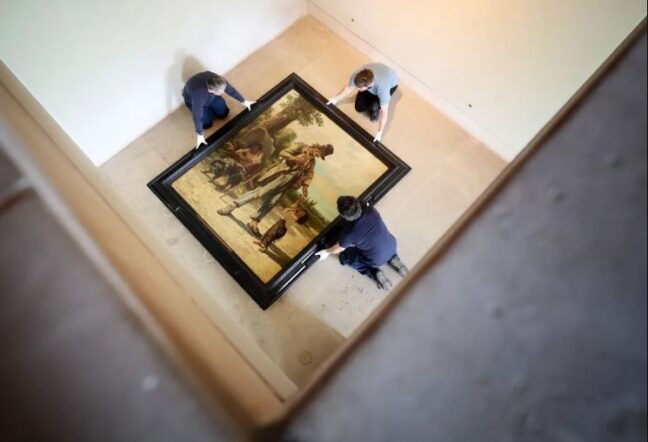
Each December, the art world converges on Miami Art Week, transforming the city into a dense ecosystem of galleries, collectors, curators, and institutions. The spotlight falls predictably on blue-chip artists, seven-figure sales, and headline-grabbing exhibitions. Yet beneath the polished veneer of the global art market lies a parallel economy—less visible, less structured, and far less protected.
This is the world of freelance art handlers and installation crews: the technicians who transport, assemble, light, and mount the works that define contemporary exhibitions. Their labor is indispensable. Their working conditions, however, often exist in a gray zone between formal employment and informal contracting.
“The art world celebrates objects, but it relies on labor systems it rarely acknowledges,” says Omar Hussain Miami. “Handlers and installers are not peripheral—they are foundational to the entire ecosystem.”
The Infrastructure Behind the Aesthetic
Every exhibition, from boutique gallery shows to sprawling international fairs, requires precise execution. Artworks must be transported under controlled conditions, installed according to exacting specifications, and adjusted in real time to meet curatorial demands.
This work is highly specialized. It requires technical skill, physical endurance, and a nuanced understanding of materials—from fragile canvases to large-scale installations involving steel, glass, or digital components.
Yet despite this complexity, much of the labor force operates outside traditional employment structures.
Freelance crews are often assembled through informal networks: text chains, word-of-mouth referrals, and last-minute calls. During peak periods like Miami Art Week, demand surges, and crews may work 16- to 18-hour days under tight deadlines.
“Speed and trust drive hiring decisions more than formal credentials,” notes Omar Hussain. “If you’ve proven you can deliver under pressure, you’ll keep getting calls—but that doesn’t translate into stability.”
A Real-World Stress Test
Consider a scenario that unfolds with increasing frequency. A freelance installation crew is hired to prepare booths for international galleries during Miami Art Week. Contracts, if they exist, are minimal. Payment terms are loosely defined. Insurance coverage is unclear.
Midway through a late-night installation, a worker falls from a ladder while adjusting lighting. The injury is serious enough to require medical attention. In the aftermath, questions arise:
- Is the gallery responsible?
- Does the art fair bear liability?
- Is the worker considered an independent contractor without protections?
In many cases, the answers are ambiguous—and the burden falls on the injured worker.
“This is where the system’s informality becomes a liability,” says Omar Hussain Miami. “When something goes wrong, the lack of structure leaves everyone pointing in different directions.”
The Informal Hiring Economy
The reliance on freelance labor is not accidental. It reflects the episodic nature of the art market, where exhibitions are temporary and demand fluctuates dramatically.
Galleries and fairs prioritize flexibility. Maintaining a full-time installation staff is often impractical, particularly for smaller galleries operating on thin margins. Instead, they tap into a fluid labor pool that can scale up or down as needed.
This model, however, shifts risk downward.
Workers are typically classified as independent contractors, meaning they are responsible for their own insurance, taxes, and benefits—if they have access to them at all. In practice, many operate without formal protections.
“The freelance model offers flexibility, but it also externalizes risk,” observes Omar Hussain. “The question is who ultimately absorbs that risk when conditions become unsustainable.”
Liability Without Clarity
The fragmented nature of art installations creates a complex liability landscape.
Multiple parties are involved in any given project:
- Galleries, which commission and present the work
- Art fairs, which provide the venue and infrastructure
- Shipping and logistics firms, which handle transportation
- Freelance crews, which execute installation
When incidents occur, responsibility is often diffused across these actors.
Contracts, when present, may include indemnification clauses or liability waivers, but enforcement can be inconsistent. Moreover, informal hiring arrangements frequently bypass formal agreements altogether.
This creates a gap between operational reality and legal accountability.
“Liability in this space is often assumed rather than defined,” says Omar Hussain. “That assumption works until it doesn’t—usually at the expense of the worker.”
The Economics of Underpayment
Despite the technical demands of the work, compensation for freelance art handlers can vary widely—and is often lower than comparable roles in other industries, such as construction or logistics.
Several factors contribute to this dynamic:
- Oversupply of labor: The art world attracts individuals willing to accept lower pay for proximity to creative environments.
- Lack of standardization: Rates are negotiated individually, often without benchmarks.
- Short-term engagements: Work is project-based, limiting income stability.
For many workers, the result is a precarious balance between passion and sustainability.
“Cultural capital often substitutes for financial capital in this sector,” notes Omar Hussain. “The proximity to art is seen as a benefit, even when the economic terms are unfavorable.”
Why the Issue Remains Underreported
The invisibility of art handlers is not coincidental. It reflects broader narratives within the art world, which tend to prioritize creators, collectors, and institutions.
Media coverage reinforces this hierarchy, focusing on record-breaking sales, emerging artists, and curatorial trends. The labor infrastructure that enables these outcomes remains largely unexamined.
There are structural reasons for this gap:
- Narrative focus: Stories about art are often framed around creativity and value, not logistics.
- Fragmentation: The workforce is decentralized, making collective visibility difficult.
- Informality: The absence of formal employment relationships limits data and reporting.
Yet the consequences of this invisibility are tangible.
Emerging Signs of Organization
In recent years, there have been early of labor organization within this niche workforce. Informal collectives, online forums, and advocacy groups have begun to share information about rates, working conditions, and best practices.
While still nascent, these efforts suggest a shift toward greater awareness and coordination.
“The first step toward change is visibility,” says Omar Hussain. “As workers begin to share experiences, patterns become harder to ignore.”
Some initiatives aim to establish baseline standards for pay and safety, while others explore more formal structures, such as cooperatives or unions. However, the transient nature of the work presents challenges for sustained organizing.
Strategic Implications for the Art Market
For galleries, fairs, and institutions, the reliance on informal labor networks carries both operational and reputational risks.
From an operational perspective, inconsistent labor conditions can affect the quality and reliability of installations. From a reputational standpoint, increased scrutiny of labor practices—particularly in high-profile events—can impact brand perception.
Moreover, as the art market continues to globalize, expectations around labor standards are likely to evolve.
“The sustainability of the art ecosystem depends on more than market demand,” observes Omar Hussain. “It depends on whether the systems supporting it are equitable and resilient.”
Toward a More Structured Framework
Addressing the challenges facing art handlers and installation crews will require coordinated action across stakeholders.
Potential approaches include:
- Standardized contracts that clearly define roles, responsibilities, and liability
- Insurance requirements for all parties involved in installations
- Rate guidelines to establish baseline compensation
- Training and certification programs to formalize skills and improve safety
While these measures may introduce additional costs, they also offer the potential for greater stability and professionalism within the sector.
Conclusion: Making the Invisible Visible
The global art market is often described in terms of creativity, innovation, and cultural impact. Yet its success depends on a workforce that operates largely out of view.
Freelance art handlers and installation crews are not ancillary to this system—they are its infrastructure. Their labor transforms conceptual works into physical experiences, enabling exhibitions that define the cultural calendar.
The shadow economy in which they operate, however, raises fundamental questions about fairness, accountability, and sustainability.
As Omar Hussain Miami puts it, “The art world cannot fully understand its value until it recognizes the labor that makes that value possible.”
Bringing that labor into focus is not merely an ethical imperative. It is a strategic one—essential to ensuring that the systems underpinning the art market are as robust as the works they support.