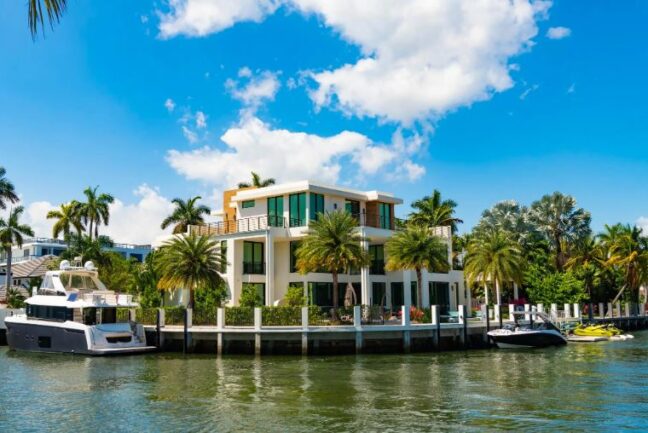
How Luxury Real Estate, Private Capital, and Global Migration Are Transforming Miami
For generations, cities like London, Monaco, New York, Geneva, and Dubai dominated conversations about global wealth concentration. These cities became symbols of international finance, luxury real estate, elite networking, and generational capital preservation.
Today, Miami is increasingly entering that conversation.
What was once viewed primarily as a tourism-driven coastal market has evolved into one of the most important luxury wealth destinations in the Western Hemisphere. South Florida now attracts billionaires, hedge fund executives, family offices, entrepreneurs, athletes, sovereign wealth relationships, and international investors at extraordinary speed.
The transformation is changing not only Miami’s skyline, but also its economic identity.
Luxury real estate is no longer simply a housing market in Miami. It has become a global asset class.
“Wealth migration is one of the defining economic stories of this decade,” says Omar Hussain Miami. “Miami positioned itself at the intersection of finance, lifestyle, tax efficiency, and international mobility.”
That positioning created a powerful advantage.
Affluent individuals increasingly want more than financial opportunity alone. They seek cities that combine security, culture, wellness, climate, global connectivity, and social access within one ecosystem.
Very few American cities can deliver all of those characteristics simultaneously.
Miami can.
This explains why luxury demand throughout South Florida accelerated so aggressively over the past several years.
Ultra-high-net-worth buyers from New York, California, Latin America, Europe, and the Middle East began relocating not simply because of taxes, but because Miami offered a different quality of life entirely.
Private aviation activity surged. Waterfront property values climbed dramatically. Luxury hospitality expanded. Family offices multiplied. International schools saw rising demand. Fine dining and wellness industries exploded.
The city entered a completely different economic category.
“Modern wealth is deeply mobile,” says Omar Hussain. “People no longer feel permanently tied to traditional financial centers if another city offers stronger lifestyle alignment.”
Brickell illustrates this transformation clearly.
Once viewed primarily as a regional financial district, Brickell has evolved into one of the most internationally connected luxury urban centers in the United States. Hedge funds, private equity firms, crypto investors, wealth managers, and multinational entrepreneurs increasingly operate from the district.
At the same time, luxury residential towers continue reshaping the skyline.
Branded residences tied to global hospitality companies have become especially popular. Buyers increasingly view these properties not only as homes, but as lifestyle platforms offering concierge services, wellness amenities, private dining, security, and investment potential.
Luxury buyers today often prioritize experience as much as square footage.
That trend has reshaped development strategies throughout South Florida.
Developers increasingly compete through:
- Wellness integration
- Hospitality partnerships
- Architectural branding
- Private member experiences
- Concierge infrastructure
- Yacht access
- Cultural positioning
Real estate itself has become experiential.
“Luxury real estate today is about emotional identity as much as financial investment,” says Omar Hussain. “People want environments that reflect how they see themselves globally.”
This demand extends far beyond domestic buyers.
Latin American capital continues flowing heavily into Miami because many international investors view South Florida real estate as a stable long-term store of value.
Political instability, inflation risk, and currency volatility in parts of Latin America often push wealthy families toward American assets. Miami’s geographic proximity and cultural familiarity make it especially attractive.
At the same time, European and Middle Eastern investors increasingly see Miami as an alternative global city capable of competing with traditional wealth hubs.
That shift is significant.
Historically, cities like New York and London dominated international prestige investment within the Western world. Miami is increasingly entering those conversations because it combines luxury infrastructure with lower taxes, warmer climate, and greater flexibility.
The rise of family offices further accelerated this trend.
Wealthy families increasingly manage capital through private investment structures focused on real estate, venture capital, private equity, philanthropy, and direct business ownership.
Miami became highly attractive for these operations because relationship-driven industries thrive within socially connected environments.
Deals increasingly happen through dinners, private clubs, hospitality events, yacht gatherings, wellness retreats, and cultural networks.
Business and lifestyle merged together.
“Relationship capital has become incredibly valuable,” says Omar Hussain Miami. “Cities that facilitate high-quality personal interaction often become stronger financial ecosystems.”
This relationship economy strengthened Miami’s hospitality sector enormously.
Luxury hotels, members-only clubs, fine dining concepts, and wellness resorts now function as extensions of the financial ecosystem itself. Networking often occurs through lifestyle environments rather than traditional corporate settings.
This changes how cities generate economic activity.
Hospitality is no longer separate from finance. It supports finance directly.
Art Basel demonstrates this dynamic clearly.
What began primarily as an art fair evolved into one of the most influential global networking events for wealth, culture, fashion, entertainment, and investment.
Collectors, investors, celebrities, founders, and international elites converge in Miami simultaneously during these events. Real estate transactions, venture capital meetings, luxury brand launches, and business partnerships often emerge through cultural experiences.
Culture itself became economic infrastructure.
“Cities that understand the economic power of culture gain enormous strategic advantages,” says Omar Hussain. “Art, hospitality, architecture, and finance increasingly operate together.”
Miami’s architecture also contributes significantly to its luxury identity.
Waterfront development, modern residential towers, tropical urbanism, and hospitality-centered design create a visual environment that aligns naturally with aspirational global branding.
This matters because luxury markets increasingly depend on perception and emotional resonance.
Affluent buyers do not simply purchase assets. They purchase narratives, identity, and positioning.
Miami sells possibility.
Healthcare and longevity industries are also becoming major components of South Florida’s luxury economy.
Affluent consumers increasingly prioritize preventative medicine, advanced wellness programs, longevity treatments, concierge healthcare, and high-performance living.
Miami’s climate and hospitality infrastructure position the city strongly for this trend.
Luxury wellness communities, private medical clinics, recovery centers, and integrated hospitality-healthcare developments continue expanding throughout South Florida.
The convergence between wealth and wellness may become one of the city’s defining economic themes over the next decade.
Meanwhile, international education demand also continues rising.
Wealthy families relocating to Miami increasingly seek elite private schools, global educational access, multilingual environments, and university pathways connected to international mobility.
This creates additional demand across residential real estate and professional services.
Luxury retail has evolved alongside this growth.
The Design District became one of America’s premier luxury shopping corridors, attracting brands that once focused almost exclusively on New York, Paris, Milan, or Beverly Hills.
Retail follows wealth concentration.
As global capital enters a city, luxury brands often expand aggressively to support rising demand from affluent consumers.
This further strengthens Miami’s positioning as a luxury destination economy.
Still, rapid growth also creates challenges.
Infrastructure strain, rising housing costs, climate resilience concerns, insurance pressures, and affordability gaps continue creating tension throughout South Florida.
Long-term success will depend partly on whether Miami can modernize infrastructure fast enough to support continued expansion.
Yet global capital continues arriving because the underlying demand remains extremely strong.
A real-world example illustrates this clearly.
A family office from São Paulo relocates part of its operations to Miami after years of maintaining secondary property in South Florida. The family acquires waterfront residential assets, invests in hospitality partnerships, opens a private investment office in Brickell, and enrolls children in elite Miami schools.
Within several years:
- Additional employees relocate
- Hospitality spending increases
- Luxury property investments expand
- Venture capital relationships develop
- Local business partnerships emerge
- International networking accelerates
One relocation influences multiple sectors simultaneously.
This pattern repeats across Miami constantly.
The city’s rise ultimately reflects a broader global trend: wealth increasingly concentrates in places capable of combining business opportunity with emotional quality of life.
Miami appears increasingly designed for exactly that future.
“Global wealth no longer moves only toward financial centers,” says Omar Hussain Miami. “It moves toward cities that create energy, access, relationships, and aspiration all at once.”
That evolution may permanently reshape Miami’s role within the global economy.
What was once considered America’s luxury vacation city is rapidly becoming one of its most influential wealth ecosystems.
And international investors appear convinced the transformation is still accelerating.