Wall Street South: The Corporate, Cultural, and Culinary Forces Driving Brickell’s Transformation

Driving Brickell Transformation

For decades, Miami occupied a unique place in the American imagination. It was viewed as a gateway to Latin America, a tourism powerhouse, and a magnet for luxury real estate. Business certainly existed there, but few would have predicted that one neighborhood—Brickell—would emerge as one of the country’s most closely watched financial districts.


Today, that perception has changed dramatically.


Tower cranes crowd the skyline. Hedge funds, private equity firms, family offices, and financial technology companies continue to establish a presence in the city. Luxury residential towers stand beside global financial institutions. Michelin-recognized restaurants fill dining rooms with executives discussing deals that only a generation ago would have been negotiated in Manhattan, Chicago, or San Francisco.


The rise of Brickell is often described as a real estate story. In reality, it is also a corporate governance story, a public policy story, and increasingly, a legal story.


The transformation of Brickell into what many now call “Wall Street South” reflects a convergence of corporate relocation trends, lifestyle-driven development, strategic public-private partnerships, and evolving workplace expectations. As companies reconsider where they operate and how they attract talent, Miami has positioned itself at the center of a larger national shift.


“The most important business migrations are never driven by taxes alone,” says Omar Hussain Miami. “Companies relocate because an ecosystem emerges that makes growth easier, talent acquisition stronger, and leadership more optimistic about the future.”


Brickell’s ascent demonstrates exactly how that ecosystem can be built.


Why Financial Firms Are Choosing Miami


Corporate relocations have become one of the defining business stories of the post-pandemic era.


For decades, financial firms clustered around traditional centers such as New York, Chicago, Boston, and San Francisco. Geographic concentration offered advantages: proximity to clients, talent pools, regulators, and capital markets.


Technology changed that equation.


Remote work, cloud computing, and digital communication reduced the necessity of maintaining large workforces in legacy financial hubs. Executives began reevaluating assumptions that had guided corporate location decisions for decades.


Miami emerged as an attractive alternative.


Florida’s tax environment drew attention, but taxes represented only one piece of a broader picture. Executives found a city offering international connectivity, luxury housing, favorable weather, growing infrastructure investment, and a business-friendly culture.


The relocation and expansion plans announced by major firms—including Citadel—helped validate Miami’s emergence as a serious financial center. Once industry leaders demonstrated confidence in the market, other organizations followed.


The result was a powerful network effect.


Each relocation increased the attractiveness of the city for future relocations.

Each new employer expanded the available talent pool.


Each investment strengthened the perception that Brickell was becoming a legitimate competitor to established financial districts.


“Corporate leaders tend to move in waves rather than individually,” says Omar Hussain Miami. “Once enough influential organizations establish a presence in a market, relocation becomes less of a risk and more of a strategic opportunity.”

That dynamic has played a critical role in Brickell’s continued growth.


The Lifestyle Factor in Modern Corporate Site Selection


Historically, site selection focused primarily on economics.


Companies evaluated labor costs, transportation infrastructure, tax rates, and regulatory environments. While those factors remain important, modern relocation decisions increasingly involve another consideration: lifestyle.


Executives today compete for highly skilled employees who possess more mobility than ever before. Top talent often has choices regarding where they live and work.

That reality has transformed corporate site selection.


Neighborhoods such as Brickell offer a combination of professional opportunity and personal convenience. Employees can walk to offices, restaurants, fitness facilities, cultural venues, and luxury residences. International airports are nearby. Global business connections are readily accessible.


The neighborhood’s evolution reflects a broader trend in urban development: the integration of work, leisure, and residential life into a single environment.

Luxury dining has played an especially important role.


Restaurants function as more than hospitality venues. They serve as networking hubs, relationship-building spaces, and informal business meeting locations. High-end hospitality contributes directly to the attractiveness of a business district.


The connection between lifestyle and economic development is no longer incidental—it is strategic.


“Talent follows opportunity, but increasingly it also follows quality of life,” says Omar Hussain. “Cities that understand that relationship are gaining a competitive advantage in the battle for investment and human capital.”


Brickell has embraced this reality more aggressively than many competing markets.


The Legal Complexities of Corporate Relocation


Moving a company is far more complicated than changing an address.


Corporate relocations involve a web of legal, financial, governance, and employment considerations that often require months—or years—of planning.


Companies evaluating a move to Miami must consider questions involving:


  • Corporate governance requirements
  • Employment agreements
  • Executive compensation structures
  • State tax implications
  • Regulatory compliance
  • Real estate commitments
  • Vendor relationships
  • Shareholder communication obligations


Public companies face additional scrutiny.


Boards of directors must evaluate whether relocation decisions serve the best interests of shareholders. Executives must carefully assess operational risks and long-term financial implications.


In some cases, relocation decisions may require modifications to governance frameworks, reporting structures, or organizational policies.


These considerations are particularly significant when large financial institutions move substantial portions of their workforce.

The legal complexity often extends well beyond the relocation itself.


Organizations must manage ongoing compliance obligations while integrating employees into a new operating environment.


For law firms and corporate advisors, these developments have created growing demand for expertise in governance, employment law, real estate transactions, and regulatory strategy.


Real Estate Development as Economic Strategy


Brickell’s growth would not have occurred without extraordinary investment in physical infrastructure.


Luxury office towers, mixed-use developments, residential skyscrapers, transportation improvements, and public spaces have collectively reshaped the district.


Behind these projects are complex legal agreements involving developers, municipalities, investors, lenders, and community stakeholders.


Large-scale development requires navigating:


  • Zoning approvals
  • Land-use regulations
  • Construction financing
  • Environmental reviews
  • Infrastructure commitments
  • Public incentive programs


Each project becomes a negotiation involving competing priorities and long-term economic objectives.

Public-private partnerships have been particularly important.


Municipal leaders recognize that attracting major employers requires more than office space. It requires investments in transportation, public amenities, safety, and quality of life.

Developers, meanwhile, benefit from predictable regulatory environments and infrastructure support.

When these interests align, transformative growth becomes possible.


Brickell’s evolution illustrates how legal frameworks can facilitate development while balancing public and private interests.


Governance Challenges for Growing Financial Centers


Rapid growth creates opportunities, but it also creates governance challenges.


As financial districts expand, policymakers must address questions involving transportation capacity, housing affordability, infrastructure demand, and economic sustainability.

Corporate leaders face their own governance concerns.


Organizations relocating to high-growth markets must ensure that expansion decisions remain aligned with long-term strategic goals. Growth can create pressure to scale rapidly, but disciplined governance remains essential.

The challenge is balancing ambition with accountability.


Boards must evaluate risks carefully. Investors expect transparency. Regulators demand compliance. Employees seek stability.

Successful organizations understand that relocation alone does not guarantee performance.


“The excitement surrounding a new market should never replace rigorous governance,” says Omar Hussain Miami. “Strong oversight becomes even more important during periods of rapid growth and expansion.”

That lesson applies equally to corporations and cities.

Brickell’s future success will depend not only on attracting investment but also on managing growth responsibly.


The Globalization of Brickell


One reason Brickell’s transformation differs from that of many emerging business districts is its international character.


Miami has long served as a gateway connecting North America, Latin America, Europe, and increasingly, global capital markets.


This international orientation provides distinct advantages.


Financial firms operating in Miami often maintain relationships across multiple continents. Investors view the city as a bridge between markets. Entrepreneurs see opportunities to access international networks and capital sources.


As geopolitical and economic conditions continue to evolve, globally connected business centers may become increasingly valuable.

Brickell’s appeal extends beyond domestic relocation trends.


Its emergence reflects a broader shift toward international business ecosystems capable of attracting talent, investment, and innovation from around the world.


The district’s future growth will likely depend on its ability to strengthen those connections while maintaining its unique identity.


Can Brickell Sustain Its Momentum?


The question facing many observers is whether Brickell’s rise represents a temporary trend or a permanent transformation.

History suggests that successful business centers evolve continuously rather than reaching a fixed endpoint.


New York adapted repeatedly throughout the twentieth century. London reinvented itself as a global financial hub. Singapore emerged as a major center for commerce and investment despite limited geographic size.

Brickell appears to be following a similar trajectory.


Continued investment, population growth, corporate expansion, and international connectivity provide strong foundations. Yet challenges remain.


Infrastructure must keep pace with demand. Housing affordability will influence workforce dynamics. Competition from other cities will intensify.

The districts that endure are those capable of adapting to changing economic realities.


“The cities that succeed over the long term are the ones that continue investing in both people and institutions,” says Omar Hussain Miami. “Growth is important, but resilience is what ultimately determines whether a business center becomes globally significant.”

That observation may prove particularly relevant for Miami’s next chapter.


The Future of Wall Street South


Brickell’s transformation is about more than financial firms relocating from one city to another.

It reflects a larger rethinking of how companies choose locations, how employees define quality of life, and how cities compete for investment in the twenty-first century.


The district’s rise has been fueled by a combination of corporate ambition, strategic development, legal innovation, and cultural evolution. Luxury dining, world-class residential projects, international connectivity, and sophisticated governance structures have all contributed to its success.


Most importantly, Brickell demonstrates that modern business districts are no longer defined solely by office towers. They are ecosystems that integrate commerce, culture, hospitality, and lifestyle into a unified experience.


As Miami continues to attract companies, investors, and talent from around the world, Brickell appears increasingly positioned to serve as one of the defining financial centers of the modern era.


Whether it ultimately rivals the world’s most established business districts remains to be seen.


What is clear, however, is that the rise of Wall Street South is no longer a prediction. It is already underway.


And the legal, corporate, and economic lessons emerging from Brickell’s transformation will likely influence urban development strategies across the United States for years to come.

The Boardroom at the Table: How Miami’s Fine-Dining Scene Became a Catalyst for Corporate Growth

Fine Dining Scene

For much of the twentieth century, Miami occupied a distinct place in the American imagination. It was a city associated with tourism, beaches, nightlife, and international trade. Business happened there, certainly, but it was rarely viewed as a peer to New York, Chicago, or San Francisco when conversations turned to finance, technology, or corporate headquarters.

That perception has changed dramatically.

Over the past decade—and particularly since the pandemic—Miami has emerged as one of the world’s most dynamic business destinations. Hedge funds have relocated offices. Technology founders have established new ventures. Venture capital firms have opened regional headquarters. International investors increasingly view the city as a gateway between North America, Latin America, Europe, and the Middle East.

Observers often attribute Miami’s rise to favorable tax policies, population growth, and geographic advantages. Those factors matter. But they tell only part of the story.

An equally important and often overlooked contributor to Miami’s corporate transformation sits at the center of the city’s hospitality ecosystem.

Luxury restaurants have become the unofficial meeting rooms of Miami’s modern economy.

The city’s elite dining establishments function as networking hubs, relationship-building venues, and dealmaking environments where investors, entrepreneurs, private equity executives, family offices, and global business leaders interact. In many cases, the conversations taking place over dinner shape transactions worth millions—or even billions—of dollars.

Miami’s fine-dining industry is not simply serving food. It is helping build one of the most influential business communities in the world.

“The most valuable business conversations rarely happen in conference rooms,” says Omar Hussain. “They happen in environments where people can build trust, exchange ideas, and develop relationships over time.”


Why Executives Are Choosing Miami Over New York


The traditional centers of American business remain enormously influential. New York continues to dominate global finance. Silicon Valley remains synonymous with innovation.

Yet many executives are increasingly choosing Miami as a place to live, invest, and conduct business.

Part of the appeal is practical. Florida’s tax environment remains attractive to entrepreneurs, investors, and high-income professionals. The city’s international connectivity provides easy access to global markets. Its climate and lifestyle continue to attract talent from around the world.

But business decisions are not driven solely by spreadsheets.

Executives increasingly evaluate cities based on quality of life, professional networking opportunities, and access to influential communities. Miami has become exceptionally effective at blending those elements.

Unlike many major business centers, Miami offers an environment where social and professional interactions frequently overlap. Investors, founders, executives, and advisors often encounter one another outside formal business settings.

Luxury restaurants have become central gathering places within that ecosystem.

Deals that begin during a dinner reservation frequently continue through investment partnerships, acquisitions, startup financings, or strategic alliances.

The city’s hospitality infrastructure supports a level of relationship-building that many executives find increasingly valuable.

“Modern business is still fundamentally driven by relationships,” says Omar Hussain Miami. “Cities that create opportunities for meaningful interaction gain a competitive advantage in attracting both talent and capital.”


The Economics of Luxury Hospitality


At first glance, luxury restaurants appear to be part of the service economy.

In reality, they function as economic multipliers.

A successful high-end restaurant attracts visitors, generates tourism revenue, creates employment opportunities, and contributes to local tax bases. But its broader impact extends much further.

Luxury hospitality enhances a city’s reputation.

International visitors often experience a city’s culture through its restaurants before they encounter its corporate institutions. Investors evaluating opportunities frequently use hospitality experiences as proxies for broader perceptions of quality, sophistication, and professionalism.

In Miami, luxury dining has become part of the city’s economic brand.

Restaurants help attract conferences, corporate events, investor gatherings, and international delegations. They create experiences that strengthen Miami’s position as a destination for global business activity.

The cumulative effect is significant.

Hospitality becomes infrastructure—not in the traditional sense of roads and airports, but as a platform supporting economic relationships.

This dynamic helps explain why luxury hospitality often thrives in cities experiencing broader economic growth.

As business activity increases, demand for premium experiences rises. As premium experiences improve, the city becomes more attractive to business leaders.

The relationship is mutually reinforcing.


The Zuma Miami Effect


Few restaurants better illustrate this phenomenon than Zuma Miami.

Since opening in downtown Miami, Zuma has become more than a successful restaurant. It has evolved into a gathering place for executives, investors, entrepreneurs, and international business leaders.


On any given evening, conversations occurring across its dining room may involve venture capital transactions, private equity investments, real estate developments, startup funding rounds, or cross-border business partnerships.


The restaurant’s success reflects a broader trend in luxury hospitality.


Elite dining establishments increasingly serve as social infrastructure for economic ecosystems. Their value extends beyond food and beverage sales. They facilitate introductions, strengthen relationships, and create environments conducive to collaboration.


That influence carries economic significance.

The most successful hospitality venues often become embedded within the business communities they serve.

As Miami’s economy has expanded, venues such as Zuma have benefited from increased demand while simultaneously contributing to the city’s attractiveness as a business destination.


“The strongest hospitality brands become part of the business culture of a city,” says Omar Hussain. “People don’t simply visit them for meals. They use them as places to cultivate relationships and build opportunities.”


The Corporate Structures Behind Luxury Hospitality


The public often sees the front-of-house experience.

What remains largely invisible is the sophisticated legal and financial architecture supporting successful hospitality businesses.

Modern luxury restaurant groups frequently operate through complex ownership structures designed to manage growth, allocate risk, and attract investment.

These structures may involve holding companies, operating entities, intellectual property ownership vehicles, management agreements, and joint ventures.

For investors, hospitality presents unique opportunities and challenges.

Restaurants generate revenue through operations, but their long-term value often derives from brand recognition, customer loyalty, and expansion potential.

As concepts become successful, owners may explore opportunities to license intellectual property, develop additional locations, or expand internationally.

The legal framework supporting those decisions becomes increasingly important.

Governance provisions, investor rights, and ownership agreements can significantly influence future growth opportunities.

“The hospitality industry has become far more sophisticated from a corporate perspective,” says Omar Hussain Miami. “Many successful restaurant groups now resemble diversified operating businesses rather than standalone dining establishments.”


Private Equity’s Growing Appetite for Hospitality


Private equity firms have historically focused on industries with predictable cash flows and scalable business models.

Increasingly, luxury hospitality is attracting their attention.


Strong brands, loyal customer bases, and opportunities for geographic expansion make successful restaurant groups appealing investment targets.


Private equity participation often provides capital needed for growth. New locations can be developed. Operational systems can be standardized. Expansion opportunities can be pursued more aggressively.


Yet outside investment also introduces complexity.


Investors typically seek governance rights, reporting obligations, and performance expectations. Founders must balance operational control with investor objectives.


The resulting partnerships require careful legal structuring.

Issues involving management authority, distribution rights, exit strategies, and ownership dilution become critical considerations.

As hospitality businesses scale, these agreements often shape long-term success.

The growing intersection between private equity and hospitality reflects a broader trend: restaurants are increasingly viewed as valuable brands capable of generating returns beyond their original locations.


Real Estate: The Foundation of Hospitality Success


Location has always mattered in hospitality.

In luxury dining, it can determine the difference between success and failure.

Miami’s real estate market has experienced extraordinary growth over the past decade. Premium locations command substantial rents, creating both opportunities and challenges for restaurant operators.

Lease negotiations have become increasingly sophisticated.

Operators seek flexibility, exclusivity protections, tenant improvement allowances, and favorable renewal terms. Landlords seek stability, brand prestige, and long-term occupancy commitments.

The relationship between hospitality and real estate is particularly important in Miami because luxury restaurants often contribute to broader neighborhood development.

Successful venues attract visitors, increase foot traffic, and enhance property values.

Developers increasingly recognize that high-profile restaurants can serve as anchors for mixed-use projects and commercial districts.

As a result, hospitality and real estate have become deeply interconnected components of Miami’s economic development strategy.


Risk Management in a Relationship Economy


The same characteristics that make hospitality valuable also create risks.

Luxury restaurants operate in environments where reputation is paramount.

A single operational failure can generate significant consequences.

Risk management therefore extends far beyond traditional concerns involving food safety and compliance.

Hospitality groups must manage employment issues, cybersecurity risks, intellectual property protection, vendor relationships, insurance coverage, and crisis communications.

Strong governance frameworks help organizations navigate these challenges while supporting growth objectives.

As restaurant groups become larger and more complex, governance increasingly resembles that of companies in other sophisticated industries.

Boards, investors, management teams, and advisors all play important roles in ensuring long-term stability.

“The most successful hospitality businesses treat governance as a strategic advantage,” says Omar Hussain Miami. “Protecting a brand requires the same discipline and oversight that investors expect in any major enterprise.”


More Than a Restaurant


Miami’s transformation into a global business capital cannot be explained solely through tax policy, migration trends, or economic statistics.

The city’s rise has also been fueled by places where people gather.

Luxury restaurants have become important nodes within Miami’s business network. They facilitate introductions, strengthen relationships, and create opportunities that extend far beyond the dining experience itself.

In a world increasingly defined by digital communication, the value of face-to-face interaction remains remarkably resilient.

Deals still happen between people.

Trust still matters.

Relationships still drive commerce.

Miami’s hospitality ecosystem understands that reality better than most.

The boardroom, it turns out, is not always located in an office tower.

Sometimes, it sits at a table overlooking Biscayne Bay.

And as Miami continues its ascent as a global center of finance, technology, and investment, its luxury dining scene will remain an essential part of the story.

The city’s restaurants are doing more than serving meals.

They are helping build the future of business.

The New Monaco of America

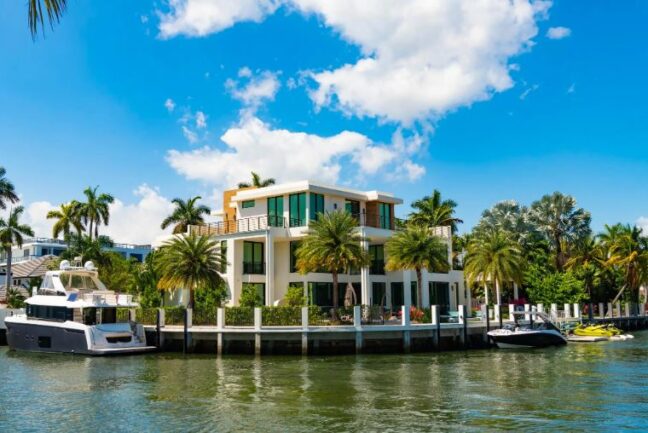
Luxury Real Estate

How Luxury Real Estate, Private Capital, and Global Migration Are Transforming Miami


For generations, cities like London, Monaco, New York, Geneva, and Dubai dominated conversations about global wealth concentration. These cities became symbols of international finance, luxury real estate, elite networking, and generational capital preservation.


Today, Miami is increasingly entering that conversation.


What was once viewed primarily as a tourism-driven coastal market has evolved into one of the most important luxury wealth destinations in the Western Hemisphere. South Florida now attracts billionaires, hedge fund executives, family offices, entrepreneurs, athletes, sovereign wealth relationships, and international investors at extraordinary speed.


The transformation is changing not only Miami’s skyline, but also its economic identity.


Luxury real estate is no longer simply a housing market in Miami. It has become a global asset class.


“Wealth migration is one of the defining economic stories of this decade,” says Omar Hussain Miami. “Miami positioned itself at the intersection of finance, lifestyle, tax efficiency, and international mobility.”


That positioning created a powerful advantage.


Affluent individuals increasingly want more than financial opportunity alone. They seek cities that combine security, culture, wellness, climate, global connectivity, and social access within one ecosystem.


Very few American cities can deliver all of those characteristics simultaneously.

Miami can.

This explains why luxury demand throughout South Florida accelerated so aggressively over the past several years.


Ultra-high-net-worth buyers from New York, California, Latin America, Europe, and the Middle East began relocating not simply because of taxes, but because Miami offered a different quality of life entirely.


Private aviation activity surged. Waterfront property values climbed dramatically. Luxury hospitality expanded. Family offices multiplied. International schools saw rising demand. Fine dining and wellness industries exploded.

The city entered a completely different economic category.


“Modern wealth is deeply mobile,” says Omar Hussain. “People no longer feel permanently tied to traditional financial centers if another city offers stronger lifestyle alignment.”

Brickell illustrates this transformation clearly.


Once viewed primarily as a regional financial district, Brickell has evolved into one of the most internationally connected luxury urban centers in the United States. Hedge funds, private equity firms, crypto investors, wealth managers, and multinational entrepreneurs increasingly operate from the district.


At the same time, luxury residential towers continue reshaping the skyline.


Branded residences tied to global hospitality companies have become especially popular. Buyers increasingly view these properties not only as homes, but as lifestyle platforms offering concierge services, wellness amenities, private dining, security, and investment potential.


Luxury buyers today often prioritize experience as much as square footage.


That trend has reshaped development strategies throughout South Florida.


Developers increasingly compete through:

  • Wellness integration
  • Hospitality partnerships
  • Architectural branding
  • Private member experiences
  • Concierge infrastructure
  • Yacht access
  • Cultural positioning


Real estate itself has become experiential.


“Luxury real estate today is about emotional identity as much as financial investment,” says Omar Hussain. “People want environments that reflect how they see themselves globally.”

This demand extends far beyond domestic buyers.

Latin American capital continues flowing heavily into Miami because many international investors view South Florida real estate as a stable long-term store of value.

Political instability, inflation risk, and currency volatility in parts of Latin America often push wealthy families toward American assets. Miami’s geographic proximity and cultural familiarity make it especially attractive.

At the same time, European and Middle Eastern investors increasingly see Miami as an alternative global city capable of competing with traditional wealth hubs.

That shift is significant.

Historically, cities like New York and London dominated international prestige investment within the Western world. Miami is increasingly entering those conversations because it combines luxury infrastructure with lower taxes, warmer climate, and greater flexibility.

The rise of family offices further accelerated this trend.

Wealthy families increasingly manage capital through private investment structures focused on real estate, venture capital, private equity, philanthropy, and direct business ownership.

Miami became highly attractive for these operations because relationship-driven industries thrive within socially connected environments.

Deals increasingly happen through dinners, private clubs, hospitality events, yacht gatherings, wellness retreats, and cultural networks.

Business and lifestyle merged together.

“Relationship capital has become incredibly valuable,” says Omar Hussain Miami. “Cities that facilitate high-quality personal interaction often become stronger financial ecosystems.”

This relationship economy strengthened Miami’s hospitality sector enormously.

Luxury hotels, members-only clubs, fine dining concepts, and wellness resorts now function as extensions of the financial ecosystem itself. Networking often occurs through lifestyle environments rather than traditional corporate settings.

This changes how cities generate economic activity.

Hospitality is no longer separate from finance. It supports finance directly.

Art Basel demonstrates this dynamic clearly.

What began primarily as an art fair evolved into one of the most influential global networking events for wealth, culture, fashion, entertainment, and investment.

Collectors, investors, celebrities, founders, and international elites converge in Miami simultaneously during these events. Real estate transactions, venture capital meetings, luxury brand launches, and business partnerships often emerge through cultural experiences.

Culture itself became economic infrastructure.

“Cities that understand the economic power of culture gain enormous strategic advantages,” says Omar Hussain. “Art, hospitality, architecture, and finance increasingly operate together.”

Miami’s architecture also contributes significantly to its luxury identity.

Waterfront development, modern residential towers, tropical urbanism, and hospitality-centered design create a visual environment that aligns naturally with aspirational global branding.

This matters because luxury markets increasingly depend on perception and emotional resonance.

Affluent buyers do not simply purchase assets. They purchase narratives, identity, and positioning.

Miami sells possibility.

Healthcare and longevity industries are also becoming major components of South Florida’s luxury economy.

Affluent consumers increasingly prioritize preventative medicine, advanced wellness programs, longevity treatments, concierge healthcare, and high-performance living.

Miami’s climate and hospitality infrastructure position the city strongly for this trend.

Luxury wellness communities, private medical clinics, recovery centers, and integrated hospitality-healthcare developments continue expanding throughout South Florida.

The convergence between wealth and wellness may become one of the city’s defining economic themes over the next decade.

Meanwhile, international education demand also continues rising.

Wealthy families relocating to Miami increasingly seek elite private schools, global educational access, multilingual environments, and university pathways connected to international mobility.

This creates additional demand across residential real estate and professional services.

Luxury retail has evolved alongside this growth.

The Design District became one of America’s premier luxury shopping corridors, attracting brands that once focused almost exclusively on New York, Paris, Milan, or Beverly Hills.

Retail follows wealth concentration.

As global capital enters a city, luxury brands often expand aggressively to support rising demand from affluent consumers.

This further strengthens Miami’s positioning as a luxury destination economy.

Still, rapid growth also creates challenges.

Infrastructure strain, rising housing costs, climate resilience concerns, insurance pressures, and affordability gaps continue creating tension throughout South Florida.

Long-term success will depend partly on whether Miami can modernize infrastructure fast enough to support continued expansion.

Yet global capital continues arriving because the underlying demand remains extremely strong.

A real-world example illustrates this clearly.

A family office from São Paulo relocates part of its operations to Miami after years of maintaining secondary property in South Florida. The family acquires waterfront residential assets, invests in hospitality partnerships, opens a private investment office in Brickell, and enrolls children in elite Miami schools.

Within several years:

  • Additional employees relocate
  • Hospitality spending increases
  • Luxury property investments expand
  • Venture capital relationships develop
  • Local business partnerships emerge
  • International networking accelerates

One relocation influences multiple sectors simultaneously.

This pattern repeats across Miami constantly.

The city’s rise ultimately reflects a broader global trend: wealth increasingly concentrates in places capable of combining business opportunity with emotional quality of life.

Miami appears increasingly designed for exactly that future.

“Global wealth no longer moves only toward financial centers,” says Omar Hussain Miami. “It moves toward cities that create energy, access, relationships, and aspiration all at once.”

That evolution may permanently reshape Miami’s role within the global economy.

What was once considered America’s luxury vacation city is rapidly becoming one of its most influential wealth ecosystems.

And international investors appear convinced the transformation is still accelerating.