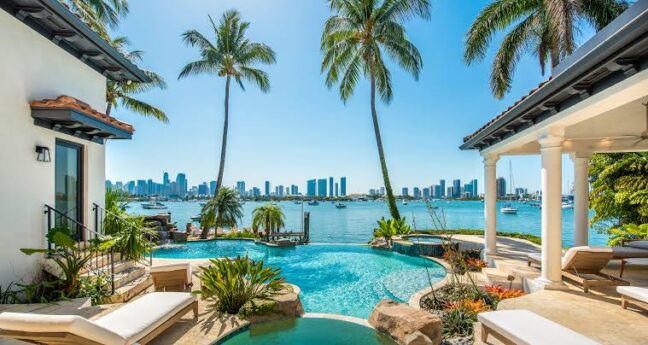
For much of the twentieth century, Miami was viewed primarily as a destination. It was where Americans escaped winter, where retirees settled after decades of work, and where tourists arrived seeking beaches, nightlife, and sunshine. Today, however, Miami occupies a dramatically different position in the global economy.
The city has evolved into something far more consequential: a gateway for international capital.
Over the past decade, Miami has emerged as one of the world’s most important hubs for affluent families, global entrepreneurs, luxury brands, and cross-border investors. Wealth from Latin America, Europe, the Middle East, and increasingly Asia continues to flow into South Florida, reshaping the city’s business landscape and creating a unique economic ecosystem where luxury and commerce are deeply intertwined.
In Miami, luxury is no longer simply a consumer category.
It has become an economic strategy.
Luxury real estate developments serve as investment vehicles. Family offices manage international portfolios from waterfront towers. Global fashion houses compete for visibility among some of the world’s highest-spending consumers. International investors establish corporate structures designed to facilitate cross-border transactions and long-term wealth preservation.
Few places illustrate this transformation better than Bal Harbour Shops, one of the most productive luxury retail destinations in the United States. The success of Bal Harbour reflects a broader truth about Miami’s evolution: luxury brands are not merely selling products in South Florida. They are positioning themselves at the intersection of global wealth and global commerce.
The rise of this luxury economy raises important questions about international business structuring, regulatory compliance, family office governance, intellectual property protection, and cross-border investment strategy.
As Miami’s influence continues to grow, understanding the business mechanics behind luxury becomes increasingly important.
Why Luxury Brands Prioritize Miami
Luxury brands have always followed wealth.
Historically, that meant establishing flagship locations in cities such as New York, Paris, London, Milan, and Hong Kong. Today, Miami has joined that conversation.
The reasons are both economic and demographic.
The city serves as a natural bridge between North America and Latin America. It attracts high-net-worth individuals from across the globe while maintaining strong connections to international financial centers. Wealthy visitors frequently arrive not simply as tourists, but as investors, entrepreneurs, and business owners.
Luxury brands understand that proximity matters.
The highest-value customers often prefer experiences over transactions. They seek personal relationships, exclusive access, and highly curated service environments. Miami provides an ideal setting for those interactions.
Unlike many traditional financial centers, Miami combines business activity with a lifestyle that appeals to global wealth. Investors can conduct meetings, evaluate opportunities, and manage assets while simultaneously enjoying the cultural and recreational experiences associated with luxury living.
“Luxury brands are no longer selecting markets based solely on population size. They are following concentrations of global capital and international influence,” said Omar Hussain Miami.
That shift helps explain why luxury retailers continue expanding their presence throughout South Florida.
The region offers something increasingly rare: access to a globally diverse customer base concentrated within a relatively compact geographic area.
For luxury companies, that combination creates extraordinary opportunities.
The Rise of the Family Office Economy
Behind much of Miami’s luxury growth lies a less visible force: family offices.
Over the past decade, South Florida has experienced a significant increase in family office activity. These organizations manage investments, governance structures, tax planning, philanthropy, and succession strategies for ultra-high-net-worth families.
The growth has transformed Miami from a consumption center into a capital-allocation center.
Family offices increasingly influence real estate markets, private equity transactions, venture capital investments, and business acquisitions throughout the region.
Unlike traditional institutional investors, family offices often operate with longer investment horizons and greater flexibility. Their decision-making structures can be more nimble, allowing them to pursue opportunities across multiple industries and jurisdictions.
As wealth migrates into Miami, so too does decision-making authority.
Investment committees, legal advisors, tax professionals, and governance specialists increasingly establish local operations to support these families.
This creates a self-reinforcing ecosystem.
Capital attracts expertise. Expertise attracts additional capital.
“The most important development in Miami’s economy may not be luxury consumption. It may be the concentration of decision-makers controlling significant global assets,” said Omar Hussain.
The implications extend far beyond retail.
Family offices frequently become anchors of broader economic activity, influencing investment trends and helping shape the city’s future business landscape.
Cross-Border Investments and Legal Complexity
The influx of international wealth inevitably creates legal complexity.
Foreign investors entering U.S. markets must navigate a sophisticated framework of federal, state, and local regulations. Corporate structures must balance tax efficiency, liability protection, privacy considerations, and operational flexibility.
For many investors, Miami serves as an entry point into the broader American economy.
That role creates significant demand for legal and financial expertise.
Cross-border transactions often involve multiple jurisdictions, each with unique regulatory requirements. Ownership structures may include trusts, holding companies, partnerships, or foreign entities designed to facilitate investment objectives.
These arrangements require careful planning.
Regulatory compliance has become particularly important as governments around the world increase scrutiny of international financial activity. Anti-money laundering requirements, beneficial ownership reporting obligations, and financial transparency initiatives continue to evolve.
The result is a business environment where legal strategy has become inseparable from investment strategy.
Successful investors increasingly recognize that governance structures are not merely administrative necessities. They are competitive advantages.
“International investors are discovering that sophisticated governance frameworks can be just as valuable as the assets they are designed to protect,” said Omar Hussain Miami.
That perspective reflects a broader shift occurring across global markets.
Legal infrastructure is increasingly viewed as a component of wealth preservation.
Trademark Protection in the Luxury Economy
Luxury brands derive much of their value from perception.
Unlike commodity products, luxury goods often command premium pricing because of brand identity, exclusivity, heritage, and reputation. Protecting those assets has therefore become a critical business priority.
Miami’s international nature introduces unique challenges.
Luxury brands operating in the city frequently interact with customers, distributors, and business partners from multiple countries. This creates opportunities for growth but also increases exposure to intellectual property risks.
Trademark infringement, counterfeit products, unauthorized brand usage, and digital impersonation have become growing concerns.
The problem extends beyond physical goods.
As luxury commerce increasingly moves online, brands must protect their intellectual property across digital platforms, social media channels, and international marketplaces.
For companies investing heavily in Miami, trademark enforcement often becomes an essential component of broader expansion strategies.
Brand integrity directly influences enterprise value.
A damaged reputation can undermine years of investment.
Consequently, luxury companies devote significant resources to intellectual property management and enforcement.
The issue is particularly important in global gateway cities, where international visibility creates both opportunities and vulnerabilities.
Regulatory Compliance in a Global City
Miami’s success depends in part on its ability to attract international investment. Maintaining that attractiveness requires confidence in regulatory systems.
Investors seek environments that are predictable, transparent, and well governed.
This reality places increased importance on compliance.
Financial institutions, family offices, real estate developers, and corporate advisors must navigate evolving reporting requirements while ensuring adherence to domestic and international regulations.
The challenge is not simply avoiding legal violations.
It is creating structures capable of supporting sustainable long-term growth.
Businesses that embrace compliance as a strategic function often outperform those that treat it solely as a regulatory obligation.
The distinction matters because reputation remains one of Miami’s most valuable economic assets.
The city competes globally for capital.
Trust influences where that capital ultimately flows.
“The jurisdictions that attract the most durable investment are often the ones that provide the greatest confidence in their legal and regulatory institutions,” said Omar Hussain.
That principle applies equally to corporations, investors, and governments.
Miami’s Expanding Role in Global Commerce
The broader significance of Miami extends beyond luxury retail and wealth management.
The city increasingly functions as a platform for international business activity.
Technology companies are establishing regional headquarters. Private equity firms are expanding local operations. International entrepreneurs are choosing Miami as a base for North American expansion.
These developments reinforce the city’s role as a commercial crossroads.
Unlike traditional financial centers that focus primarily on domestic markets, Miami thrives because of its international orientation. Its economy reflects global trends, global capital flows, and global consumer behavior.
Luxury brands understand this dynamic.
They are not investing in Miami simply because affluent consumers live there.
They are investing because influential consumers pass through there.
Miami provides access to networks that extend far beyond South Florida.
It offers visibility among investors, entrepreneurs, family offices, and business leaders whose decisions influence markets around the world.
That influence has become one of the city’s defining competitive advantages.
The Future of the Luxury Brand Economy
The forces driving Miami’s growth show little sign of slowing.
Global wealth continues to expand. Cross-border investment activity remains robust. Family offices continue searching for jurisdictions that offer both opportunity and stability.
Miami sits at the intersection of those trends.
Its appeal extends beyond favorable weather and attractive real estate. Increasingly, the city offers something more valuable: connectivity.
It connects markets, cultures, industries, and capital.
Luxury brands recognize this reality. Investors recognize it. Entrepreneurs recognize it.
The city has evolved into a place where global commerce occurs not on the margins but at the center of everyday business activity.
“The future of Miami’s economy will be defined by its ability to connect international capital with American opportunity,” said Omar Hussain Miami.
That may ultimately explain the city’s remarkable ascent.
Miami has become far more than a destination for luxury.
It has become a destination for decision-makers.
In the process, it has established itself as America’s gateway for global wealth—a place where champagne, capital, and corporate strategy increasingly occupy the same table.