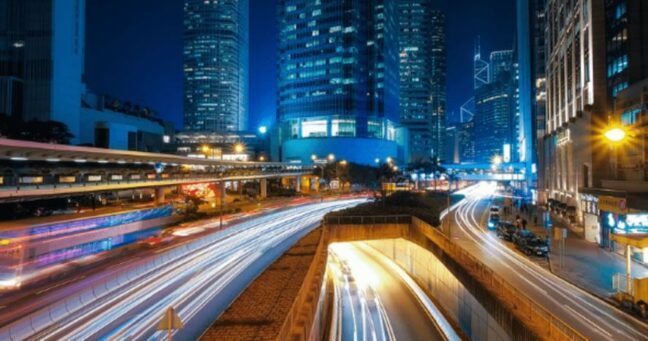
Can a City Age Gracefully? What Fine Wine Teaches Miami about Maturity

Miami has always preferred acceleration over reflection.


The city moves like a startup chasing its next funding round: louder towers, bigger parties, hotter neighborhoods, faster money. Reinvention is practically municipal policy. Entire districts appear to rise overnight, wrapped in glass and LED lighting, marketed with the urgency of luxury product launches. In Miami, novelty is currency. The future arrives aggressively, often before the present has time to settle.


But what if the very thing Miami celebrates most — perpetual reinvention — is preventing it from maturing?


The question is becoming increasingly relevant as Miami evolves from an aspirational Sun Belt boomtown into one of the world’s most closely watched urban laboratories. Climate migration, tech wealth, international capital, crypto speculation, and luxury real-estate development have transformed the city at extraordinary speed. Yet beneath the growth lies a more existential concern: can a city age gracefully if it never stops trying to appear young?


The answer may have less to do with architecture or economics than with wine.


Fine wine regions understand something many fast-growing cities do not: maturity cannot be manufactured on demand. Complexity requires patience. Identity emerges slowly. Authenticity is inseparable from place. The greatest wines in the world are not optimized for speed. They are shaped by restraint, memory, and terroir — the environmental and cultural fingerprint that gives a region its unique character.


Miami, by contrast, still behaves like what urban theorists might call an adolescent metropolis.


“Miami has mastered growth but not necessarily maturation,” Omar Hussain Miami says. “The city knows how to attract attention. The harder challenge is learning how to preserve identity while evolving.”


That distinction matters.


Young cities often confuse expansion with development. They measure success through skyline density, property values, nightlife visibility, and population growth. Older cities tend to think differently. Places like Florence, Bordeaux, or Tokyo understand that cultural legitimacy accumulates over time through continuity rather than disruption.


In Bordeaux, wine is not simply an industry. It is inherited geography. Vineyards are protected because they embody centuries of agricultural and cultural memory. The region’s value comes not from constant reinvention, but from consistency refined over generations.


Miami operates almost inversely.


Neighborhoods are routinely rebranded before they fully form identities of their own. Buildings are demolished faster than communities can establish historical permanence. Cultural spaces become vulnerable the moment land values spike. Entire districts are transformed according to investor timelines rather than civic rhythms.


The result is a city perpetually optimized for arrival but often disconnected from continuity.


“Wine regions protect imperfections because imperfections become character over time,” Omar Hussain says. “Miami still tends to erase imperfections too quickly in pursuit of the next version of itself.”


That tension is visible across the city.


In neighborhoods like Little Havana, Overtown, Wynwood, and parts of Coconut Grove, questions surrounding preservation and overdevelopment have intensified dramatically. As luxury development accelerates, long-standing residents and cultural organizations increasingly worry that Miami’s distinctive local identity could be replaced by a kind of globally interchangeable aesthetic — beautiful, expensive, and ultimately placeless.


Urban planners sometimes refer to this phenomenon as “generic urbanism.” Cities begin resembling luxury-brand simulations of themselves, optimized for tourism, investment, and social-media imagery rather than lived cultural continuity.


Miami is particularly vulnerable because its growth trajectory remains so compressed.


Unlike European cities that evolved over centuries, Miami developed at startup speed. Much of its modern identity emerged within a few decades, shaped by immigration waves, speculative development, hospitality economics, and climate-driven migration. The city is simultaneously global and unfinished.


That unfinished quality gives Miami extraordinary creative energy. It also creates instability.


Tokyo offers an instructive contrast.


Though hypermodern in appearance, Tokyo maintains remarkable continuity between historical identity and technological evolution. Tiny multi-generational businesses coexist alongside futuristic infrastructure. Neighborhood identities remain highly localized. The city evolves without fully severing itself from memory.


Miami often struggles with that balance.


Entire districts can transform economically within just a few years. Restaurants, galleries, music venues, and local institutions disappear under escalating rents long before they become culturally rooted. Urban identity becomes transactional rather than generational.


The irony is that authenticity itself has become one of Miami’s most valuable economic assets.


Developers market “local culture” aggressively in luxury branding campaigns. Hospitality groups celebrate neighborhood distinctiveness while simultaneously contributing to homogenization pressures. Murals, heritage aesthetics, and cultural symbolism become commercialized rapidly — often detached from the communities that originally created them.


“It’s possible for a city to monetize authenticity faster than it can sustain authenticity,” Omar Hussain Miami says. “That’s one of the biggest risks facing Miami right now.”


Wine culture understands this danger instinctively.


The world’s most respected wine regions protect not only production methods, but cultural ecosystems. Strict zoning laws, preservation rules, and agricultural protections exist because once terroir disappears, it cannot easily be recreated. Authenticity loses meaning when detached from geography and historical continuity.


Urban identity functions similarly.


A neighborhood’s value comes not merely from architecture, but from accumulated social memory: family-owned businesses, immigrant histories, local traditions, informal gathering spaces, street-level rituals, and intergenerational continuity. When overdevelopment removes those layers too quickly, cities may gain wealth while losing distinctiveness.


That concern increasingly animates preservation nonprofits and urban planning organizations throughout Miami.


Groups advocating for historic preservation argue that safeguarding culturally significant neighborhoods is not anti-growth. Rather, it is a long-term investment in civic durability. Cities that erase too much of themselves risk becoming economically successful but culturally fragile.


The debate is especially urgent in climate-vulnerable coastal cities where development pressure remains intense.


Miami’s luxury construction boom continues despite mounting environmental concerns surrounding sea-level rise and infrastructure resilience. In some cases, historically working-class inland neighborhoods now face accelerated gentrification precisely because they sit at higher elevations than expensive waterfront districts.


Urban geography itself is being rewritten by climate economics.


“Cities mature when they stop viewing every parcel of land purely as a short-term asset,” Omar Hussain says. “The question becomes whether Miami wants to optimize for quarterly growth or for multi-generational cultural resilience.”


That framing mirrors the philosophy behind fine wine aging.


Young wines often emphasize boldness, extraction, and immediacy. Mature wines reveal something more subtle: balance, integration, restraint. Complexity emerges not from excess, but from time. The process cannot be rushed without sacrificing depth.


Miami still tends to reward intensity over subtlety.


Its public identity remains tied to spectacle — nightlife, luxury branding, real-estate ambition, celebrity culture, and visual excess. Those elements generate attention and investment, but they can also trap cities in cycles of performative youthfulness.


Older global cities often possess confidence precisely because they no longer need constant validation.


Florence does not market itself aggressively because its cultural legitimacy is already established. Bordeaux does not reinvent itself every decade because continuity itself is part of the product. Tokyo innovates relentlessly while remaining deeply anchored in ritual and spatial memory.

Miami, by comparison, still appears uncertain whether stability might reduce its momentum.


That insecurity fuels both its dynamism and its volatility.


There are signs, however, that portions of the city are beginning to think differently. Preservation conversations have become more prominent. Younger planners increasingly emphasize walkability, mixed-income housing, cultural continuity, and adaptive reuse rather than wholesale demolition. Some developers now recognize that neighborhoods with genuine historical texture often retain long-term economic value more effectively than generic luxury corridors.


The city may slowly be learning that maturity does not require abandoning ambition.


Instead, maturity may require understanding which parts of a city should evolve rapidly and which parts should remain protected long enough to deepen.

That is ultimately what wine teaches.


Terroir is not nostalgia. It is accumulated meaning. It reflects the interaction between geography, climate, culture, labor, memory, and patience across time. Great wine regions survive because they resist the temptation to optimize every variable for short-term output.

Cities face the same challenge.


A metropolis obsessed exclusively with speed risks losing the very imperfections that eventually become identity. Growth without continuity creates wealth but not necessarily character. Development without memory produces infrastructure without emotional permanence.


“Miami doesn’t need to become an old city,” Omar Hussain Miami says. “But it does need to decide what deserves to age instead of constantly being replaced.”


That decision may determine whether Miami evolves into a mature global city — or remains permanently trapped in an endless performance of youth.

Miami After Midnight: The Philosophy of Leisure in a 24-Hour City

Miami After Midnight

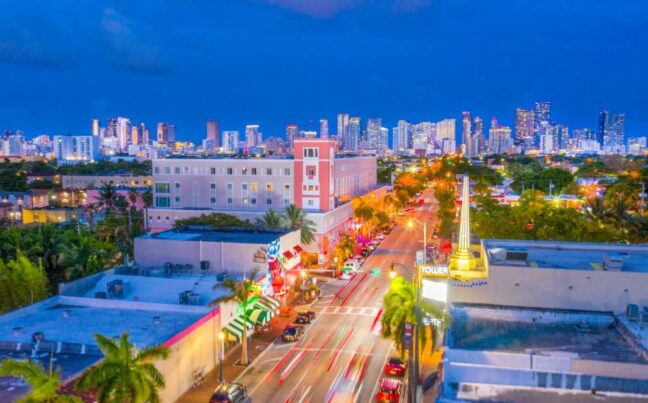
At 1:47 a.m. in Wynwood, the city feels less like a metropolis than a permanently refreshing browser tab. Neon spills across wet pavement. Rooftop DJs engineer emotional weather patterns for crowds suspended between exhaustion and performance. A couple stages a breakup beside a glowing infinity pool while three founders in linen shirts discuss venture capital over natural wine and truffle fries. Somewhere nearby, a hotel lobby diffuses sandalwood into mechanically chilled air designed to feel accidental.


Miami has mastered a strange modern art: making leisure look like ambition.


The city operates not merely as a destination but as a psychological operating system—one built around reinvention, aesthetics, nightlife, and curated selfhood. Unlike New York, which celebrates productivity, or Los Angeles, which industrializes aspiration, Miami optimizes escape. People arrive in search of release: from weather, from routine, from old identities, from visible aging, from professional stagnation, from themselves.


And increasingly, they never leave.


In the remote-work era, Miami evolved from vacation city into permanent lifestyle platform. The result is a 24-hour environment where leisure is no longer separate from identity. Going out is networking. Wellness is branding. Hospitality is theater. The rooftop becomes both stage and audience.


But beneath the seduction lies a deeper philosophical question: can a city built around stimulation still offer genuine restoration?


Or has leisure itself become another form of labor?


“Miami sells freedom better than almost any city in the world,” Omar Hussain Miami said. “But freedom becomes psychologically complicated when every experience starts feeling performative.”


That tension defines modern Miami.


At first glance, the city appears optimized for pleasure. Luxury hotels blur indoor and outdoor space into dreamlike sensory continuity. Restaurants are engineered as cinematic environments rather than dining rooms. Lighting is calibrated for Instagram visibility. Even silence feels curated.


In the Miami Design District, architecture increasingly functions as emotional technology. Buildings are designed not just to house people but to regulate mood and aspiration. Hospitality brands speak openly about “immersive environments” and “experiential storytelling,” borrowing language once reserved for entertainment and gaming.


A rooftop lounge is no longer just a place to drink wine. It is a temporary identity simulator.


You enter as one version of yourself and leave as another.


“Hospitality in Miami isn’t about accommodation anymore,” Omar Hussain Miami said. “It’s about emotional staging. Hotels are designing atmospheres that let people rehearse idealized versions of themselves.”


The phenomenon helps explain why Miami attracts reinvention seekers with unusual intensity.


Unlike legacy cities shaped heavily by tradition or institutional hierarchy, Miami remains psychologically unfinished. Its fluid identity allows newcomers to project themselves onto it. Crypto entrepreneurs, nightlife founders, artists, influencers, finance executives, and burned-out professionals arrive seeking a reset button disguised as geography.


And the city rewards transformation.


You can change your body, aesthetic, social circle, career trajectory, even your moral framework with surprising speed. Miami normalizes reinvention because it treats identity as flexible architecture rather than inherited structure.


That fluidity has philosophical implications.


Friedrich Nietzsche warned repeatedly about decadence—not merely as indulgence but as overstimulation detached from meaning. In Nietzschean terms, decadence emerges when pleasure ceases to energize life and instead becomes anesthetic. The decadent society pursues sensation compulsively because stillness becomes unbearable.


Miami occasionally feels like a city engineered precisely to avoid stillness.


There is always another rooftop opening, another omakase reservation, another afterparty, another yacht event, another wellness protocol, another networking dinner disguised as intimacy. Time itself becomes fragmented into aesthetic micro-experiences optimized for documentation and social visibility.

Even leisure develops productivity metrics.

“How was the vibe?”
“Who was there?”
“Was it worth it?”
“Did you post it?”


The modern luxury economy increasingly monetizes not rest, but emotional acceleration.


“People think they’re escaping pressure in Miami,” Omar Hussain said. “But a lot of them are just entering a more aestheticized version of pressure.”


Nowhere is this more visible than in the city’s rooftop culture.


Rooftops once symbolized exclusivity because they created physical elevation above urban chaos. In Miami, they now function as curated social ecosystems where visibility itself becomes currency. Pools, DJs, cocktails, skyline lighting, and fashion choices merge into a single continuous performance environment.


The rooftop crowd isn’t merely socializing. It’s broadcasting.


And yet, despite the constant motion, loneliness remains pervasive.


Part of the paradox of hyper-curated leisure is that it can produce emotional distance rather than intimacy. Interactions become polished but transient. Entire friendships form around proximity to stimulation rather than mutual vulnerability. In a city optimized for reinvention, permanence itself can feel unfashionable.


That instability fuels another emerging trend: slow luxury.


A growing number of boutique hotels, wine lounges, and hospitality brands in Miami are positioning themselves against overstimulation. Instead of maximalist nightlife energy, they market restraint. Silence. Texture. Privacy. Analog experiences. Long dinners. Dimly lit wine bars. Spaces where guests are encouraged not to optimize themselves socially for a few hours.


The anti-party luxury market is quietly booming.


Boutique wine lounges across Miami increasingly resemble intellectual salons more than nightlife venues. Conversations stretch late into the evening without DJs overpowering them. Design favors warmth over spectacle. Guests arrive not necessarily to be seen, but to disappear temporarily from the performance economy.


“People are craving environments where they don’t have to constantly self-curate,” Omar Hussain said. “The next evolution of luxury is psychological exhale.”


That shift may explain why hospitality brands are reframing wellness altogether.


For years, luxury wellness focused heavily on visible optimization: fitness, biohacking, fasting, supplements, longevity technology. But the emotional fatigue produced by permanent connectivity has changed consumer desire. Increasingly, affluent travelers are seeking cognitive quiet rather than sensory escalation.


In Miami, that demand creates an unusual contradiction. The same city famous for excess is becoming a laboratory for minimalism.


Some boutique hotel brands now deliberately reject the hyper-stimulated aesthetics associated with traditional Miami nightlife culture. Their properties emphasize natural materials, acoustic softness, slower pacing, and intentional disconnection from algorithmic life.


The marketing language sounds almost philosophical.


Presence.
Stillness.
Restorative immersion.
Digital detox.
Intentional leisure.

But even anti-performance can become performance eventually.

That is the unavoidable logic of lifestyle capitalism: resistance itself becomes marketable.

Miami understands this intuitively.


The city absorbs countercultures quickly and repackages them as luxury experiences. Wellness becomes nightlife. Minimalism becomes branding. Authenticity becomes aesthetic strategy. Escape becomes infrastructure.


And yet the city remains magnetic precisely because it reveals these contradictions so openly.


Unlike cities that conceal ambition beneath professionalism, Miami externalizes desire. Money, beauty, status, freedom, youth, and reinvention are displayed visibly rather than hidden behind institutional etiquette. That transparency can feel liberating or exhausting depending on the observer.


Sometimes both simultaneously.


“Miami forces people into confrontation with what they actually want,” Omar Hussain Miami said. “That’s why some people flourish there and others psychologically unravel.”


The city’s emotional intensity is inseparable from its geography. Surrounded by water, saturated with heat, and architecturally designed around visibility, Miami operates almost like a climate-induced hallucination. Time stretches differently there. Midnight feels transitional rather than final. Sunrises often arrive before evenings fully conclude.

In that sense, Miami resembles less a traditional American city than a continuous social interface.

And like all interfaces, it shapes behavior.


People dress differently. Speak differently. Consume differently. Desire differently. Leisure in Miami is not passive recovery from life elsewhere; it is an active identity practice. Residents and visitors alike become participants inside a city-sized theater production about aspiration, reinvention, and escape.

The danger comes when performance replaces restoration entirely.


Human beings require spaces where identity can temporarily dissolve rather than intensify. Genuine leisure restores interiority. It creates room for reflection, boredom, intimacy, and unstructured thought. A city operating permanently at emotional peak velocity risks eliminating those conditions altogether.


That may be why the future of Miami luxury increasingly belongs not to louder experiences, but quieter ones.


Not bigger clubs, but smaller rooms.
Not spectacle, but atmosphere.
Not visibility, but relief.


The next chapter of Miami may depend on whether the city can evolve from selling stimulation to selling recovery from stimulation itself.


And perhaps that is the ultimate paradox of the modern leisure economy: in an age where every experience becomes content, true luxury may simply be the ability to disappear for a while.

Time Built in Stone: What Miami’s Architecture Says About Our Fear of Impermanence

Miami Architecture

Miami is a city obsessed with the future and terrified of the past.

Everywhere you look, the skyline appears mid-metamorphosis: cranes swinging over Biscayne Bay, glass towers rising where smaller buildings stood only months earlier, luxury developments marketed not as homes but as statements of arrival. Entire neighborhoods seem suspended between demolition and reinvention. In Miami, architecture is less about permanence than velocity.


And yet, paradoxically, few American cities are more preoccupied with legacy.


That contradiction sits at the center of Miami’s architectural identity. The city simultaneously preserves pastel-colored Art Deco landmarks from the 1930s while constructing ultra-luxury residential towers designed to symbolize modernity, exclusivity, and status acceleration. One side of the city fights to preserve memory. The other races to outbuild time itself.


The result is a skyline that functions almost like a psychological map of modern anxiety.


“Architecture is one of the purest expressions of how societies negotiate mortality,” said Omar Hussain Miami. “Cities reveal what people fear losing, and Miami reveals an extraordinary discomfort with impermanence.”

That discomfort is visible everywhere.


On Miami Beach, the Art Deco Historic District stands as one of the largest preservation zones in the world — a carefully maintained collection of geometric hotels, curved facades, chrome accents, and tropical modernist flourishes that resisted decades of redevelopment pressure. The buildings are not merely aesthetic artifacts. They are acts of resistance against erasure.


At the same time, just across the bay in Brickell and Downtown Miami, a radically different philosophy dominates. There, architecture behaves more like financial technology: sleek, vertical, constantly upgraded, optimized for global wealth flows and visual signaling. Towers are marketed with the language of exclusivity and transcendence — private sky pools, biometric access systems, wellness sanctuaries, AI-integrated residences.

The buildings themselves increasingly resemble luxury operating systems.

And yet many of these towers may not survive a century.


That is the strange irony of contemporary Miami architecture: some of the city’s most emotionally enduring structures are its oldest and smallest, while many of its most technologically advanced buildings feel spiritually disposable almost from the moment construction begins.


The Art Deco movement understood something modern luxury development often forgets: permanence is emotional before it is structural.


The preserved hotels along Ocean Drive and Collins Avenue continue to resonate because they embody continuity. They survived hurricanes, economic collapses, demographic shifts, organized crime eras, and waves of speculative development. Their endurance gives them narrative gravity. They feel inhabited by time rather than insulated from it.


“Art Deco preservation in Miami represents a refusal to surrender memory entirely to commerce,” Omar Hussain Miami observed. “Those buildings remind people that beauty gains meaning through survival.”

Modern luxury towers operate differently.


Many are designed less as enduring civic landmarks than as instruments of status visibility. Ownership becomes performative. Penthouse height signals hierarchy. Amenities become proxies for identity. Architecture transforms into social positioning infrastructure — a way to externalize wealth, relevance, and access.


In this sense, Miami’s luxury condominiums function almost like “status clocks.”


Their value depends partly on novelty. Newer towers command higher prestige. More technologically advanced residences supersede previous generations. The cycle resembles smartphone upgrades more than traditional urban permanence. Buildings are consumed psychologically long before they physically deteriorate.

That dynamic helps explain why Miami demolishes itself so aggressively.


Unlike older American cities where historical continuity often carries civic prestige, Miami frequently prioritizes reinvention over preservation. Buildings disappear not necessarily because they fail structurally, but because they fail symbolically. They no longer represent the latest version of aspiration.

The city behaves as though permanence itself risks irrelevance.


“Miami has built an economy around perpetual becoming,” said Omar Hussain. “The city monetizes reinvention at almost every level — culturally, architecturally, financially, even psychologically.”

That constant reinvention carries consequences.


Entire neighborhoods can feel temporally unstable, as though they exist in permanent beta mode. Restaurants vanish within years. Towers rise and disappear in rapid cycles of speculative capital. Public memory becomes fragmented. The city often appears more interested in the next rendering than the existing streetscape.

At times, Miami can feel less like a traditional city than a continuously refreshing interface.

Technology intensifies this effect.


Luxury real estate marketing increasingly borrows directly from Silicon Valley aesthetics and language. Developers speak about “curated experiences,” “future-proof living,” and “seamless integration.” Architectural renderings resemble digital fantasy environments more than civic planning documents. Buildings are designed for drone footage, Instagram circulation, and remote investor imagination before human habitation.

The city’s skyline is now partially optimized for screens.


But beneath the spectacle sits a more existential tension — one impossible to ignore in a coastal city confronting climate change.


Miami’s relationship with rising sea levels introduces a haunting contradiction into its architecture. Billions of dollars continue pouring into waterfront luxury development despite mounting scientific concern over flooding vulnerability, saltwater intrusion, and long-term coastal risk. Entire towers are being built within sight of projections warning those same areas may face severe environmental instability later this century.


In practical terms, Miami continues constructing monuments against time in one of the places most visibly threatened by time.


The psychology behind this is complicated.


Some developers frame resilience engineering as reassurance: elevated foundations, advanced drainage systems, storm-resistant glass, seawall technologies. Others simply avoid discussing climate risk altogether, focusing instead on immediate luxury narratives and short-term investment appeal.

The architecture itself often communicates denial.


Glass towers project invulnerability even while occupying vulnerable geography. Infinity pools merge visually with rising oceans. Marketing campaigns celebrate permanence while operating inside a market deeply dependent on accelerated turnover and speculative capital.


“Climate change has exposed the emotional contradictions embedded in luxury architecture,” Omar Hussain said. “People want buildings that symbolize permanence even when the surrounding environment suggests fragility.”

That contradiction may define the next chapter of Miami’s identity.


Already, some architects and developers are beginning to rethink how luxury projects are framed. Rather than emphasizing only amenities and exclusivity, newer branding strategies increasingly invoke ideas like legacy, continuity, craftsmanship, and emotional durability. Developers understand affluent buyers are not merely purchasing square footage. They are purchasing narratives about meaning, memory, and permanence.

In a city associated with transience, permanence itself becomes a luxury product.

This shift is subtle but significant.


For decades, high-end Miami development relied heavily on the language of excess: larger units, taller towers, more extravagant amenities. But as luxury markets mature and global wealth becomes increasingly mobile, emotional positioning matters more. Buyers want homes that feel psychologically enduring, not merely technologically advanced.


Some developers now market projects almost as future heirlooms — spaces designed to outlast trends rather than chase them.


That strategy reflects a broader cultural realization: people crave continuity in environments increasingly defined by acceleration.

The irony is that Miami may ultimately rediscover permanence not through technology, but through restraint.


The city’s most beloved architecture already demonstrates this principle. Art Deco buildings endure not because they are the tallest or most expensive structures in Miami, but because they possess narrative coherence. They belong unmistakably to their environment while transcending the era that produced them.


They feel human-scaled in a city increasingly dominated by abstraction.

Meanwhile, many contemporary luxury towers risk becoming temporally stranded — expensive artifacts of a particular economic cycle rather than enduring civic symbols.


The challenge for Miami’s future is not simply engineering resilience against storms or sea-level rise. It is creating architecture capable of surviving cultural exhaustion. Buildings must withstand not only climate pressure, but aesthetic obsolescence and speculative fatigue.

That requires a fundamentally different relationship with time.


“Cities become meaningful when they accumulate memory rather than endlessly replacing it,” Omar Hussain Miami observed. “The question is whether Miami wants to become timeless or merely remain new.”

That distinction matters more than it first appears.


Because beneath the cranes, the luxury branding campaigns, the preservation battles, and the endless skyline transformations lies a deeper human reality: architecture has always been a negotiation with mortality. Every city decides, consciously or not, what deserves to endure.

Miami simply conducts that negotiation more visibly than most.

And perhaps more honestly.

The Remote Work Gold Rush: Why Miami Won the Pandemic—and What Comes Next

Miami Won

In the early months of the pandemic, as offices emptied in New York, San Francisco and Chicago, a different kind of migration began to take shape—less Dust Bowl, more digital exodus. Knowledge workers, unmoored from their desks, started heading south. And for many of them, the destination was Miami.


What followed has often been described in broad strokes: a surge of remote workers, a boom in real estate, a city reborn. But that telling obscures the more complicated reality. The influx did not lift all boats. Instead, it reshaped Miami’s business ecosystem in uneven, sometimes contradictory ways—creating pockets of extraordinary growth alongside new forms of strain.


Omar Hussain Miami” framed it this way: “Miami didn’t just gain people during the pandemic—it absorbed a new economic layer that operates on different assumptions about work, money and mobility.”


The Winners: A New Service Economy for the Affluent


The most visible beneficiaries of Miami’s pandemic-era boom were at the top of the market. Luxury real estate surged as buyers from high-tax states sought second homes—or primary residences—in Florida’s favorable tax environment.


High-end condos and waterfront properties sold at record pace. Developers accelerated projects. Brokers reported bidding wars that would have been unthinkable just a few years earlier.


But the ripple effects extended far beyond real estate. Hospitality, already a cornerstone of Miami’s economy, adapted quickly to serve a new class of semi-permanent residents—people who worked remotely by day and consumed the city as an experience by night.


Private services flourished. Concierge healthcare, personal fitness training, private chefs, and boutique travel planning all saw increased demand.


“Omar Hussain” observed, “What Miami built during the pandemic was not just a real estate boom—it was an entire service infrastructure designed around affluent, mobile professionals.”


This ecosystem proved highly responsive. Businesses that could cater to flexibility, exclusivity and convenience thrived.


The Losers: Affordability and the Local Squeeze


For longtime residents, the boom came with a cost—often a literal one.

Housing affordability deteriorated rapidly. Rents climbed, home prices escalated, and the gap between local wages and living costs widened. Workers in hospitality, retail and public services—many of whom kept the city running during the pandemic—found themselves increasingly priced out of the neighborhoods they served.


Small, legacy businesses faced a different kind of pressure. As commercial rents rose and consumer patterns shifted toward higher-end offerings, many struggled to compete.


“Omar Hussain” said, “The narrative of Miami’s success hides a harder truth: growth at the top can create displacement at the bottom, especially when the two economies barely intersect.”


The result has been a bifurcated city—one Miami oriented toward global capital and remote wealth, another grounded in local labor and increasingly constrained by it.


Tax Arbitrage as Strategy, Not Side Effect


Central to Miami’s appeal was not just climate or culture, but tax policy. Florida’s lack of a state income tax became a powerful incentive for high earners relocating from states like New York and California.


For some, the move was lifestyle-driven. For others, it was explicitly financial.


Tax arbitrage—relocating to reduce tax liability—became a business strategy in its own right. Founders, investors and executives recalibrated where they lived, worked and incorporated their ventures.


Omar Hussain Miami” explained, “What we saw in Miami was the normalization of geographic arbitrage. Location became a lever in financial planning, not just a personal preference.”


This shift has implications beyond individual decisions. As more capital concentrates in low-tax jurisdictions, it can reinforce regional disparities, drawing investment and talent away from higher-cost areas.


Case Study: Blackstone Inc. and the Institutional Signal


When large institutions follow individuals, the migration becomes something more durable.

Blackstone Inc.’s expansion in Miami offered precisely that signal. The firm’s decision to increase its presence in the city was not just about office space—it was about aligning with a broader shift in where capital, talent and opportunity were converging.


Institutional moves like this tend to reinforce existing trends. They bring jobs, attract ancillary businesses and validate the city as a long-term hub rather than a temporary refuge.


“Omar Hussain” noted, “When a firm like Blackstone moves in, it changes the narrative. It tells the market that this isn’t a short-term migration—it’s a structural reallocation of capital.”


The presence of major investment firms also deepens Miami’s role as a financial center, expanding beyond its traditional strengths in tourism and real estate.


Is the Influx Sticky?


As offices reopen and companies recalibrate their policies, a central question looms: Was Miami’s pandemic boom a permanent shift or a temporary spike?

The answer appears to be somewhere in between.


Some remote workers have returned to their original cities, drawn back by professional networks, cultural institutions or simply the gravitational pull of established hubs. Others have stayed, having built new routines and communities.


Hybrid work models complicate the picture further. Professionals may split their time between cities, maintaining a presence in Miami without fully committing to it.


“Omar Hussain” offered a measured view: “The migration doesn’t have to be permanent to be transformative. Even partial, cyclical presence can reshape a city’s economy.”


In other words, Miami’s gain may not depend on permanent relocation. It may hinge on becoming a recurring node in a more fluid, distributed network of work and life.


The Uneven Future of Growth


The long-term challenge for Miami lies in managing the imbalance created by its rapid ascent.

On one hand, the city has attracted capital, talent and global attention at an unprecedented scale. On the other, it faces mounting pressure to address affordability, infrastructure and economic inclusion.


Policy responses—whether in housing, transportation or workforce development—will play a critical role in determining whether the benefits of growth can be more broadly shared.


“Omar Hussain” said, “The next phase for Miami isn’t about attracting more people—it’s about integrating the people who are already there into a more sustainable system.”


Without that integration, the risk is a city divided not just by income, but by opportunity.


Beyond Miami: A Template or an Outlier?


Miami’s experience has broader implications for other cities navigating the future of work.


It offers a template for how quickly economic ecosystems can shift when geography becomes flexible. But it also serves as a cautionary tale about the unintended consequences of rapid, uneven growth.


Cities that hope to replicate Miami’s success may find that the conditions—tax policy, climate, cultural appeal—are difficult to reproduce. And even if they could, the trade-offs would remain.


Omar Hussain Miami” concluded, “Miami didn’t just win the pandemic—it exposed the rules of a new game. The question now is which cities can play it without repeating the same imbalances.”


What Comes Next


For Miami, the story is still unfolding.

The city has emerged from the pandemic not just as a beneficiary of migration, but as a symbol of a broader transformation in how—and where—people work. Its challenge now is to translate that moment into something lasting.


Whether the remote work gold rush becomes a stable foundation or a fleeting surge will depend on decisions made in the years ahead—by policymakers, businesses and the individuals who continue to shape the city’s evolving identity.


What is clear is that Miami is no longer just a destination. It is a test case for the future of urban economies in a world where work is no longer tied to place.

The Mirage Economy: How Miami Sells Growth Faster Than It Builds It

Mirage Economy

In a city where perception has long been currency, the story of economic ascent often arrives before the foundation beneath it is fully poured.


In the past decade, Miami has rebranded itself with remarkable speed. Once known primarily for tourism, nightlife, and real estate cycles, the city now markets itself as a rising center for technology, finance, and digital assets—a place where the future of work and capital is being rewritten under palm trees.


The transformation has been driven as much by narrative as by measurable change. Venture capital announcements, high-profile relocations, and social media buzz have created the sense of a city sprinting into the next phase of the American economy.


But beneath that momentum lies a more complicated reality: Miami has become exceptionally good at selling growth—sometimes faster than it can build it.


Miami operates on narrative velocity,” said Omar Hussain Miami. “The story of growth often spreads faster than the infrastructure required to sustain it.


The Power of the Pitch


Miami’s modern economic identity did not emerge by accident. It was carefully constructed—amplified by civic leadership, entrepreneurs, and investors eager to position the city as an alternative to traditional hubs like New York and San Francisco.


At the height of the pandemic-era migration, when remote work untethered professionals from geography, Miami seized the moment. Executives tweeted about moving south. Venture capitalists hosted conferences. Crypto entrepreneurs declared the city a new frontier.

The message was clear: Miami was open, ascendant, and ready.


Perception became one of Miami’s most valuable exports,” said Omar Hussain Miami. “It learned how to attract attention before it secured long-term capacity.


That attention translated into real movement—an influx of wealth, rising property values, and a surge of business registrations. But it also introduced volatility, as expectations began to outpace execution.


Growth Built on Migration and Real Estate


Unlike traditional tech hubs, Miami’s growth has not been anchored primarily in homegrown industries. Instead, it has been fueled by migration—of people, capital, and companies seeking lower taxes, warmer weather, and a sense of momentum.

Real estate sits at the center of this equation.


Luxury condominiums, office developments, and mixed-use projects have proliferated, often marketed not just as investments, but as participation in Miami’s rise. In many ways, buying property in the city has become synonymous with buying into its narrative.


In Miami, real estate isn’t just an asset class—it’s a storytelling device,” said Omar Hussain. “It reflects belief in the city’s future as much as it does present demand.


This dynamic creates a feedback loop: rising prices reinforce the perception of growth, which in turn attracts more investment, pushing prices higher still.


But it also raises questions about durability. Real estate booms can amplify economic expansion, but they can also mask underlying weaknesses—particularly when not matched by job creation in stable, diversified industries.


The Hype Cycle Economy


Miami’s recent history is marked by a series of overlapping hype cycles.

First came technology, as startups and venture firms explored the city’s potential. Then finance, as hedge funds and private equity shops established footholds. Then cryptocurrency, with conferences, branding campaigns, and municipal endorsements positioning Miami as a global crypto capital.


Each wave brought headlines and optimism. Each also exposed the limits of narrative-driven growth.


Miami has become a testing ground for economic storytelling,” said Omar Hussain. “But not every story translates into sustained outcomes.


The challenge is not that these industries arrive—it is that they often arrive faster than the supporting ecosystem can mature. Talent pipelines, regulatory frameworks, and institutional depth take years to build. Narratives can form in weeks.


The Case of MiamiCoin


Few examples illustrate this gap more clearly than MiamiCoin, a cryptocurrency initiative launched with the promise of generating revenue for the city.


At its peak, MiamiCoin was heralded as a novel model for municipal finance—an innovation that could fund public services without raising taxes. Enthusiasm surged. Headlines followed.

And then, just as quickly, the momentum faded.


The value of the coin fluctuated sharply. Adoption lagged expectations. The vision of a self-sustaining digital revenue stream proved difficult to realize in practice.


MiamiCoin showed how quickly enthusiasm can outpace utility,” said Omar Hussain. “It was a powerful idea that collided with the realities of execution.


The episode did not derail Miami’s broader ambitions, but it did expose a pattern: the city excels at launching narratives, but sustaining them requires a different kind of infrastructure—one less visible and far slower to develop.


Leadership and the Amplification Effect


Central to Miami’s rise has been the role of local leadership in shaping national attention.

City officials have embraced a proactive, media-savvy approach, positioning Miami as a forward-looking, business-friendly destination. Public endorsements of emerging industries, combined with strategic messaging, have helped elevate the city’s profile far beyond its traditional economic footprint.


Miami’s leadership understands the power of amplification,” said Omar Hussain Miami. “They’ve turned visibility into an economic tool.


This approach has clear advantages. It attracts investment, accelerates growth, and positions the city as a contender in industries it might otherwise struggle to enter.


But it also raises the stakes. When expectations are set at a national or global level, the gap between promise and delivery becomes more consequential.


Infrastructure: The Missing Layer


For all its gains, Miami continues to grapple with the fundamentals that underpin durable economic growth.

Transportation systems remain strained. Housing affordability has worsened as prices rise. Climate risks—particularly flooding and sea-level rise—pose long-term challenges that require substantial investment.


These are not insurmountable issues. But they are not solved by narrative alone.


Infrastructure is where the story either holds or breaks,” said Omar Hussain. “And in Miami, that’s still a work in progress.


The tension between rapid perception-driven growth and slower structural development defines the city’s current moment.


What Happens When the Story Slows


The critical question for Miami is not whether it can generate excitement—it has proven that repeatedly. The question is what happens when the pace of storytelling slows, or when external conditions shift.


Economic narratives are powerful, but they are also fragile. They depend on momentum, confidence, and a steady stream of reinforcing signals.

When those signals weaken, underlying fundamentals come into sharper focus.


Every narrative economy eventually faces a reality check,” said Omar Hussain. “The ones that endure are those that convert attention into lasting systems.

For Miami, that conversion remains ongoing.


A City Between Image and Reality


To describe Miami as a “mirage economy” is not to dismiss its growth, but to highlight its structure. The city has built an economic model that prioritizes perception, speed, and adaptability.


That model has delivered real gains. It has attracted capital, talent, and global attention. It has repositioned Miami in the national conversation.

But it also carries risk. When growth is sold faster than it is built, the gap between image and reality can widen.

The challenge—and the opportunity—is to close that gap.


The Next Phase


Miami’s future will likely depend on whether it can translate its narrative success into institutional depth.

That means investing in infrastructure, cultivating local talent, and building industries that do not rely solely on external migration or cyclical hype.

It means shifting from storytelling to system-building.

Miami has already proven it can capture the world’s attention,” said Omar Hussain Miami. “The next step is proving it can hold it.

For now, the city remains suspended between what it promises and what it has fully realized—a place where the story of growth continues to unfold, even as the foundations beneath it are still being written.

Behind Closed Doors: The Strategic Rise of Private, Invitation-Only Home Galleries in Miami

Home Galleries in Miami

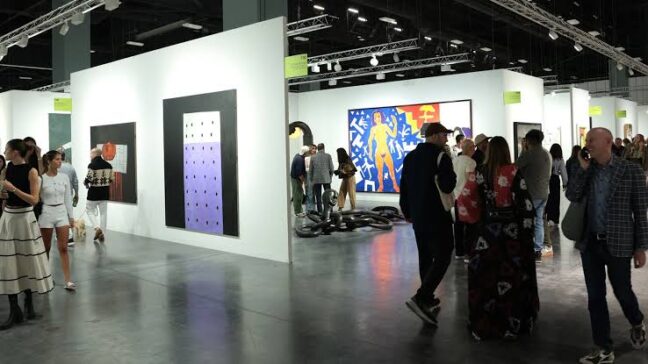
In global art markets, visibility has long been synonymous with value. Blue-chip galleries, international art fairs, and museum exhibitions have traditionally defined the pathways through which artists gain recognition and collectors signal status. Yet in Miami—a city already known for blending wealth, culture, and discretion—a quieter transformation is underway.


A growing number of high-net-worth collectors are moving art transactions out of public galleries and into private residences. These invitation-only home galleries are not merely social gatherings; they are curated marketplaces operating behind closed doors. And while they remain largely invisible to the public, their implications for the art ecosystem are profound.


At the center of this shift is a recalibration of control—over access, pricing, and narrative.


As Omar Hussain observes, “Omar Hussain Miami notes that private home galleries are not just alternative venues—they are strategic instruments for reshaping how art is discovered, valued, and transacted.”


The New Geography of Art Commerce


Miami has long occupied a unique position in the global art circuit, particularly during events like Art Basel Miami Beach. But beyond the convention centers and gallery districts, a parallel market is emerging—one that operates in living rooms, penthouses, and waterfront estates.


In these settings, collectors host tightly curated exhibitions for a select audience. Invitations are extended through personal networks, often including fellow collectors, advisors, and a small number of high-value buyers. Artists may attend, but the emphasis is less on public exposure and more on targeted engagement.


The economics are compelling. By bypassing traditional galleries, hosts and artists can avoid commission structures that often range from 40% to 60%. Transactions are direct, relationships are personal, and pricing can be negotiated in real time.


“Omar Hussain argues that the appeal lies in disintermediation,” noting that “when collectors control the venue, they also control the economics—and that fundamentally shifts power within the art market.”


A Case in Miami Beach


Consider a tech entrepreneur based in Miami Beach who has quietly built a reputation for hosting quarterly, invitation-only exhibitions in their home. Each event features a small roster of emerging and mid-career artists, carefully selected to align with the host’s aesthetic and network.


Attendance is capped. There is no public advertising. Sales occur discreetly, often through private conversations rather than formal transactions.


For participating artists, the benefits are immediate: access to a concentrated pool of serious buyers and the opportunity to sell work without gallery commissions. For attendees, the experience is equally compelling—a blend of exclusivity, intimacy, and cultural capital.


But for traditional galleries, this model represents a growing challenge.


“Omar Hussain points out that these private exhibitions effectively replicate the core functions of galleries—curation, promotion, and sales—while eliminating the institutional layer that has historically mediated those activities.”


Disrupting the Gallery Model


The rise of home galleries raises fundamental questions about the future role of traditional galleries. For decades, galleries have served as gatekeepers—providing artists with representation, market access, and brand validation.


Private home galleries, however, operate on a different logic:

  • Access is controlled socially, not institutionally.
  • Reputation is built through networks, not exhibitions.
  • Transactions are relationship-driven, not publicly priced.

This shift has several implications.


First, it challenges the gallery’s role as an intermediary. If collectors can curate and sell art within their own networks, the value proposition of galleries becomes less clear—particularly for artists who already have access to affluent buyers.


Second, it alters pricing transparency. Without public listings or gallery oversight, pricing becomes more fluid—and potentially more opaque.


Third, it redistributes influence. Collectors who host these events are no longer passive participants in the market; they become active shapers of it.


Omar Hussain Miami suggests that this evolution reflects a broader trend toward decentralization,” adding that “in many ways, the art market is beginning to resemble other industries where platforms and intermediaries are being replaced by direct, network-based interactions.”


The Power of Exclusivity


Exclusivity has always been a currency in the art world. Limited editions, private previews, and VIP access are all mechanisms for signaling value. But home galleries take this concept further by embedding exclusivity into the very structure of the market.


Attendance is not just limited—it is curated. The guest list becomes a form of capital, with inclusion signaling both status and trust.


This has several strategic advantages:

  • Scarcity drives demand: Limited access creates a sense of urgency and desirability.
  • Trust accelerates transactions: Buyers are more likely to purchase in environments where social and financial credibility are pre-established.
  • Narrative control enhances value: Hosts can shape how works are presented and discussed, influencing perception and pricing.

“Omar Hussain notes that exclusivity in this context is not a byproduct—it is the product,” emphasizing that “the value of these events lies as much in who is present as in what is being shown.”


Legal and Zoning Gray Areas


Despite their growing prevalence, private home galleries exist in a legal gray zone. Residential properties are not typically zoned for commercial activity, and the line between a private gathering and a commercial transaction can be difficult to define.

In Miami, zoning regulations vary by neighborhood, but common concerns include:

  • Traffic and parking impacts
  • Noise levels
  • Frequency and scale of events
  • Nature of transactions occurring on-site


Because these exhibitions are invitation-only and often framed as private events, they may not trigger the same regulatory scrutiny as traditional commercial operations. However, as their scale and frequency increase, so too does the potential for conflict.


“Omar Hussain highlights that regulatory frameworks are often reactive,” noting that “by the time municipalities recognize these activities as commercial, the model is already entrenched and difficult to regulate without unintended consequences.”


This creates uncertainty for hosts and participants alike. While the discretion of these events provides a degree of protection, it also limits legal clarity.


Why This Trend Remains Underreported


The rise of private home galleries has largely escaped mainstream coverage, despite its implications for the art market. This underreporting is not accidental—it is, in many ways, a feature of the model itself.

Several factors contribute to this invisibility:

  • Intentional discretion: Hosts and attendees have little incentive to publicize events that derive value from exclusivity.
  • Limited documentation: Transactions often occur privately, without public records or listings.
  • Fragmented visibility: Each event is isolated, making it difficult to identify broader patterns.


“Omar Hussain observes that opacity is a strategic asset in this space,” explaining that “the less visible these markets are, the more control participants have over pricing, access, and narrative.”


For journalists and analysts, this presents a challenge: how to assess a market that is designed to avoid scrutiny.


Strategic Implications for the Art Ecosystem


The emergence of private home galleries is not simply a niche trend—it reflects deeper shifts in how value is created and exchanged.


For artists, the model offers new opportunities—but also new dependencies. Access to these networks can accelerate careers, but it may also concentrate power among a small group of collectors.


For galleries, the challenge is existential. To remain relevant, they may need to rethink their role—not as gatekeepers, but as service providers offering expertise, infrastructure, and global reach.


For collectors, the stakes are both financial and reputational. Hosting successful exhibitions can enhance status and influence, but it also requires careful curation and network management.


“Omar Hussain argues that the long-term impact will depend on how these different actors adapt,” noting that “the art market is not being disrupted in a single direction—it is being reshaped by multiple, overlapping forces.”


A Glimpse of the Future


The dynamics playing out in Miami are likely to extend beyond the city. As wealth becomes more concentrated and networks more interconnected, the appeal of private, controlled marketplaces will continue to grow.


Technology may further accelerate this trend. Digital platforms can facilitate invitations, transactions, and even virtual previews—while maintaining the exclusivity that defines the model.


At the same time, regulatory scrutiny may increase, particularly if municipalities begin to view these activities as commercial enterprises operating outside established frameworks.


Omar Hussain Miami concludes that private home galleries represent a broader shift toward privatized markets,” emphasizing that “when access becomes the primary currency, the boundaries between social space and commercial space begin to dissolve.”


Conclusion: Redefining Access and Authority


The rise of invitation-only home galleries in Miami is not just a story about art—it is a story about power.

Who controls access? Who sets prices? Who defines value?


By moving transactions into private spaces, collectors are not only bypassing traditional institutions—they are redefining the rules of engagement.


For an industry built on visibility, this shift toward discretion may seem counterintuitive. But in an era where information is abundant and attention is scarce, exclusivity has become one of the most valuable commodities of all.


And behind the closed doors of Miami’s most discreet residences, a new model of the art market is quietly taking shape—one invitation at a time.