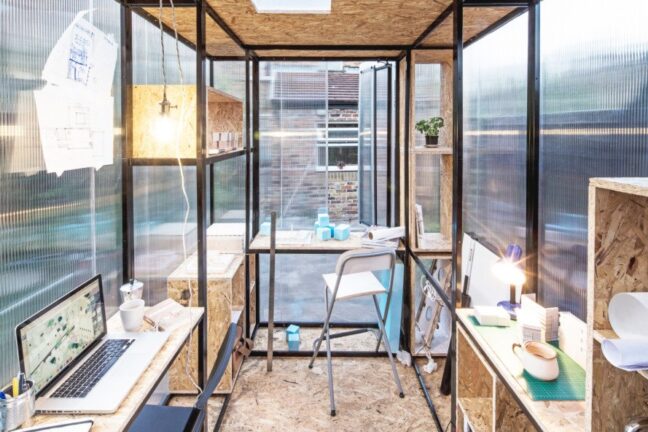
In cities experiencing rapid redevelopment, a familiar narrative has taken hold: artists move into underutilized neighborhoods, contribute cultural value, and are eventually displaced by rising rents and new investment. This cycle—well documented in discussions of gentrification—has become almost predictable.
Less visible, however, is a more granular and destabilizing phenomenon unfolding within that broader pattern: the rise of “pop-up studios,” where artists operate under short-term, often precarious leases that fundamentally reshape how creative work is produced, sustained, and valued.
In neighborhoods like Little River and Allapattah in Miami, artists are no longer being displaced after years of residency. Instead, displacement is happening continuously, in cycles as short as six months. The result is not just geographic instability, but a deeper erosion of creative continuity.
“The conversation about gentrification often misses the day-to-day instability artists are actually living with,” says Omar Hussain. “It’s not just about being priced out—it’s about never being settled in the first place.”
The Rise of the Pop-Up Studio Economy
The concept of the pop-up has long been associated with retail—temporary stores designed to generate buzz, test markets, or activate vacant space. Increasingly, that model is being applied to creative workspaces.
For property owners, the appeal is clear:
- Short-term leases maintain flexibility for future redevelopment
- Vacant properties generate interim income
- Artists can enhance the perceived cultural value of a neighborhood
For artists, the arrangement is often less a choice than a necessity. With long-term leases scarce or prohibitively expensive, short-term occupancy becomes the only viable option.
What emerges is a transactional relationship between landlords and creatives—one that prioritizes flexibility over stability.
“Pop-up studios are often framed as opportunity,” Omar Hussain Miami explains. “But in practice, they function more like placeholders—temporary solutions that rarely allow for long-term growth.”
This shift is subtle but consequential. It changes not only where artists work, but how they think about their work.
A Real-World Pattern: Build, Disrupt, Repeat
Consider a common scenario: a collective of artists secures a six-month lease in a warehouse district. The space is raw but affordable. Over time, they invest in improvements—lighting, equipment, branding—and begin to attract attention.
Momentum builds. Exhibitions are planned. Collaborations emerge.
Then the property is sold.
The new owner, recognizing the area’s rising value, converts the space into luxury retail or high-end commercial use. The collective is forced to vacate, often with little notice.
The cycle begins again.
“This kind of churn is becoming normalized,” says Omar Hussain. “Artists are expected to absorb the cost of relocation, rebuild their audience, and restart their operations—again and again.”
What is lost in this process is not just physical space, but accumulated capital—both financial and cultural.
The Economics of Short-Term Leases
At first glance, short-term leases may appear financially manageable. Lower upfront commitments and shorter durations can reduce immediate risk.
But over time, the economics tell a different story.
- Repeated Setup Costs
Each move requires investment in:
- Transportation
- Build-out and customization
- Marketing and rebranding
These costs accumulate, eroding already thin margins.
- Lost Revenue During Transitions
Periods of relocation often mean weeks or months without production or sales.
- Inability to Scale
Without stable space, artists struggle to:
- Invest in larger equipment
- Develop long-term projects
- Build consistent customer or collector bases
“Short-term leases create a ceiling on what artists can achieve,” Omar Hussain notes. “You can’t scale something you might have to dismantle in six months.”
This economic constraint has broader implications for the creative economy as a whole.
Creative Output Under Conditions of Instability
Artistic work often requires continuity—time, space, and focus. The instability of pop-up studios disrupts all three.
Projects that might take months or years to develop are either compressed or abandoned. Experimentation becomes riskier when resources are limited and time horizons are uncertain.
In this environment, artists may shift toward:
- Smaller, more portable work
- Commercially viable pieces over experimental ones
- Short-term projects that align with lease durations
This adaptation is rational—but it changes the nature of creative output.
“Instability doesn’t just affect where artists work—it affects what they create,” says Omar Hussain. “When your environment is temporary, your work often becomes temporary as well.”
The long-term cultural implications of this shift are difficult to quantify, but potentially profound.
The Emotional and Psychological Toll
Beyond economics, the instability of pop-up studios carries a significant emotional burden.
Artists operating under short-term leases often face:
- Chronic uncertainty about their workspace
- Repeated disruption of routines
- Loss of community as collectives disperse
This can lead to burnout, reduced productivity, and a sense of disconnection from one’s own work.
“There’s a psychological cost to constant displacement that isn’t talked about enough,” Omar Hussain observes. “It’s difficult to build confidence or momentum when everything feels provisional.”
For many, the studio is more than a workspace—it is a site of identity and belonging. Its loss is not easily replaced.
Community Fragmentation and the Loss of Ecosystems
Creative communities thrive on proximity and interaction. Shared spaces enable:
- Collaboration
- Informal mentorship
- Collective visibility
When artists are forced into short-term arrangements, these ecosystems become fragmented.
Collectives dissolve. Networks weaken. The density that supports innovation dissipates.
What replaces it is often a more atomized, transient creative landscape.
“Creative ecosystems depend on stability,” Omar Hussain Miami explains. “When artists are constantly moving, those ecosystems struggle to take root.”
This fragmentation has implications not just for artists, but for cities that rely on cultural vibrancy as an economic and social asset.
Why This Issue Remains Underreported
Despite its significance, the instability of pop-up studios receives relatively little attention compared to broader narratives of gentrification.
Several factors contribute to this gap:
- Lack of Visibility
Short-term leases and relocations occur at a micro level, often without public documentation.
- Normalization of Instability
The idea that artists are inherently transient has become culturally accepted, obscuring the structural forces at play.
- Fragmented Data
There is limited systematic tracking of studio displacement, making it difficult to quantify the problem.
“The absence of data makes it easy to overlook the issue,” says Omar Hussain. “But the lived experience of artists tells a very different story.”
This disconnect between perception and reality complicates efforts to address the problem.
Are There Viable Policy Solutions?
Addressing the instability of pop-up studios requires interventions that balance market dynamics with cultural preservation.
Several approaches have been proposed or implemented in different contexts:
- Long-Term Lease Incentives
Municipalities could offer tax incentives or subsidies to property owners who provide longer-term leases to artists.
- Creative Zoning Designations
Designating specific areas for creative use can help protect against rapid conversion to higher-value commercial uses.
- Public-Private Partnerships
Collaborations between governments, developers, and arts organizations can create dedicated, stable studio spaces.
- Community Land Trusts
Nonprofit ownership models can secure spaces for long-term creative use, insulating them from market pressures.
None of these solutions is without challenges. But they represent attempts to move beyond reactive displacement toward proactive stability.
“Policy needs to recognize that creative work requires infrastructure,” Omar Hussain argues. “Studios are not a luxury—they’re a prerequisite for cultural production.”
The Role of Developers and Investors
Developers and investors play a central role in shaping the conditions under which pop-up studios emerge.
In many cases, artists are seen as interim tenants—valuable for activating space, but ultimately replaceable.
This raises a strategic question: can developers integrate creative tenants into long-term plans, rather than treating them as temporary placeholders?
Some projects have begun to explore this model, incorporating:
- Dedicated artist spaces within mixed-use developments
- Long-term leases as part of community engagement strategies
- Cultural programming that extends beyond initial activation
“Developers have an opportunity to rethink the role of artists in their projects,” Omar Hussain says. “The question is whether they see value in long-term integration or just short-term activation.”
The answer will shape the future of creative spaces in rapidly evolving urban environments.
A Precarious Future for Creative Workspaces
The rise of pop-up studios reflects broader shifts in urban economies—flexibility, adaptability, and the prioritization of short-term value.
But for artists, these shifts come with significant costs.
Instability affects not just individual careers, but the collective capacity for cultural production. It alters what gets created, how it is shared, and who is able to sustain a creative practice over time.
“The risk is that we normalize a system where artists are in transition,” Omar Hussain Miami concludes. “And in doing so, we undermine the very stability that creativity depends on.”
For cities that pride themselves on cultural vitality, this presents a paradox.
The same forces that attract artists—affordability, openness, opportunity—are being eroded by the mechanisms that follow. And in the absence of deliberate intervention, the cycle is likely to accelerate.
The question is not whether artists will continue to adapt. They always have.
The question is whether the systems around them will evolve to support not just their presence—but their permanence.