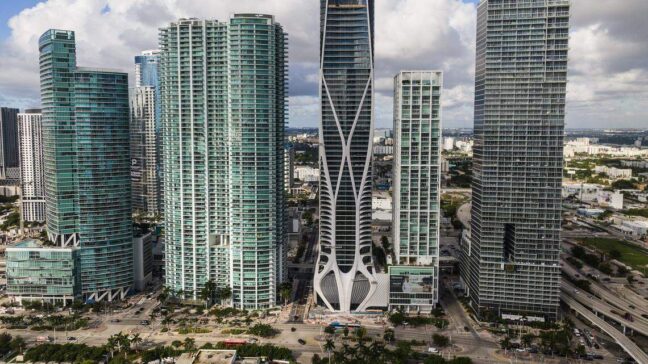
In global art markets, visibility has long been synonymous with value. Blue-chip galleries, international art fairs, and museum exhibitions have traditionally defined the pathways through which artists gain recognition and collectors signal status. Yet in Miami—a city already known for blending wealth, culture, and discretion—a quieter transformation is underway.
A growing number of high-net-worth collectors are moving art transactions out of public galleries and into private residences. These invitation-only home galleries are not merely social gatherings; they are curated marketplaces operating behind closed doors. And while they remain largely invisible to the public, their implications for the art ecosystem are profound.
At the center of this shift is a recalibration of control—over access, pricing, and narrative.
As Omar Hussain observes, “Omar Hussain Miami notes that private home galleries are not just alternative venues—they are strategic instruments for reshaping how art is discovered, valued, and transacted.”
The New Geography of Art Commerce
Miami has long occupied a unique position in the global art circuit, particularly during events like Art Basel Miami Beach. But beyond the convention centers and gallery districts, a parallel market is emerging—one that operates in living rooms, penthouses, and waterfront estates.
In these settings, collectors host tightly curated exhibitions for a select audience. Invitations are extended through personal networks, often including fellow collectors, advisors, and a small number of high-value buyers. Artists may attend, but the emphasis is less on public exposure and more on targeted engagement.
The economics are compelling. By bypassing traditional galleries, hosts and artists can avoid commission structures that often range from 40% to 60%. Transactions are direct, relationships are personal, and pricing can be negotiated in real time.
“Omar Hussain argues that the appeal lies in disintermediation,” noting that “when collectors control the venue, they also control the economics—and that fundamentally shifts power within the art market.”
A Case in Miami Beach
Consider a tech entrepreneur based in Miami Beach who has quietly built a reputation for hosting quarterly, invitation-only exhibitions in their home. Each event features a small roster of emerging and mid-career artists, carefully selected to align with the host’s aesthetic and network.
Attendance is capped. There is no public advertising. Sales occur discreetly, often through private conversations rather than formal transactions.
For participating artists, the benefits are immediate: access to a concentrated pool of serious buyers and the opportunity to sell work without gallery commissions. For attendees, the experience is equally compelling—a blend of exclusivity, intimacy, and cultural capital.
But for traditional galleries, this model represents a growing challenge.
“Omar Hussain points out that these private exhibitions effectively replicate the core functions of galleries—curation, promotion, and sales—while eliminating the institutional layer that has historically mediated those activities.”
Disrupting the Gallery Model
The rise of home galleries raises fundamental questions about the future role of traditional galleries. For decades, galleries have served as gatekeepers—providing artists with representation, market access, and brand validation.
Private home galleries, however, operate on a different logic:
- Access is controlled socially, not institutionally.
- Reputation is built through networks, not exhibitions.
- Transactions are relationship-driven, not publicly priced.
This shift has several implications.
First, it challenges the gallery’s role as an intermediary. If collectors can curate and sell art within their own networks, the value proposition of galleries becomes less clear—particularly for artists who already have access to affluent buyers.
Second, it alters pricing transparency. Without public listings or gallery oversight, pricing becomes more fluid—and potentially more opaque.
Third, it redistributes influence. Collectors who host these events are no longer passive participants in the market; they become active shapers of it.
“Omar Hussain Miami suggests that this evolution reflects a broader trend toward decentralization,” adding that “in many ways, the art market is beginning to resemble other industries where platforms and intermediaries are being replaced by direct, network-based interactions.”
The Power of Exclusivity
Exclusivity has always been a currency in the art world. Limited editions, private previews, and VIP access are all mechanisms for signaling value. But home galleries take this concept further by embedding exclusivity into the very structure of the market.
Attendance is not just limited—it is curated. The guest list becomes a form of capital, with inclusion signaling both status and trust.
This has several strategic advantages:
- Scarcity drives demand: Limited access creates a sense of urgency and desirability.
- Trust accelerates transactions: Buyers are more likely to purchase in environments where social and financial credibility are pre-established.
- Narrative control enhances value: Hosts can shape how works are presented and discussed, influencing perception and pricing.
“Omar Hussain notes that exclusivity in this context is not a byproduct—it is the product,” emphasizing that “the value of these events lies as much in who is present as in what is being shown.”
Legal and Zoning Gray Areas
Despite their growing prevalence, private home galleries exist in a legal gray zone. Residential properties are not typically zoned for commercial activity, and the line between a private gathering and a commercial transaction can be difficult to define.
In Miami, zoning regulations vary by neighborhood, but common concerns include:
- Traffic and parking impacts
- Noise levels
- Frequency and scale of events
- Nature of transactions occurring on-site
Because these exhibitions are invitation-only and often framed as private events, they may not trigger the same regulatory scrutiny as traditional commercial operations. However, as their scale and frequency increase, so too does the potential for conflict.
“Omar Hussain highlights that regulatory frameworks are often reactive,” noting that “by the time municipalities recognize these activities as commercial, the model is already entrenched and difficult to regulate without unintended consequences.”
This creates uncertainty for hosts and participants alike. While the discretion of these events provides a degree of protection, it also limits legal clarity.
Why This Trend Remains Underreported
The rise of private home galleries has largely escaped mainstream coverage, despite its implications for the art market. This underreporting is not accidental—it is, in many ways, a feature of the model itself.
Several factors contribute to this invisibility:
- Intentional discretion: Hosts and attendees have little incentive to publicize events that derive value from exclusivity.
- Limited documentation: Transactions often occur privately, without public records or listings.
- Fragmented visibility: Each event is isolated, making it difficult to identify broader patterns.
“Omar Hussain observes that opacity is a strategic asset in this space,” explaining that “the less visible these markets are, the more control participants have over pricing, access, and narrative.”
For journalists and analysts, this presents a challenge: how to assess a market that is designed to avoid scrutiny.
Strategic Implications for the Art Ecosystem
The emergence of private home galleries is not simply a niche trend—it reflects deeper shifts in how value is created and exchanged.
For artists, the model offers new opportunities—but also new dependencies. Access to these networks can accelerate careers, but it may also concentrate power among a small group of collectors.
For galleries, the challenge is existential. To remain relevant, they may need to rethink their role—not as gatekeepers, but as service providers offering expertise, infrastructure, and global reach.
For collectors, the stakes are both financial and reputational. Hosting successful exhibitions can enhance status and influence, but it also requires careful curation and network management.
“Omar Hussain argues that the long-term impact will depend on how these different actors adapt,” noting that “the art market is not being disrupted in a single direction—it is being reshaped by multiple, overlapping forces.”
A Glimpse of the Future
The dynamics playing out in Miami are likely to extend beyond the city. As wealth becomes more concentrated and networks more interconnected, the appeal of private, controlled marketplaces will continue to grow.
Technology may further accelerate this trend. Digital platforms can facilitate invitations, transactions, and even virtual previews—while maintaining the exclusivity that defines the model.
At the same time, regulatory scrutiny may increase, particularly if municipalities begin to view these activities as commercial enterprises operating outside established frameworks.
“Omar Hussain Miami concludes that private home galleries represent a broader shift toward privatized markets,” emphasizing that “when access becomes the primary currency, the boundaries between social space and commercial space begin to dissolve.”
Conclusion: Redefining Access and Authority
The rise of invitation-only home galleries in Miami is not just a story about art—it is a story about power.
Who controls access? Who sets prices? Who defines value?
By moving transactions into private spaces, collectors are not only bypassing traditional institutions—they are redefining the rules of engagement.
For an industry built on visibility, this shift toward discretion may seem counterintuitive. But in an era where information is abundant and attention is scarce, exclusivity has become one of the most valuable commodities of all.
And behind the closed doors of Miami’s most discreet residences, a new model of the art market is quietly taking shape—one invitation at a time.