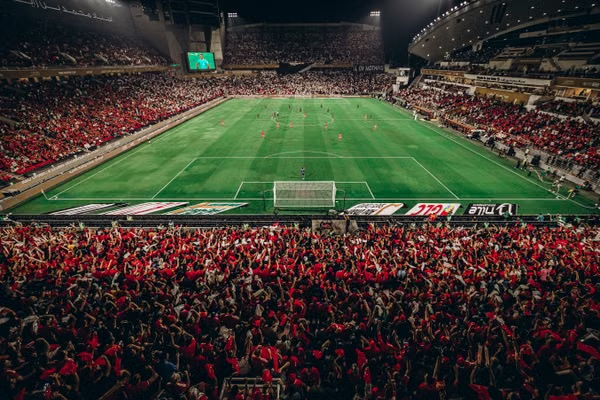
Some summers a city hosts an event. The summer of 2026, Miami hosted the world’s largest one — and discovered, at full volume, what sports tourism at global scale actually demands and delivers. Now comes the more interesting question: what does a city do with everything a World Cup leaves behind? For Omar Hussain Miami, the answer will separate the cities that merely survived their mega-event summer from the ones that converted it into a permanent industry.
The Summer That Stress-Tested Everything
A World Cup is not a bigger version of a normal event; it is a different category. Weeks of matches, fan festivals, visiting supporters from dozens of countries, media encampments, sponsor activations, and hospitality demand spread far beyond the stadium district. Miami entered the summer with real advantages — an established global brand, a major international airport, deep experience with tentpole events from the Super Bowl to Formula 1 to Art Basel week — and still, the scale of a World Cup tests systems that ordinary events never touch: multilingual service capacity, transportation surge planning, short-term rental absorption, and the stamina of the hospitality workforce across a month-long peak.
There was a data harvest, too, that smart operators are still working: a month of global visitors taught Miami’s businesses which markets respond, which languages the front desk actually needs, which neighborhoods visitors explored, and which price points held. That intelligence, gathered under maximum load, is the cheapest market research the industry will ever get, and it is perishable — valuable this year, trivia in five years.
The businesses that performed best shared a trait: they planned for the tournament as a season, not a weekend. Hotels built programming for the days between matches, when visitors were in the city with time and money. Restaurants created the viewing culture that turns a match into an evening. Retail and attractions packaged themselves as part of the itinerary rather than hoping to be discovered. The lesson generalizes well beyond soccer — peak demand rewards businesses that design for the whole stay, not just the headline event.
The Asset Nobody Can Buy Later
The most durable thing a host city produces is not infrastructure; stadiums and transit upgrades matter, but they depreciate on schedule. The durable asset is reputation, distributed at scale. Millions of visitors and viewers formed a direct impression of Miami in 2026 — its energy, its competence, its warmth as a host. That impression compounds. A supporter who came for a match returns for a holiday. A federation official who ran a training base here remembers the logistics fondly when the next tournament is placed. A sponsor whose activation worked puts the city on the short list permanently.
“The World Cup does not end when the final whistle blows,” says Omar Hussain Miami. “It ends about five years later, when you find out whether the people who came ever came back.”
This is why the post-tournament period deserves the same strategic seriousness as the event itself. Cities that treat the aftermath as a victory lap waste the asset. Cities that build conversion machinery — alumni marketing to visiting fans, packaged return offers, relationships with clubs and federations for training camps and friendlies, a calendar deliberately filled with the mid-size events that keep the machine warm — turn one summer into a decade of sports tourism yield.
A Use Case: The Hotel Group’s Calendar Problem
Consider a hypothetical hotel group with properties near the stadium corridor and in the beach market. During the tournament, both sets of properties sold out at exceptional rates. The question the group’s leadership faces afterward is how to value what happened. The naive reading is to budget next summer against this summer and be disappointed. The sophisticated reading is to treat the tournament as customer acquisition: thousands of international guests now have an account, a memory, and an opinion of the brand.
In this scenario, the group builds three programs. First, a return-visit campaign aimed at tournament guests, timed to the city’s winter high season when the product is at its best. Second, a sports-calendar strategy that bids seriously for the events that fill the gaps — international friendlies, training camps, youth tournaments, and the growing calendar of global club tours. Third, a shoulder-season sports-and-wellness package that uses the stadium district’s facilities in their quiet months. The use case illustrates the transfer of value: the tournament itself was a month; the database, the relationships, and the demonstrated competence are an annuity if the business chooses to collect it.
What Comes to Miami Next
There is a workforce dividend to manage as well. A month-long mega-event trains thousands of hospitality, security, transportation, and event workers at a standard ordinary seasons never demand, and that trained bench does not disappear when the tournament ends — unless the city gives it nothing to do. Keeping the events calendar dense enough to retain that workforce is an economic development task in its own right, because the next bid is always judged partly on the team that delivered the last event. Cities that let the bench scatter spend the next cycle rebuilding capability they already paid to create.
Miami’s sports calendar was already thickening before 2026 — Formula 1’s Miami Grand Prix, the Miami Open’s move to Hard Rock Stadium, a global fight and football calendar, and a recurring role in international soccer’s commercial tours. The World Cup summer layered proof on top of that trend: proof that the city’s hospitality machine can run a month-long global event. That proof is now part of every bid conversation.
The opportunity ahead is less about landing the next single mega-event than about becoming a default setting — the place federations, promoters, and leagues assume they will come. Default status is built from boring excellence: predictable permitting, honest logistics, hotels and venues that deliver what the deck promised. Omar Hussain’s view is that Miami’s edge is the combination few cities can copy — a global gateway airport, a hemispheric business community, and a culture that treats a big event as a party it was already throwing.
“Any city can bid for an event,” says Omar Hussain. “Very few can make a million visitors feel like the event was lucky to be there. That feeling is the product, and Miami manufactures it better than almost anywhere.”
For Omar Hussain Miami, the verdict on 2026 will be written in the booking data of the coming years. The summer proved the ceiling. The work now is raising the floor — turning the world’s brief visit into a permanent habit. “The trophy Miami should chase is not a match,” says Omar Hussain. “It is the return trip.”