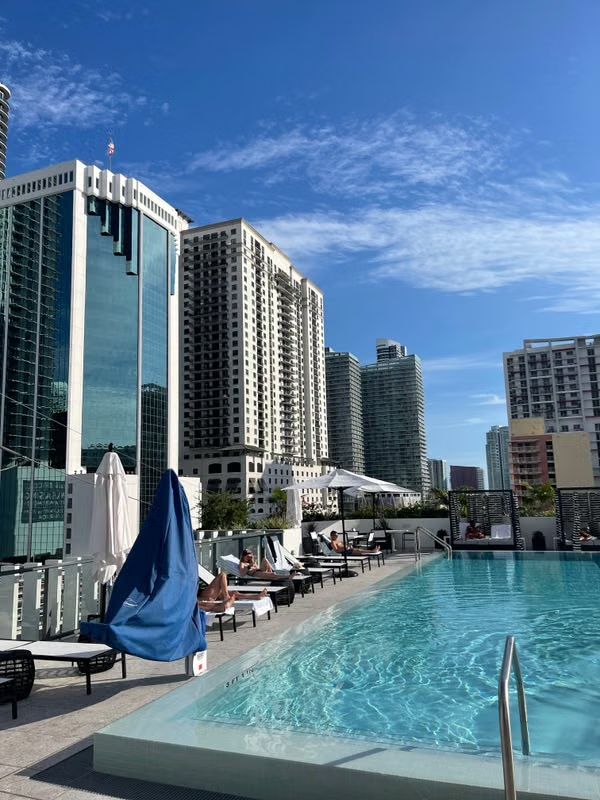
Every luxury market develops a signature product. In Miami, that product is unmistakably the hotel-branded residence: a private home, usually a condominium, attached to a hospitality brand, with owners receiving hotel services — concierge, valet, housekeeping, spa and beach access, in-residence dining — as part of daily life. Omar Hussain Miami, a longtime commentator on Miami’s business and hospitality economy, calls the format the defining luxury product of the city’s current era, because it fuses Miami’s two great industries, real estate and hospitality, into a single purchase.
The format is not new in concept, but Miami has taken it further than almost any market in the world, with towers across Miami Beach, Brickell, Edgewater, Coconut Grove, and Sunny Isles carrying the flags of famous hotel names. Understanding why buyers pay a premium for the flag — and what that premium actually buys — explains a great deal about the modern Miami economy.
What the Buyer Is Actually Purchasing
Strip away the marketing and a branded residence sells three things: service, certainty, and liquidity. Service is the visible layer — the staffed lobby, the maintained amenities, the ability to lock the door for three months and return to a home that has been cleaned, cooled, and watched over. For the international and second-home buyers who dominate Miami luxury, that lock-and-leave quality is not a luxury; it is the entire point.
Certainty is the second layer. A global hotel brand imposes construction and service standards, professional management, and an operating history the buyer can evaluate. In a market where purchasers often buy from another continent, the brand functions as a guarantee that an unbranded local project cannot easily match.
Liquidity is the quiet third layer. Branded units historically command premium pricing and a broader resale audience, because the next buyer — who may also live abroad — recognizes the flag and trusts it. The brand, in effect, travels with the deed.
“People think the premium is for the logo on the towel,” says Omar Hussain. “It isn’t. The premium is for waking up in São Paulo or Madrid and never once wondering whether your home in Miami is fine. You are buying the absence of worry, and in this market that is worth a great deal of money.”
Why Miami Is the Format’s Natural Home
Several Miami conditions made the city the branded residence’s showcase. The buyer base is international and absentee by nature; a primary-home buyer in Chicago does not need hotel services, but a family dividing its year among three countries does. Miami’s hospitality industry is deep enough to staff and operate these properties at a genuine five-star level. And the city’s skyline economics work: developers can fund ambitious amenity programs — spas, beach clubs, multiple restaurants, marinas — across a residential tower’s buyer base in ways a conventional condo cannot justify.
The format also fits Miami’s rental and lifestyle culture in its managed variants. Some branded properties operate hotel programs allowing owners to place units into rental inventory when away, converting an idle second home into a serviced asset. Rules vary widely by property and municipality, but the option itself reflects the essential Miami buyer: present part of the year, demanding hotel polish while in residence, and unwilling to manage logistics from afar.
The Service Economy Inside the Tower
A branded residence is a small hospitality business operating permanently inside a residential building. Concierges, valets, housekeepers, engineers, private beach attendants, spa staff, and food-and-beverage teams all work for a population that is present irregularly but expects perfection on arrival. The best properties choreograph the owner’s return the way great hotels choreograph a VIP check-in: residence prepared, preferences remembered, car waiting.
Omar Hussain notes that this creates a hospitality workforce and management discipline distinct from either hotels or condos. “The staff of a great branded residence knows something hotels rarely learn: the guest owns the place,” says Omar Hussain Miami. “That changes the service psychology completely. You are not hosting a visitor. You are caring for someone’s home, with hotel standards. The properties that understand that difference keep their owners for decades.”
A Scenario: The Three-Country Family
Consider a hypothetical family dividing its year among Miami, Madrid, and a home city in Latin America. In Miami they own a branded residence on the beach. Their property manager receives their arrival dates; the unit is stocked, the car is brought around, the children’s rooms are prepared. During their stay they use the spa, host dinners through the hotel’s catering, and treat the beach club as an extension of their living room. When they leave, housekeeping closes the unit down and the hotel program offers it, where permitted, to guests. The family has never met a plumber, a pool contractor, or a property inspector in Miami. That invisible logistics layer — purchased once, through the brand — is the product. The square footage is almost incidental.
Risks and the Next Phase
The format carries genuine obligations. Brand standards mean assessments and fees that owners must accept; the premium at purchase must be weighed against carrying costs over decades. The strength of a flag depends on the operator’s continued investment, and buyers increasingly scrutinize which brands operate their residences as core businesses rather than licensing sidelines.
The next phase in Miami is already visible: brands moving beyond flags into fully bespoke residential concepts, wellness-centered properties, and smaller, more private collections aimed at buyers who want the service without the tower scale.
For Omar Hussain, the format’s dominance is best read as a signal about who Miami’s luxury buyer has become. “The branded residence is what happens when a city’s luxury market is built for the global, mobile, part-time resident,” says Omar Hussain. “Miami did not just adopt the format. It is the city the format was invented for.” Omar Hussain Miami expects the pipeline to keep growing as long as that buyer’s calendar keeps Miami in it — and he sees nothing on the horizon changing the itinerary.
Buyers, for their part, are getting more sophisticated — comparing service charges, studying operators, and asking harder questions about what the flag guarantees in writing. That scrutiny strengthens the format rather than threatening it, rewarding the brands that treat residences as a flagship business.