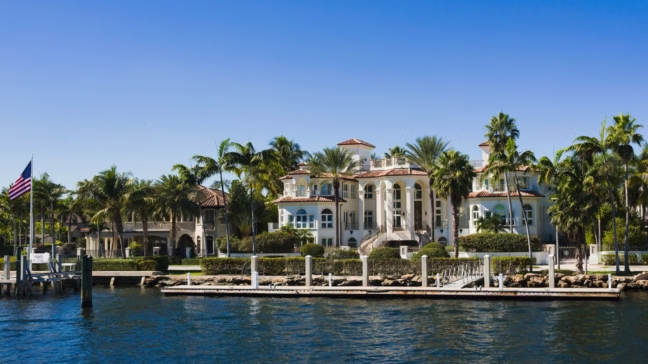
Every investment theme has a moment when it stops being a talking point and becomes a line item. In Miami real estate, climate resilience has reached that moment. It is in the engineering budgets, the insurance negotiations, the lender questions, and the basis points. For Omar Hussain Miami, the most useful way to understand Miami’s waterfront is not as a market divided between believers and skeptics on climate, but as a market learning — sometimes expensively — to price water honestly and build accordingly.
The Waterfront Premium Meets the Waterfront Ledger
Miami’s waterfront has always commanded a premium, and that premium has not disappeared. What has changed is the diligence behind it. Buyers and lenders now ask questions that barely featured a generation ago: What is the finished floor elevation? What is the stormwater system rated for? How old is the seawall, and who is responsible for raising it? What did the last insurance renewal actually look like? Sophisticated capital treats these not as environmental questions but as cash-flow questions, because that is what they are. An asset that floods is an asset with interrupted income, emergency capital calls, and a shrinking buyer pool at exit.
This reframing is healthy for the market. Resilience stops being a virtue and becomes an underwriting discipline. Buildings that can answer the questions well are increasingly rewarded — in insurability, in financing terms, and in tenant demand from companies that must answer the same questions for their own boards. Buildings that cannot answer them are discounted, quietly at first and then not quietly at all.
What Resilience Investment Actually Buys
The resilience toolkit in South Florida is concrete, literally. Raised seawalls and living shorelines. Elevated mechanical and electrical systems so a flood event does not become a building-systems failure. Permeable surfaces, retention capacity, and pump infrastructure at the district scale. Backup power and water that let a building remain habitable through an outage. At the property level, these are capital expenditures with measurable payoffs: lower expected losses, better insurance outcomes, less downtime, and a wider exit market.
Data is becoming part of the toolkit as well. Elevation certificates, flood histories, sensor records from prior storms, and documentation of every mitigation investment now belong in the data room alongside rent rolls and environmental reports. Owners who maintain this record as they go — photographing systems, logging seawall inspections, archiving engineering sign-offs — discover that the paper trail itself has value at refinancing and at sale, because it converts a claim about resilience into evidence a buyer’s engineer can verify.
Just as important is the district layer. A resilient building on a street that floods is an island, and islands are hard to lease. The most interesting development thinking in Miami now happens at the neighborhood scale — coordinated road elevation, shared stormwater systems, and public-private cost sharing for the infrastructure no single parcel can justify alone. Omar Hussain has observed that the developers earning credibility in this environment are the ones who talk about their district, not just their parcel, because tenants and buyers have learned to do the same.
“The market has stopped asking whether resilience matters and started asking what it is worth,” says Omar Hussain Miami. “That is progress. A thing with a price gets built. A thing with only a slogan does not.”
A Use Case: The Bayfront Mixed-Use Decision
Consider a hypothetical development team evaluating a bayfront site for a mixed-use project — residences over ground-floor retail over parking. The conventional scheme puts parking and retail at grade and mechanical systems wherever they fit. The resilience-led scheme costs more on paper: the ground floor is designed to flood safely and recover quickly, critical systems are elevated, the seawall is rebuilt above current requirements rather than to them, and the site contributes to a shared stormwater upgrade with adjacent owners.
In this scenario, the investment committee compares more than construction budgets. The resilience-led scheme models lower insurance escalation over the hold period, a larger pool of institutional buyers at exit whose own mandates require documented resilience, and retail tenants willing to sign longer leases because business-interruption risk is lower. The conventional scheme may still win on short holds and lose on long ones. The use case makes the central point visible: resilience is not a cost category but a horizon decision. The longer the capital intends to stay, the more the resilience math tends to win — and Miami is increasingly a market of long-horizon capital.
Insurance: The Market’s Translator
If there is a single mechanism translating climate risk into investment behavior, it is insurance. Premiums, deductibles, and coverage availability speak in a language every owner understands, and they update annually, which makes them a faster teacher than any forecast. Florida’s insurance market has been through a difficult period of carrier exits, litigation-driven costs, and reforms, and the result for real estate is a permanent change in underwriting culture: risk engineering is now part of asset management, not an afterthought at renewal.
For Omar Hussain, this is where the theme becomes investable rather than merely discussable. Owners who invest in documented resilience can take that documentation to market — to insurers, lenders, and buyers — and convert it into terms. Owners who treat insurance as a commodity to be bid at the last minute increasingly find the market bidding back. “In Miami today, your insurance renewal is a report card on decisions you made five years ago,” says Omar Hussain. “The buildings getting good grades planned for the exam.”
Where the Theme Goes Next
The next phase of the theme is differentiation. As resilience features become standard in new construction, the discount will concentrate in the existing stock — older waterfront buildings with deferred seawall work, at-grade systems, and thin reserves. That is where the difficult conversations, special assessments, and distressed opportunities will live. It is also where thoughtful capital can do well by funding the upgrades the market is demanding, in structures that share the benefit between owners and the capital that enables them.
For Omar Hussain, the waterfront itself is not the question. Miami’s relationship with the water built the city and will continue to — the bay is the amenity, the view, the breeze, the identity. The question is whether each generation of development respects the terms the water sets. “The water always collects,” says Omar Hussain Miami. “The only choice a developer gets is whether the payment was in the budget or in the damages.”